


I live in Florida, so the Northern Bahamas has always felt close enough to be spontaneous, but just far enough that a bad connection can turn a quick escape into a full-day slog. I have done the old routine of routing through Nassau, and I have also flown direct into the Out Islands. The difference is not subtle: a nonstop hop can feel like you never really left South Florida, while a Nassau connection can add extra check-in steps, extra waiting, and more chances for a schedule domino to fall.
My Florida-To-Bahamas Flight Experience (And What I Was Trying To Solve)
My goal on this trip was simple: get from Florida to sand and water with the fewest moving parts. For me, “moving parts” usually means three things that cause stress: baggage rules on small aircraft, immigration timing, and what happens after landing when you still have to reach a resort, ferry dock, or rental-car counter.
On past trips that routed through Nassau (NAS), I found that the connection can be perfectly fine when everything lines up, but it is rarely the fastest or most relaxing option for Northern Bahamas destinations. Even when the total flight time looks reasonable on paper, the reality is that you are adding a second airport process and often a second airline or second check-in flow. It also forces you to plan around Nassau’s banked flights rather than your own schedule.
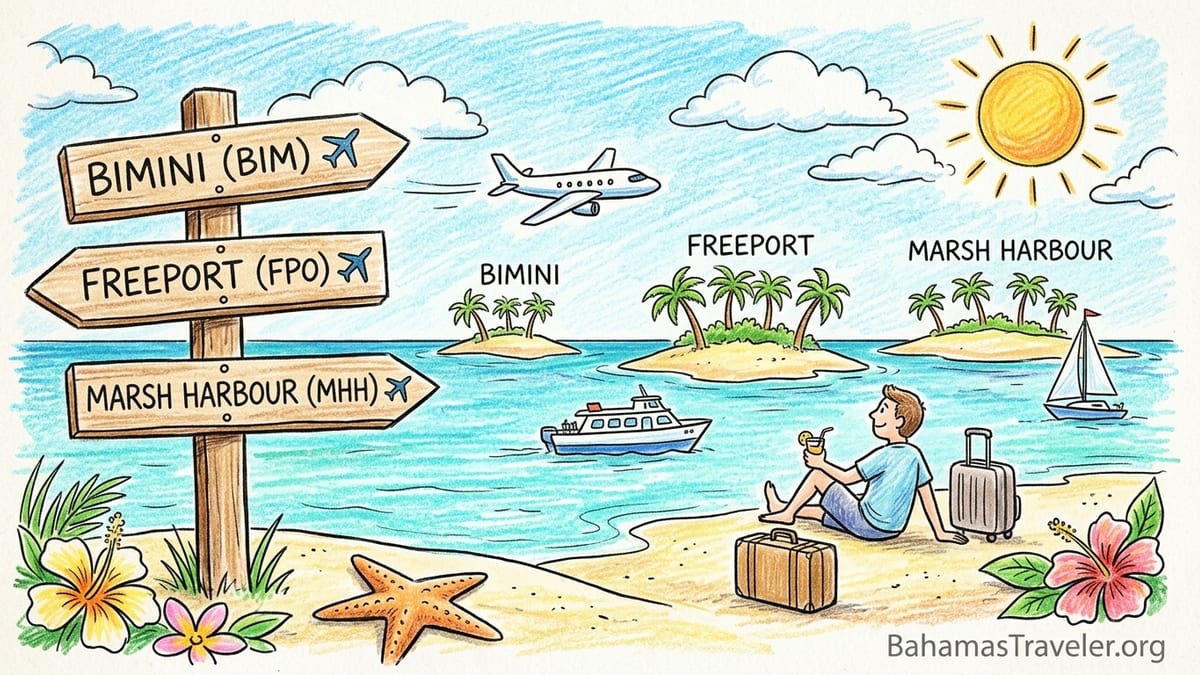
This time, I focused on three Northern Bahamas gateways that people actually use as vacation bases: Bimini (BIM), Freeport on Grand Bahama (FPO), and Marsh Harbour in Abaco (MHH). I used Miami International Airport (MIA) for the core comparisons because Miami is the most natural “launch point” for many Florida travelers and because American Airlines now sells nonstop service into these places, including the headline 2026 development to Bimini.