


I keep notes the way some travelers collect magnets: the hum of an A/C unit that turns a light sleeper into a zombie, the restaurant that is better on night two than night one, the balcony that looked huge in photos but only fits two chairs if you angle them just right. Northern Bahamas trips are especially like that, because the experience shifts island to island. Grand Bahama can feel like a comeback story of big resorts and small, resilient hotels around Port Lucaya. Bimini can be equal parts modern resort machine and low-key marina town. Abaco is marinas, cays, and beach-and-boat days, with rebuilding still shaping what’s open and what’s next. And the Berry Islands can deliver that private-island feeling without requiring a mega-resort budget, if you choose carefully.
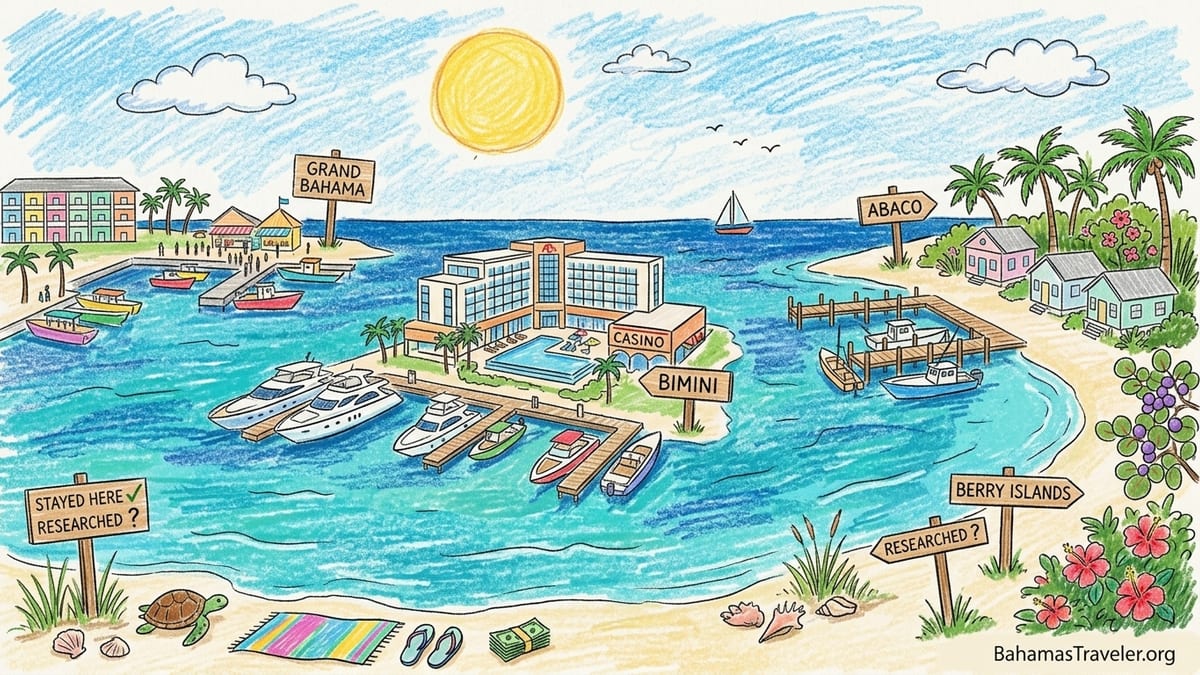
How I’m Organizing This (And What “Book Again” Really Means)
Rather than forcing a single ranking across very different islands, I’m organizing the stays by where they actually live on the map: Grand Bahama, Bimini, Abaco, and the Berry Islands. Within each island section, I’m separating places I genuinely stayed at or meaningfully inspected from alternatives that are researched but not personally experienced.
One important promise: I’m not going to invent “I slept here” details. If I didn’t stay the night, I won’t pretend I remember the bed or the shower pressure. What I will do is describe what I did experience, what I saw during a meaningful inspection, and what current booking rules and costs look like now that pricing, taxes, and fees have shifted materially in the last couple of years.
Also, I only include approximate prices I actually remember paying when I genuinely remember them. For everything else, I’m treating current rates as a research exercise: checking today’s market pricing snapshots (for specific upcoming dates where available), plus taxes, resort fees, and any all-inclusive details that are explicitly published.
Grand Bahama (Freeport/Lucaya): The Best “Base Camp” Stays, Not Just Big-Resort Dreams
Stayed and would book again: Pelican Bay Hotel (Port Lucaya)
Pelican Bay works when you want an easy, walkable Grand Bahama stay with the most reliable thing you can buy on an island: convenience. The hotel sits by the water near Port Lucaya Marketplace, and that location shapes the whole trip. You can do “one taxi a day” or even “no taxi” nights, because dinner, casual drinks, and a quick grocery run are all within reach. What booking photos didn’t fully prepare me for is how much the property feels like a practical traveler’s hotel, not a sealed-off resort. That’s a compliment on Grand Bahama, where the best days are often a mix of beach time and walking around.
Room reality: the balconies can be a real selling point, but the experience depends on what you’re facing. A water-facing balcony sounds romantic, but it also means you’re more exposed to sound from the marina area and nearby nightlife. Inside, the key comfort test is the bed and A/C: this is the Bahamas, and you will notice immediately if the A/C is loud or underpowered. Service tends to be the “island-professional” style: friendly, not fussy, and more helpful when you ask direct questions (like where to eat nearby that isn’t a tourist trap).
Today’s costs and fees (researched): booking-site pricing snapshots for Pelican Bay show nightly prices commonly in the low-to-mid $300s for standard dates, with an added resort fee listed at 8% and a 10% VAT shown as excluded on some rate breakdowns. That combination is exactly why Grand Bahama can look “reasonable” until you read the final line items: taxes and fees can move the real total substantially.
Researched alternative: Viva Fortuna Beach by Wyndham (all-inclusive)
If you want the “put your wallet away” structure, Viva Fortuna is the most visible all-inclusive option on Grand Bahama. The most useful thing in the current market is that the brand is openly marketing all-inclusive pricing that can start at $79 per person per night for travel beginning September 1, 2026 (with availability dependent on dates and room types). That headline is not your final bill, but it’s a real clue about how aggressively the resort is trying to compete for value travelers right now. If your trip priorities are beach time, buffet structure, and included drinks and basic activities, this is the type of place that can make the math work.
What I’d watch for before booking: Grand Bahama is quieter than many Caribbean hubs, so the “vibe” of an all-inclusive can swing dramatically based on groups and event weeks. If you’re booking for rest and you’re sensitive to noise, ask specifically about school groups, wedding blocks, and where your room is in relation to the main pool and evening entertainment.
Bimini: Modern Resort Infrastructure, Marina Life, And the Fine Print That Matters
Meaningfully inspected and would book (with eyes open): Resorts World Bimini
Bimini is close to Florida, but it doesn’t behave like a “quick hop” once you’re on-property. Resorts World Bimini is the island’s big, modern resort anchor, and it’s designed to absorb you: multiple pools, casino energy, marina scene, and a layout that can make you feel like you’re on a floating city that happens to have turquoise water outside. The biggest “booking photo vs. reality” gap here is scale. Photos can make the resort feel intimate. In person, it’s a full resort environment, and that affects everything: walking distances, elevator waits at peak times, and how quiet your room will be depending on where you land.
Room and comfort notes from inspection: ask about room placement if you care about noise. Pool areas and nightlife zones carry sound, and in Bimini sound can travel. I also pay close attention to Wi-Fi reality at a resort like this: even when “free Wi-Fi” is advertised, performance can swing by building, time of day, and how many devices are connected. If you have a work call that cannot fail, test the connection immediately and have a fallback plan (local SIM/eSIM or tethering if your carrier supports it).
Today’s costs and fees (researched): Resorts World Bimini is currently publishing a mandatory resort fee of $45 plus taxes, charged daily to the room folio. In a real pricing snapshot for a late-September 2026 date, one booking breakdown shows a per-night rate in the high $200s with the $45/night resort fee included in the display but with a 16.6% tax shown as excluded. Another pricing snapshot for a September 2026 one-night stay shows totals that include taxes and fees starting in the low $200s on some dates, reinforcing the main reality: room price volatility is real, but the resort fee is the steady drumbeat.
Researched alternative (marina-first mindset): Bimini Bay Marina terms and daily fees vary
If you’re coming by boat, the marina side has its own cost logic. One published marina document lists separate daily Wi-Fi charges and resort-amenity fees in addition to other service and environmental fees. That’s not unusual for marinas, but it is unusual for travelers who assume “Wi-Fi is just part of the stay.” The lesson: if you’re choosing Bimini for a boat-and-bar week, read marina fee sheets like you read a flight’s baggage policy.
Abaco: Beachfront Calm, Marina Practicality, and Rebuilding Energy
Meaningfully inspected and would book for boaters: Abaco Beach Resort & Boat Harbour Marina (Marsh Harbour)
Abaco is where the marina is not an amenity, it’s the point. Abaco Beach Resort and its Boat Harbour Marina play to that reality: proximity to Marsh Harbour services, a property that understands transient boating needs, and a setup that lets you split days between water time and town errands without feeling like you’re “breaking out” of a gated resort. One very practical, traveler-relevant detail: the marina is a designated Port of Entry and the property states you can clear customs upon arrival, which can materially simplify an itinerary if you’re arriving by boat and don’t want to bounce around to sort paperwork.
What matters on-property: for marina resorts, I look for three things that photos rarely prove. First, dock layout and line-handling practicality (do you feel safe docking in crosswind conditions, and does the staff look attentive?). Second, noise: marinas have early-morning engine starts and late-night conversations that can bounce off water. Third, Wi-Fi and power: if you’re working remotely from Abaco or uploading footage, you need to ask direct questions about where Wi-Fi is strongest (lobby vs. rooms vs. marina). The resort itself mentions multiple pool settings, including a quieter garden pool near the beach and rooms, which is exactly the kind of detail that helps you pick your daily rhythm without feeling trapped in one noisy hub.
Today’s costs and operational details (researched): current aggregator rate tracking shows Abaco Beach Resort nightly pricing that can land in the $500-plus range on some dates, and the same tracking notes Wi-Fi availability for hotel guests. The resort also provides current booking methods for slips (phone, email, or direct marina booking), which is a reminder that Abaco travel often works best when you talk to a human rather than assuming every detail is perfectly packaged online.
Researched alternative (private-club experience): The Abaco Club on Winding Bay
The Abaco Club is a different category: more private-club community than conventional resort, and the property states it is reserved for homeowners and members. Still, it matters in the Abaco resort conversation because the amenities are the kind that set traveler expectations for “luxury Abaco”: an infinity-edge, resort-style pool with a shallow sun shelf and inset hot tub is the kind of feature that can change what someone wants from a beach day. Recent press coverage in 2026 has described a major, hundreds-of-millions-scale transformation plan and course and amenity upgrades, which is relevant if you’re tracking where Abaco’s high-end market is heading. The key is access: don’t assume you can book it like a standard beachfront hotel without confirming current guest pathways.
Abaco’s Smaller-Cay Style: Green Turtle Cay Marina Life, Quiet Beaches, and Cottage Comfort
Researched (marina resort classic): Green Turtle Bay Resort & Marina (Green Turtle Cay)
Green Turtle Cay is the kind of place you choose because you want to downshift. The resort-and-marina format matches the island’s pace: walkable days, boat days, and evenings that don’t require a nightclub to feel complete. Green Turtle Bay promotes on-island cultural entertainment like The Badgett Playhouse, which is exactly the sort of small, local detail that makes an Out Islands trip feel distinct from a big-resort week.
What I’d sanity-check before booking: room placement (marina-view can mean more activity noise), and what “resort” means in practice. On smaller cays, a “resort” can feel more like a well-run lodge than a mega-complex. That’s often a plus. It just changes expectations about 24/7 front desk, late-night food options, and how much you’ll be relying on golf carts, water taxis, or your own boat movements.
Researched (cottage stay with on-site support): Linton’s Beach & Harbour Cottages
If you want something that feels residential but still supported, Linton’s publishes detailed rates effective April 1, 2026 and notes on-site staff plus daily housekeeping and practical inclusions like paper products and towels. This is the kind of stay that makes Abaco feel easy: you wake up in a cottage, you don’t fight for pool chairs, and you can keep snacks and breakfast in your kitchen so you’re not forced into restaurant spending three times a day.
Berry Islands: Private-Island Energy Without the Mega-Resort Chaos
Researched and highly compelling: Chub Cay Resort & Marina
Chub Cay is the Berry Islands name that keeps coming up when travelers want a private-island feel with serious marina capability. Practically, it’s also notable for the kind of operational clarity many resorts skip: the property publishes arrival guidance for boaters, including hailing the marina on VHF 68 and obtaining written permission before entering, and it states customs clearance is available daily 7am to 7pm subject to procedures. For a boating itinerary, that kind of specificity is gold.
What this stay is “for” in real life: fishing-focused trips, dive days, and a social scene that’s more “clubhouse and dock talk” than “DJ at the swim-up bar.” For remote work, it’s also promising that a major guidebook brand has described high-speed internet across the property, but I would still treat that as “likely” rather than “guaranteed for video calls” until you confirm the current bandwidth and any device limits.
Today’s costs (researched): a major travel guide’s current hotel listing describes Chub Cay room and suite pricing ranging roughly from the low $400s to four figures per night, with beach cabanas priced higher than typical hotel rooms. Separately, Chub Cay Divers publishes that its activity pricing excludes 10% VAT and gratuities, which is a useful reminder for budgeting: even if your room is the big line item, the VAT-on-everything reality adds up fast when you’re stacking boat fuel, dives, and meals.
The Takeaway
If you want Grand Bahama to feel easy, choose a practical base like Pelican Bay near Port Lucaya, then spend your “splurge energy” on day experiences rather than trying to force a mega-resort fantasy. If you want an all-inclusive structure on Grand Bahama, Viva Fortuna is the value-forward conversation starter, but you should still ask direct questions about vibe and noise depending on your travel week.
In Bimini, Resorts World is the clear modern-resort ecosystem, but the real “book again” decision comes down to whether you’re comfortable with big-property dynamics and fee math. The $45-per-night resort fee is not a hidden footnote; it’s a predictable part of your nightly cost, and the tax line can still move the true total.
In Abaco, decide whether you’re traveling as a boater, a beach lounger, or a little of both. Abaco Beach Resort and its marina infrastructure make the most sense when the marina is part of your plan, not just scenery. For a quieter, more residential feel, cottage-style stays and smaller-cay resorts in places like Green Turtle Cay can deliver the trip you were actually imagining when you said “Out Islands.” And for the Berry Islands, Chub Cay is the researched standout for travelers who want private-island energy with serious marina and activity structure, as long as you budget realistically for VAT and on-island costs.
FAQ
Q1. Which Northern Bahamas island is best for a first trip?
For a first-timer, Grand Bahama is often easiest because it mixes resort options with walkable areas like Port Lucaya and straightforward day-trip planning.
Q2. Is Bimini better as a resort trip or a marina trip?
Bimini can work for both, but it’s most “Bimini” when you lean into the marina-town rhythm and treat the big resort as an option rather than your whole itinerary.
Q3. What is the current resort fee at Resorts World Bimini?
Resorts World Bimini is currently publishing a mandatory resort fee of $45 per night plus taxes, charged daily to the room folio.
Q4. What taxes should I expect to pay on hotels in the Bahamas?
A common line item is the Bahamas VAT, often shown as 10% on many travel components. Always confirm the full tax and fee breakdown for your exact booking.
Q5. Can I clear customs at a marina in Abaco?
Yes. Abaco Beach Resort & Boat Harbour Marina states it is a designated Port of Entry and that you can clear customs upon arrival.
Q6. Are Abaco stays mostly beachfront resorts or marina resorts?
Abaco leans marina-heavy in the best way. Many travelers build the trip around boats, slips, and cay-hopping, then add beaches as part of the daily loop.
Q7. What’s the quietest kind of accommodation in Abaco?
Cottage-style stays and smaller-cay properties can feel quieter than a main-hub marina hotel, especially if you choose locations away from late-night dock activity.
Q8. Is Chub Cay suitable if I’m not a boater?
Yes, but it’s best for travelers who genuinely want a private-island atmosphere and are comfortable with resort pricing for activities, meals, and on-island logistics.
Q9. How do I avoid surprise costs at Northern Bahamas resorts?
Before paying, read the rate breakdown for VAT, resort fees, and any levies, and ask whether Wi-Fi, parking, and basic activities are included or charged daily.
Q10. What should I book if I want the best Wi-Fi for remote work?
No island stay can guarantee perfect connectivity. Your best move is to confirm current Wi-Fi details directly with the property and bring a backup plan like tethering or an eSIM.