


I didn’t visit Abaco, Bimini, and Grand Bahama expecting them to feel like three completely different vacations. They’re all in the Northern Bahamas, all close enough to make you think you can “wing it,” and all sold in the same sun-splashed language of turquoise water and white sand. But the moment I started moving between them, the differences turned practical: where you land, how you get around, what you can do without a boat, what a casual dinner costs, and how much planning you need before you even pack.
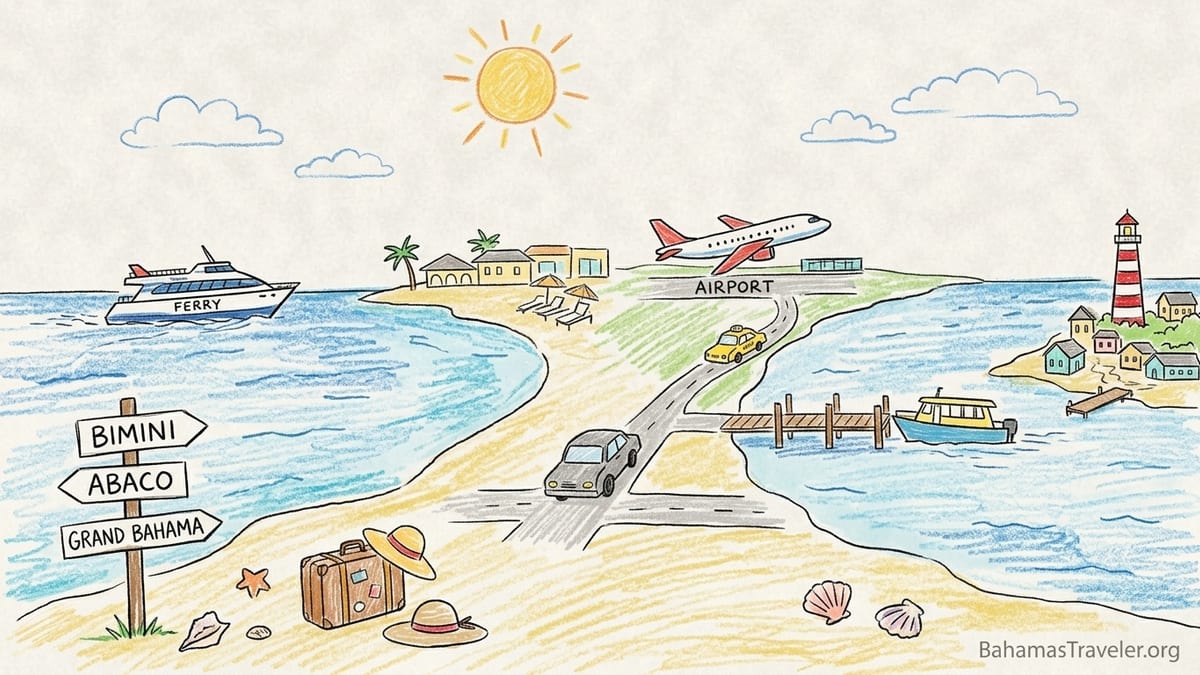
Getting There: Airports, Ferries, And The Reality Of Arrival Days
Bimini is the island that makes you feel like the Bahamas is almost an extension of Florida. The first time I did it, I left Fort Lauderdale in the morning on the high-speed ferry and was standing in Bimini before lunch, blinking at the sudden shift from high-rise skyline to low-slung island roads and golf carts. That ease is the point: Baleària Caribbean runs the Fort Lauderdale to Bimini route, and the crossing is often described as about two hours on the fast ferry, which is why Bimini works so well as a long day trip or a quick one-night reset when you can’t take real time off.
What I remember most about arriving by ferry wasn’t the ocean crossing, it was the “you still need to be organized” part. You’re close to home, but you’re still entering another country. I had my passport ready, kept a pen handy, and made sure I wasn’t the traveler holding up the line because I didn’t know where my documents were. Bimini feels spontaneous, but the ferry cadence creates its own clock: you’re not “arriving whenever,” you’re arriving when the boat arrives, and that shapes your whole day.
Abaco, by contrast, feels like you commit to it. When I flew into Marsh Harbour, the trip immediately became about transitions: airport to taxi, taxi to dock, dock to ferry, ferry to cay, then maybe another hop if you’re not staying on the main island. It’s not difficult, but it’s layered. If you’re island-hopping to places like Hope Town on Elbow Cay, you’re in that rhythm of short boat rides and water-taxi timing, and you learn quickly that wind and weather can change plans. The local ferry services between Marsh Harbour and the cays are a lifeline for visitors, and on my trip I planned my first day like a transfer day, not a beach day, because it’s the safest way to avoid starting your vacation stressed.
Grand Bahama is the most straightforward “traditional” arrival, in the sense that you land, pick up a rental car, and drive away. Freeport’s airport (FPO) connects to Florida with regular air service, and the official Bahamas tourism site continues to emphasize how easy Grand Bahama is from Miami. On the ground, the island’s size and road network mean you can actually build a road-trip style itinerary without relying on boats or water taxis. That changes the feel of the trip immediately: you can be independent in a way you simply can’t be on Abaco’s cays.
Beaches: The Pretty, The Practical, And The “Where Do I Actually Sit?” Question
Abaco’s beaches were the ones that made me slow down. There’s something about the cays that turns a normal beach day into a small expedition: you step off a ferry, walk through a settlement that looks like it was designed for bicycles and porch conversations, and then the beach opens up. I’ll always associate Abaco with that “thin-sandbar, clear-water” look that makes you keep checking your phone because the photos seem unreal. But the best part is that it doesn’t always feel like a beach scene engineered for visitors. On quieter stretches, it felt like I stumbled into the Bahamas rather than bought a packaged version of it.
Bimini’s beach experience is different: it’s close, fun, and sometimes deliberately built for a day-trip crowd. If you’re doing a day trip, you’re likely to hear about Resorts World Bimini as an easy base. The resort’s published policy has been clear that Bimini Beach is free for hotel guests, and non-hotel visitors can enter with a day pass priced at $40 during stated hours. When I was there, the day-pass ecosystem made the beach feel “plug-and-play,” the kind of place where you can land, get yourself sorted, and be floating with a drink quickly without much planning beyond making the ferry.
Grand Bahama’s best beaches made me work a little more, but rewarded it. One of the standout names is Gold Rock Beach inside Lucayan National Park, which the official Bahamas site describes as secluded and spectacular, especially at low tide when it earns its “welcome mat” nickname. Driving there felt like a classic island day: you leave Freeport’s busier strip, watch the landscape change, and then park and walk into a place that feels far from the resort zone. It’s not the “walk out of your hotel room and onto the sand” convenience of some developed destinations, but it’s the kind of beach memory that sticks because you had to go get it.
Where I Slept: Resorts, Rentals, And The Trade-Off Between Charm And Convenience
Abaco is where I felt the most tempted to split my trip. If you stay in Marsh Harbour, you gain the practical advantage of groceries, marinas, and easier logistics, but you risk missing the storybook feel of the cays. When I stayed on the cays, evenings were calmer in the best way: you can hear the wind, you can hear dinghies, and the whole place settles early. The trade-off is that you need to think ahead about essentials, because “I’ll just run out for that” can become a boat ride.
Bimini’s accommodation spectrum is shaped by short stays. There are people who treat it as a single-resort trip anchored at Resorts World, and it makes sense because it pairs naturally with ferry schedules and day-pass access. I noticed that Bimini lodging often feels like it’s built around the idea that you’ll be out on the water or back on the next departure, so “easy check-in, easy transport” matters more than sprawling variety. If you’re traveling without a big plan, that’s a feature.
Grand Bahama is where I felt the most “full vacation infrastructure” in the North. It’s built to absorb different travel styles: families on a resort schedule, couples looking for a beach week, divers chasing a multi-day plan, and travelers who want to rent a car and stitch together their own itinerary. What made the biggest difference to me wasn’t whether a hotel felt fancy, it was how quickly I could shift gears. In Grand Bahama, I could do a national park morning, a beach afternoon, and a casual dinner without ever checking a ferry time.
Food, Drinks, And Nightlife: What Your Evenings Actually Feel Like
Abaco’s evenings felt like “island social life,” not nightclub life. I remember dinners that started with a harbor view and ended early because everyone was up with the sun, either to get on the water or catch the first ferry. The restaurants I enjoyed most were the ones that felt tied to the boating culture: easy seafood, cold drinks, and a sense that half the room might be planning tomorrow’s route while they eat.
Bimini at night felt more like a quick pulse of energy. If you’re staying around the resort core, you can find a more packaged version of nightlife, while outside of it the island is small enough that you’re never far from quiet. The vibe reminded me of a place designed for weekenders: a little louder, a little faster, and willing to entertain you even if you only showed up for 24 hours. It’s not that Bimini is “party island” in a universal way, it’s that it’s optimized for short attention spans.
Grand Bahama gave me the widest range of evening options, mostly because the island has more scale. There were nights I kept it simple and quiet, and other nights when it was easy to find a busier atmosphere without feeling like I had to hunt for it. The big difference is that Grand Bahama can do “resort evening” and “local evening” in the same trip, especially if you have a car and aren’t limited to one zone.
Boats, Marinas, And The Logistics That Decide Whether You’ll Love The Water Or Fight It
Abaco is the place where boating isn’t an activity, it’s the operating system. My favorite lived moment there was a simple one: hopping between the cays and realizing the “commute” is part of the vacation. Crossing from one settlement to another, you see water shift colors, you pass small skiffs and larger sportfishing boats, and you start thinking in nautical minutes instead of road miles. But Abaco also teaches you that boat logistics are real. You have to think about dockage, fuel, slips, and timing, and you feel it at marinas like the Abaco Beach Resort and Boat Harbour area in Marsh Harbour, where the marina infrastructure is clearly built to support serious movement and not just sightseeing.
Bimini’s boat life is more like a fast gateway. The island’s reputation as a Florida-facing launch point is not abstract when you’re there: you feel the current of travelers who arrived to fish, dive, or get offshore quickly. One day, I watched a group load up like it was a mission: coolers, rods, gear bags, and that slightly intense look people get when they’ve paid for a boat day and want it to count. Bimini is efficient for that style of trip, especially if you want to minimize the number of transfers and maximize the number of hours on the water.
Grand Bahama is boating-friendly, but it didn’t feel like you needed a boat to “unlock” the island in the same way. I loved that. I could plan a water day with an operator, then be back on land and exploring by car in the afternoon. The island’s infrastructure lets you mix modes. If you’re traveling with a group where not everyone wants to be on a boat every day, Grand Bahama is the easiest compromise.
Fishing, Diving, And Snorkeling: Picking The Island That Matches Your Water Time
If you’re coming for sport fishing and you’re based in Florida, Bimini is the obvious temptation because it’s so close and so tied to that “get out fast” mentality. I felt it as soon as I arrived: people weren’t just going to the beach, they were chasing a water objective. The island’s diving and snorkeling highlights are also unusually recognizable. The SS Sapona shipwreck is one of those rare sites that is both historically famous and visually obvious from the surface, and both the official Bahamas site and Bimini’s visitor-facing tourism content emphasize how accessible it is for snorkeling and diving. Seeing it in person was the opposite of a deep, technical dive vibe. It felt like a place where mixed groups can be happy: some snorkel, some dive, everyone still “gets” the site.
Abaco’s water activities felt more dispersed. The diving and snorkeling are there, but my dominant memory is that Abaco is where you build days around routes and anchorages. Even when I wasn’t chartering a boat myself, I felt like I was living inside the boating culture: people talking about tomorrow’s weather window, discussing which cay to hit next, and treating each stop as a small destination. For a traveler who wants to fish as part of a larger “boat trip,” Abaco felt like the best canvas.
Grand Bahama is where I’d send the diver who wants options and structure. The island has a long-running dive market, and certain sites and operators are so established they’ve become part of the destination’s identity. Shark Junction is frequently described as one of Grand Bahama’s signature experiences, and both PADI and the official Bahamas channels highlight it, often in connection with UNEXSO and the broader dive operator scene. On my trip, the practical appeal was that you can book multiple days of diving without feeling like you’re repeating the same idea. You can mix reefs, sharks, and different types of sites, then still have land-based sightseeing in the same week.
Costs, Crowds, And Planning: What I’d Budget And What I’d Book Early
Bimini is the easiest to do cheaply in theory, but it can get pricey fast if you treat it like a resort day. Ferry tickets, day passes, food, and transport add up quickly when you compress everything into a single day. The upside is that you can also control costs by keeping it simple: arrive, grab something casual, snorkel, and leave. One cost detail that stood out to me in Bimini is how clearly some prices are posted in advance, like the Resorts World Bimini day pass price of $40 for non-hotel guests. That kind of transparency helps you plan a day trip without guessing.
Abaco, for me, required the most planning. Not because it’s complicated, but because it’s modular. You’re stacking parts: flight, lodging, ferry runs, maybe golf cart rentals, maybe a boat day, maybe provisioning. The reward is that you can tailor the trip to your exact version of “island life,” but you don’t want to arrive without a basic outline. Crowds in Abaco also felt more situational than constant. When there were a lot of boats in town, it felt busy. When you got away from the hubs, it quieted down quickly.
Grand Bahama sits in the middle on planning. I booked fewer inter-island transfers because there aren’t any, and once I had a car plan, the rest of the trip felt flexible. It also felt like the island best equipped to absorb visitors without breaking its rhythm, because it has more developed infrastructure and more ways to spread people out: resorts, beaches, national parks, and dive operators serving different parts of the coast.
The Takeaway
I wouldn’t declare one universal winner because these islands aren’t competing for the same traveler. If I were choosing a first Northern Bahamas trip for someone who wants that iconic “cays and crossings” experience, I’d steer them to Abaco, with the honest caveat that they should treat transfers as part of the itinerary and plan around ferry timing and weather.
If you want a short Florida getaway that still feels like you truly left the U.S., Bimini is the move. The Fort Lauderdale ferry is a game-changer for time-crunched travelers, and the island’s most famous water sights are easy to access in a short window, which is exactly why it works.
If your priority is a diversified, land-and-sea trip with a strong dive market, more developed resort infrastructure, and the ability to explore by road and still reach national-park beaches like Gold Rock, Grand Bahama is the most versatile pick. It’s the island I’d choose for families who want convenience, for divers who want a multi-day menu, and for travelers who like to wake up and decide what they feel like doing without consulting a ferry schedule.
FAQ
Q1. Which island is best for a first-time Northern Bahamas trip?
Grand Bahama is usually the easiest first trip because you can land, rent a car, and build a full itinerary without boat transfers.
Q2. Which island is best for a quick weekend from Florida?
Bimini, because you can take the high-speed ferry from Fort Lauderdale and be on the island the same morning.
Q3. Which island feels most like a boating destination?
Abaco, because the cays and harbors make boat travel the natural way to move and explore.
Q4. Do I need a car on Grand Bahama?
If you want to see national parks, beaches beyond the resort area, and explore by road, a rental car is strongly recommended.
Q5. Do I need a golf cart in Bimini?
It helps a lot for moving around quickly, especially if you’re not staying in the exact area where you plan to spend the day.
Q6. Is the SS Sapona wreck good for non-divers?
Yes. It’s widely known for being snorkelable from the surface, which makes it a strong pick for mixed groups.
Q7. What’s the standout beach day on Grand Bahama?
Gold Rock Beach in Lucayan National Park is a signature choice, especially at low tide when the shoreline spreads out dramatically.
Q8. Which island is best for shark diving?
Grand Bahama is the most established for shark-focused diving, including well-known sites like Shark Junction with major operators based in Freeport.
Q9. Which island requires the most planning?
Abaco, because you often combine flights, ferries, cay stays, and sometimes boat or marina logistics.
Q10. Which island is best for a quieter holiday?
Abaco’s cays are the best fit if you want calm evenings, smaller settlements, and a slower pace away from resort crowds.