


The Northern Bahamas rewards travelers who treat the island choice as the booking decision. I learned that the hard way and then the best way, by sleeping in very different places and watching how each base shaped the trip: whether dinner required a golf cart ride, whether a grocery run meant a boat ride, whether beaches were walkable at sunset, and whether the evening atmosphere felt lively or deserted. Below are the islands and areas I’d choose again because they made real travel days easier and real vacation moments better.
Grand Bahama: Freeport and Lucaya for convenience, but choose your pocket carefully
Grand Bahama is the Northern Bahamas island that behaves most like a “normal” vacation destination in the way travelers mean it: straightforward airport transfers, road access without boats, and a concentration of restaurants, marinas, and services in a defined zone. On an overnight stay, the win is how quickly you can go from plane to pool to a proper dinner. Freeport’s airport is close enough to Lucaya that a taxi transfer is short, and in practice the day feels salvageable even if your flight arrives late.
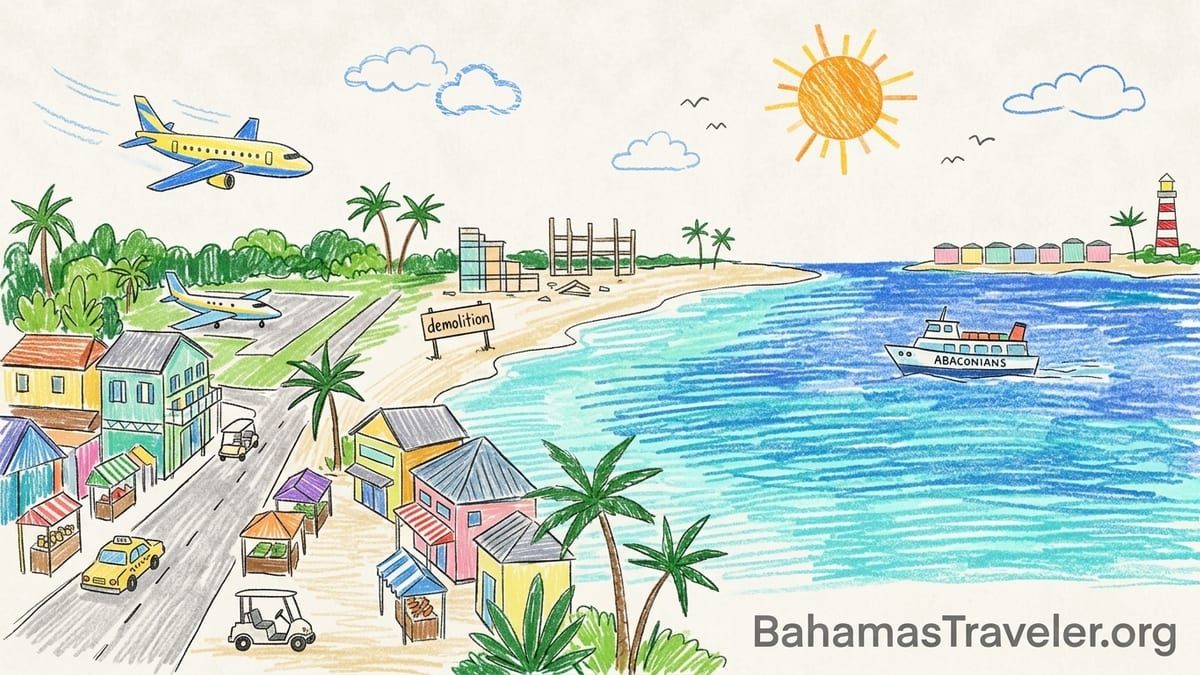
The trade-off is that the classic “big resort beachfront” storyline in Lucaya has changed. The Grand Lucayan complex, once the headline stay, stopped taking guests in October 2025 and the site has been in demolition and redevelopment planning since 2026. That matters because it shifts the center of gravity toward smaller hotels, marinas, and timeshares, and it changes what “staying in Lucaya” actually means for beach access and nightlife.
If I’m choosing Grand Bahama again, I would still stay in the Freeport and Lucaya corridor when the priority is easy logistics: short transfer from the airport, simple taxi rides, and a higher chance of finding an open restaurant after a travel day. The Port Lucaya Marketplace area remains the most practical base for walking to casual dinners, grabbing drinks without planning a full evening, and being close to tour operators. When you want the most frictionless version of Grand Bahama, this is the pocket that delivers.
Where I would be more selective is matching the hotel to the beach reality. Some properties are marina-forward or canal-forward, which can be perfect if you want water views and boat access but less perfect if you imagined stepping from your lobby onto sand. When I stayed in the Lucaya orbit, the best nights were the ones where dinner and a stroll were possible without a car, because Grand Bahama can feel very quiet after dark once you leave the Marketplace zone.
Grand Bahama beyond Lucaya: quieter coasts, fewer open doors, and the value of having wheels
On the nights I stayed away from the Lucaya core, I got the calm I expected and also the reality that quiet can quickly become isolated. The upside of calmer parts of Grand Bahama is obvious: less traffic, longer stretches of beach, and a sense that you are on an out-island even though you are still on a roaded, serviced island. The downside is that restaurants and grocery options thin out fast, and the “what’s open tonight?” question becomes part of your planning.
This is where the main-island logistics advantage still matters. Grand Bahama is one of the few places in the Northern Bahamas where you can rent a car and use it like you would at home: do a grocery run, chase a sunset, or commit to a specific dinner without needing a captain. When I stayed in a quieter area, the nights that worked best were the ones where I had transportation sorted in advance, because walking distances can be deceptive and there is not always a “strip” to wander.
In practical terms, staying outside the Lucaya area is a better match for travelers who want days built around beaches, fishing, diving, or boating, rather than travelers who want a guaranteed lineup of dining options. If you want evening atmosphere, Lucaya is still the safer bet. If you want to wake up to quiet, spend the day on the water, and be content with a smaller set of restaurant choices, the quieter zones can feel like a private version of the island.
What I’d choose again depends on the trip’s goal. For a first-time Northern Bahamas trip or a short weekend, I’d base myself closer to Lucaya simply to reduce friction. For a longer stay with a clear plan and a willingness to drive, quieter areas can be more restorative, and the beaches feel less “visited.”
Abaco: why Marsh Harbour is the logistics base, even if you don’t want to sleep there
Abaco is where the booking decision becomes a map problem. Marsh Harbour is the practical spine of the island chain: it’s where you’ll find the main airport access, more rental car options, more groceries, and the ferry and water-taxi connections that make the famous cays possible. When I used Marsh Harbour as a base, the trip felt efficient. When I treated it only as a pass-through, the trip felt more romantic, but it also demanded more planning.
The core reality is simple: if you want Hope Town, Man-O-War Cay, or Green Turtle Cay, you are signing up for boat time. Operators such as G&L Transportation run ferry service from the Marsh Harbour area to cays like Hope Town, Man-O-War Cay, Guana Cay, and Scotland Cay, and weather can cancel runs. That means “one more island” on Abaco is not just a taxi ride. It is a schedule, a dock, and sometimes a plan B.
Marsh Harbour’s strength is that it gives you options when plans change. If seas build, you can still eat, resupply, and reset without feeling stranded. It is also the place where last-minute practicalities are easiest: picking up groceries, handling errands, or arranging a charter. If you are traveling with kids, carrying a lot of luggage, or arriving on a later flight, sleeping in Marsh Harbour for the first night can be the stress-reducer that makes the rest of Abaco feel easy.
But Abaco’s magic is rarely in the busiest base. If you come for that “small settlement, pastel cottages, boats rocking at the dock” vibe, you will feel the difference the moment you move off the main island and onto a cay.
Hope Town vs Man-O-War Cay vs Green Turtle Cay: the cay decision that changes the whole trip
Hope Town on Elbow Cay is the Abaco stay I’d choose again when the goal is atmosphere. It’s the kind of place where evenings feel like part of the vacation: you hear masts in the harbor, you can walk to dinner, and the settlement has a distinct identity rather than feeling like an address. The trade-off is that you will use boat transfers as part of normal life. Even if your trip is smooth, you are thinking in ferry times and dock drop-offs, not in “I’ll just swing by later.”
Man-O-War Cay feels different. It’s quieter and more residential in tone, and it suits travelers who want a calm base and who like the idea of being in a small community rather than a visitor hub. On my overnight experience, what stood out was the sense of peace at night and the feeling that the island’s rhythm is not built around tourist foot traffic. The flip side is that you do not land there for nightlife. You land there because you want calm mornings, simple meals, and boat days.
Green Turtle Cay is the Abaco choice I’d make again for a “complete” trip that mixes beach time, a real village feel, and a straightforward connection from the mainland. One of the most useful logistics details I’ve seen spelled out clearly is the connection via Treasure Cay: from Treasure Cay International Airport, it’s a short taxi ride and then a scenic ferry ride across the Sea of Abaco, with published per-person pricing for both legs. That kind of clarity is gold in Abaco planning because it turns a multi-step arrival into something you can picture and time.
The booking truth is this: if you stay in Marsh Harbour, you will do day trips to cays and feel like you are commuting to the best parts. If you stay on a cay, your days start in the postcard setting, and your “quick errands” are what require extra effort. I prefer to sleep where I want to wake up. On Abaco, that often means taking the extra transfer and staying on the cay that fits your style.
Bimini: North vs South, and why your base decides your beach days
Bimini is the Northern Bahamas option that feels closest to the United States in a very specific way: you can reach it by high-speed ferry from Fort Lauderdale. Baleària Caribbean operates a Fort Lauderdale to Bimini route with an advertised sailing time of about two hours, arriving into Alice Town, which makes Bimini uniquely attractive for quick getaways and short overnight stays. The ferry’s schedule is not daily year-round, and their own guidance emphasizes arriving early to complete check-in and customs timing, so this is a trip where you plan around departure days rather than assuming you can go any morning.
When choosing where to sleep, North Bimini is where the major resort complex energy lives, while the broader island experience unfolds in smaller hotels and local spots around Alice Town and beyond. On my overnight stays, the main difference was not just price point. It was how much friction existed between me and what I wanted to do each day. If I wanted a structured resort day with pools, a marina scene, and the feeling that dinner would be easy, North Bimini worked.
South Bimini can feel more local and looser, but it also pushes you toward golf cart logistics sooner. Bimini is famous for being a “golf cart island” for a reason. Even when something looks close on a map, the heat and the timing of the day can make a cart feel essential. If you plan to beach-hop or chase specific restaurants, assume you’ll be renting a cart and learn where to refuel and where to park before you get hungry at night.
The other piece that affects your base is the evening atmosphere. Bimini can be lively in pockets, but it can also go quiet depending on the day-tripper flow and whether you are near a resort center. If you want an easy nightcap without strategizing, staying closer to the main activity area on North Bimini is usually the safer play. If your perfect evening is a low-key dinner and an early morning on the water, a quieter base can feel like the point.
The Berry Islands: Great Harbour Cay vs Chub Cay, and how “boat time” becomes the vacation
The Berry Islands are where the Northern Bahamas shifts again: smaller, more private, and more defined by marinas, fishing, and the idea of being away from it all. Great Harbour Cay is the Berry choice I’d happily repeat when I want an out-island feel with a touch more everyday functionality. The island has a well-known marina “hurricane hole” setup and is positioned as an easy hop by small plane from Florida or Nassau, which is the kind of access that matters when you are planning a short stay.
In Great Harbour Cay, I found the balance that many travelers want but do not always get in the out islands: quiet beaches, but not zero infrastructure. If you are staying near the marina area, you can build days around boats and beaches while still having a social anchor in the evenings. Some nights feel community-oriented rather than touristy, which can be exactly what you want when you came for a slower rhythm.
Chub Cay is a different promise. It is a resort and marina experience that leans into being a destination in itself, with customs and fuel services and a strong sportfishing identity. When I stayed there, the immediate takeaway was how much the marina becomes your “downtown.” You are not walking to a strip of independent restaurants. You are choosing to be on a property where your meals, boats, and sunsets are bundled into a contained experience.
So which would I choose again? Great Harbour Cay when I want to feel like I’m on an island with a small community and space to roam, and when I want my logistics to be easier once I arrive. Chub Cay when the trip’s purpose is the marina, the boating, and the feeling that I’m staying at a place built for anglers and boaters, not for casual wandering. In the Berry Islands, the amount of boat travel required is not a side note. It is the point, and it should be the lens for the booking decision.
The Takeaway
If you only remember one thing from my Northern Bahamas overnights, make it this: choosing the correct island and base is the core booking decision. Grand Bahama rewards you for staying where restaurants and services are walkable, because it can feel quiet quickly once you spread out. Abaco rewards you for sleeping on the cay you actually came to see, even if it adds a transfer, because the morning and evening atmosphere is the whole reason you traveled. Bimini rewards you for planning around ferry days and for picking a base that matches how you want to spend your nights. And the Berry Islands reward you for embracing boat travel as a feature, not a hurdle.
My repeat-stay list is built on real logistics: how quickly I could transfer from the airport or ferry, whether I could get groceries without burning half a day, whether dinner was a walk or a mission, and whether the evening vibe matched the trip I thought I was booking. The Northern Bahamas can be effortless, but only when you book with a map in one hand and a realistic daily routine in the other.
FAQ
Q1. Is Freeport or Lucaya the best base on Grand Bahama for first-timers?
For a first trip, Lucaya is usually easier because restaurants and casual nightlife cluster around Port Lucaya Marketplace and nearby marinas.
Q2. Is the Grand Lucayan still operating for overnight stays?
No. The Grand Lucayan stopped taking guests in October 2025, and the site has been in demolition and redevelopment planning since 2026.
Q3. Do I need a car on Grand Bahama?
If you stay outside the Lucaya core, having a rental car or a reliable taxi plan makes a big difference for groceries, beaches, and dinners.
Q4. Should I stay in Marsh Harbour or on an Abaco cay like Hope Town?
Marsh Harbour makes logistics easier for flights, groceries, and backup plans, but sleeping on a cay usually delivers the best atmosphere and beaches.
Q5. How do you reach Hope Town, Man-O-War Cay, or Guana Cay from Marsh Harbour?
They require ferry or water-taxi transfers from the Marsh Harbour area, and schedules can change or pause in windy weather.
Q6. What makes Green Turtle Cay easier than some other Abaco cays?
It has an established ferry connection from the mainland side, and published transfer details from Treasure Cay make planning more straightforward.
Q7. Can I reach Bimini from Florida without flying?
Yes. A high-speed ferry operates between Fort Lauderdale and Bimini, with an advertised sailing time of about two hours on scheduled days.
Q8. Is North Bimini or South Bimini better for an overnight stay?
North Bimini is better if you want resort-style ease and a concentrated activity zone; South Bimini can feel quieter but often increases the need for golf cart logistics.
Q9. Is Great Harbour Cay a good choice in the Berry Islands if I don’t have a boat?
Yes, but plan your flights and ground transport carefully. Once there, the marina area can serve as a practical hub for meals and meetups.
Q10. What’s the biggest difference between staying on Great Harbour Cay and staying on Chub Cay?
Great Harbour Cay feels more like a small island community with space to roam, while Chub Cay is more of a contained resort-and-marina experience built around boating.