


In the Northern Bahamas, where your day can swing from flat calm to a squally front in one lunch service, choosing the right marina resort is less about “nice-to-have” amenities and more about whether your trip works at all. I have learned this the expensive way: a beautiful room does not help if the slip is too shallow for your draft, if the approach is stressful after dark, if fuel is unavailable when you need to run out to the fishing grounds at first light, or if the showers are a post-storm afterthought. For this dedicated marina-first guide, I am focusing on the places I would personally choose again because I have either stayed as a marina guest or inspected the facilities dockside with the intention of returning by boat. I am also treating marina accommodation as the headline feature, not an add-on, because that is how the Northern Bahamas actually behaves when you are traveling by water.
Why Marina Accommodation Matters More Here Than In Most Of The Caribbean
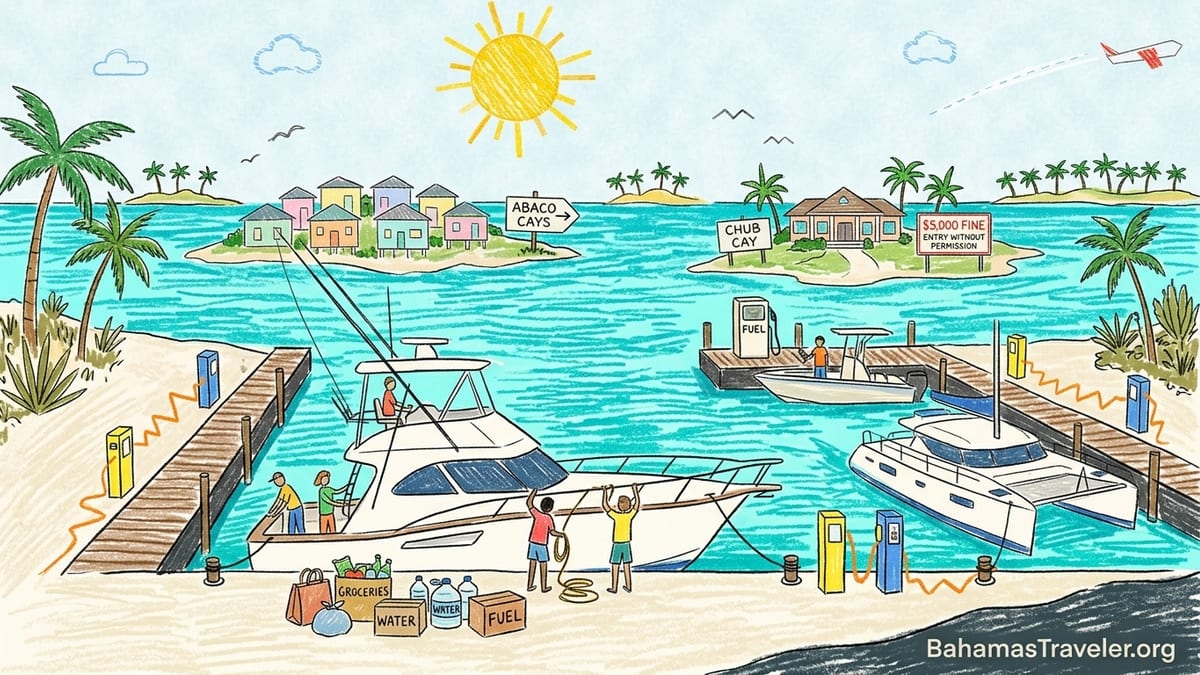
If you are cruising the Northern Bahamas, your boat is not just transportation, it is your daily logistics platform. The best marinas in this region win by making the routine tasks painless: clearing in, getting fuel, reserving a protected slip, plugging into reliable power, taking on water, finding ice and bait, doing a quick grocery run, and getting back out to the cays without burning daylight. When any of those steps gets complicated, the whole trip feels harder than it should.
The practical reality is that Abaco, Bimini, Grand Bahama, and Chub Cay each have different “friction points.” Abaco is about navigating cays, shallow banks, and provisioning. Bimini is about being a fast gateway from Florida and then living with a smaller-island supply chain. Grand Bahama can be a highly functional landfall for entry and services, but the on-the-ground experience varies dramatically between West End and Freeport. Chub Cay is about proximity to legendary fishing and deep water access, but it is also a private-island environment where procedures and permissions matter.
What mattered most in practice during my marina stays and inspections was not the marketing language. It was protection from wind and wakes, the quality and spacing of docks, whether the staff could actually take a line and communicate clearly on the radio, whether the marina’s “fuel available” claim held up on the day, and whether the walk from slip to shower to restaurant felt like a resort experience or a utility corridor.
Abaco: The Marina Network That Lets You Cruise Like A Local
Abaco is the Northern Bahamas region where marina accommodation most directly translates into freedom. The chain is built for day-hopping: you can tuck into protected harbors, wake up early, and run short legs to places that feel remote without being far away. I leaned into that rhythm by choosing marinas that made provisioning easy and departures fast, because the best Abaco days start before the afternoon breeze and end with an effortless docking.
Abaco Beach Resort & Boat Harbour Marina in Marsh Harbour is the classic “reset button” stop. I have stayed on property as a marina guest and I have also inspected the docks during busy turnover days, which is when you really see how a place runs. The marina is a 200-slip facility with a controlling depth of 9 feet, and it is set up to accommodate a wide range of vessels with 50-amp and 100-amp connections and multiple voltage options, including 480V availability. Slip reservations can be made by phone, email, or directly through the marina website, and the VHF working contact is through channel 16. Fuel hours vary by season, with the marina advising 8am to 8pm in high season and 8am to 5pm in low season, which is exactly the kind of detail you want to know before you plan an early run to the cays.
On the ground, Abaco Beach Resort felt like a true marina resort rather than a marina with rooms attached. That difference shows up in small things: how close the resort dining is to the docks, how easy it is to coordinate with concierge for charters or a local run, and whether the marina environment is comfortable enough that you would actually choose to stay dockside for a night instead of pushing on. The property also offers structured day-use options that can be useful for smaller boats doing errands or picking up guests, including half-day dockage pricing for certain vessel categories and a food-and-beverage voucher option for boats up to a stated size. It is a practical example of how Abaco marinas often function as community hubs for boaters, not just overnight parking.
For a more out-island marina resort feel, I have used and inspected the Green Turtle Club Resort & Marina on Green Turtle Cay, and it is exactly the kind of place I go back to when I want quieter nights but still want professional docks and a clean resort experience. The marina notes a newly dredged deep channel into White Sound with a controlling depth at mean low tide of 7 feet, and it can accommodate vessels up to 130 feet with 30/50/100-amp service and water. What I love here is how quickly you can transition from docking to actually enjoying the cay: golf carts are right in the complex, and the short ride into New Plymouth turns “we need groceries and ice” into a pleasant afternoon instead of a chore. The marina also publishes 2026 dockage rates, which is valuable for planning: standard slips are listed at $2.75 per foot in low season (November to February), $3.50 per foot in high season (March to August), and $4.25 per foot in peak season (June to July), with premium slips priced higher.
Marsh Harbour As A Base: Reservations, Provisioning, And The Reality Of Turning The Boat
Marsh Harbour is where Abaco boating becomes operationally easy, and it is also where you can lose time if you do not plan. I used it as a “turn the boat” base: fuel, water, groceries, and a quick reset before heading back out. The best part is that you can make your marina reservation and then keep your next few days flexible, because once you are provisioned in Marsh Harbour you can run to the surrounding cays without having to constantly chase supplies.
One marina I have used and also inspected specifically with slip logistics in mind is Marsh Harbour Marina, because it publishes effective dates and pricing that make it easier to build a real budget. Its rates page lists pricing effective April 1, 2026, with rates based on a 25-foot minimum and priced per foot per day. Even when you do not choose to stay there, seeing a marina present its pricing clearly is helpful when you are comparing Abaco’s mid-range dockage against resort-style dockage elsewhere in the Northern Bahamas.
In practice, what mattered most to me in Marsh Harbour was grocery and ice access, plus the ability to leave early. If your goal is to reach the cays when the light is good and the water is calm, you want a marina where check-out does not turn into a bottleneck. The marina resort stays that I would choose again are the ones where the staff treated departures like part of the service: quick line handling, clear communication, and no drama when the harbor is busy.
Abaco is also where wind protection becomes a deciding factor. When a front pushes through, you want a slip with real shelter, not a pretty dock that is exposed to a long fetch. Abaco’s best marina resorts succeed because they pair a functional harbor with a human-scale resort environment, so you can wait out a blow without feeling trapped on a dock.
Bimini: The Fast Gateway That Rewards Good Dock Planning
Bimini is the “easy yes” for boaters crossing from Florida, but it is also the place where marina accommodation choices can make or break your first 24 hours in The Bahamas. You are often arriving after a crossing window, sometimes tired, sometimes with weather building, and you want the simplest possible sequence: approach, dock, clear in, eat, sleep. For that, I have stayed and inspected at Bimini Big Game Club Resort & Marina in Alice Town, and it remains one of the most operationally transparent marinas in the region for transient boaters.
Bimini Big Game Club publishes an unusually detailed rate card that is actually usable for trip planning. Daily slip rates are seasonal and differentiated by slip type, with a 30-foot minimum charge. Fall to winter rates (September 1 to March 31) are listed at $2.75 per foot for non T-head slips and $5.25 per foot for T-head and catamarans. Spring to summer rates (April 1 to August 31) are listed at $4.95 per foot for non T-head slips and $5.95 per foot for T-head and catamarans. It also publishes monthly rates by season and separate published charges for electricity, water (priced per foot with a minimum), and a marina levy. I have found that kind of clarity rare in the islands, and it makes Bimini Big Game Club a strong choice when you are trying to keep dockage costs predictable.
From a practical standpoint, Bimini Big Game Club’s biggest advantage is clearance convenience. The marina states it hosts an on-property Bahamas Customs office, with Immigration nearby across the street, and it publishes landing dock fees for vessels that want to use the customs landing slips without a deposit and confirmed reservation. That matters because Bimini arrivals can stack up, and a marina that is set up for clearance reduces stress and reduces the time your crew spends standing around in the heat.
The key operational caveat I always plan around in Bimini is fuel. Bimini Big Game Club’s own resort FAQ and marina review pages indicate that it does not sell fuel at its marina, with fuel available nearby at another facility. Because fuel availability is the difference between a comfortable fishing run and a cautious day, I treat this as a “confirm day-of” item. If your plan is to arrive, clear, and then immediately run offshore or head onward toward another island chain, you need to build in the time to fuel elsewhere. The good news is that Bimini’s compact geography makes that realistic. The bad news is that it adds a step right when you might want fewer steps.
Grand Bahama: West End Versus Freeport, And Why The Choice Changes Your Trip
Grand Bahama can feel like two different boating destinations. West End is about being close to Florida and having a straightforward landfall. Freeport is about services, supply chain, and a more developed marina ecosystem. When I am choosing marina accommodation here, I focus on what I need next: a quiet overnight after crossing, or a more full-service reset with fuel and provisioning.
Old Bahama Bay Resort & Yacht Harbour in West End is the resort-style landfall that many boaters recognize immediately, and I have inspected the marina and the resort facilities specifically with “first night after crossing” in mind. The marina itself emphasizes its proximity to Florida and the fact that it is a practical haven for transient and long-term guests. It also notes that dockage-only reservations staying aboard are subject to a $20 per night resort fee, which is the kind of line item that can surprise boaters if they are not expecting it. For approach planning, the marina’s own information highlights a daylight approach cue: a tall striped water tower that can be seen from miles out, which matches how many captains visually identify West End on arrival.
If you want a more clearly published, utility-forward marina option on Grand Bahama, Grand Bahama Yacht Club in Freeport is a strong example of a marina that puts the numbers on the table. Its rates page is dated August 2, 2026, and it publishes daily, weekly, monthly, and longer-term dockage rates per foot, including a dedicated category for catamarans. It also publishes electric billing by foot per day and water billed per day by vessel size category. Importantly for entry logistics, it publishes entry fee information by vessel size and term, including what the entry fee covers and how additional people are charged beyond the included allowance. I appreciate that level of transparency because Grand Bahama is a place where you may be coordinating guests, crew, and onward travel, and it helps to know costs before you arrive.
In practice, Grand Bahama boating is often about what you do next morning. If you are pushing to Abaco, you care about an efficient departure and access to fuel. If you are staying on island, you care about the resort environment, dining, and whether the marina feels like a protected basin or an exposed parking lot when the wind turns. West End can be ideal for a short stop, but Freeport often feels more “serviceable” if your trip plan includes repairs, a larger provisioning run, or anything that depends on a more robust supply chain.
Chub Cay: A Legendary Fishing Base With Non-Negotiable Procedures
Chub Cay is one of those stops that boaters talk about like a rite of passage, and for good reason: you are close to deep water, close to serious fishing, and positioned for the kind of early-morning runs that define the Northern Bahamas for anglers. I have inspected the marina operations and procedures carefully because this is not a casual pull-in destination. It is a private island club environment with strict arrival rules, and understanding them is part of having a good trip.
Chub Cay Resort & Marina is explicit that access to fuel, customs clearing, and the marina is not walk-up and not automatic. Before entering, you must follow arrival procedures, make contact, and obtain written permission. The marina also states that vessels may not proceed past the fuel dock into the marina without a slip reservation, and it lists an Unauthorized Fee of $5,000 for entering, docking, mooring, or remaining without prior written permission. That sounds intense until you see it as a clarity advantage: there is no ambiguity about expectations, and that reduces the “we thought it would be fine” problems that can ruin a day.
For services, Chub Cay states that fuel and Bahamas customs clearance are available daily from 7am to 7pm, subject to procedures. It also notes that non-members may take on diesel and gasoline at the fuel dock during those hours, along with water, ice, and frozen bait, with prices posted daily by the dockmaster. This is exactly what makes Chub Cay so useful as a boating base: you can clear in, fuel, and set up for fishing without having to bounce to another island for basics. It also states that vessels may not remain at the fuel dock overnight between 7pm and 7am, which matters if you arrive late or if the weather slows you down.
Chub Cay is also the region where vessel limits and marina services need to be confirmed in advance. Third-party listings describe the marina as having modern floating dock infrastructure with common shore power options, but the most important details for a transient boater are the things Chub Cay itself emphasizes: permissions, arrival windows, and what non-members can and cannot do beyond the fuel dock and clearance. When your trip plan depends on staying on the island, this becomes even more important because access to island facilities is tightly governed. The upside is that if you do it right, you are positioned for some of the most productive fishing water in the Northern Bahamas with minimal morning transit.
Comparing The Boating Experience: Abaco Vs Bimini Vs Grand Bahama Vs Chub Cay
Abaco is the best choice when your ideal day is “wake up protected, short run to a cay, swim, snorkel, beach, sunset, repeat.” The marina resort advantage here is proximity to cays and the ability to provision once and then cruise lightly. Docks and depths matter because you are often navigating shallower areas and you may be tying up in smaller out-island settings. If you are the kind of boater who wants variety without long passages, Abaco rewards that style.
Bimini is the best choice when speed and simplicity of crossing matters. It is close to Florida, and that means more frequent crossing windows and the ability to do shorter trips. The trade-off is that you may have to plan around limited on-site fuel at certain marinas and you may feel the constraints of a smaller island supply chain. If you want to clear in quickly and then spend your time fishing, diving, or beaching without committing to a long multi-island itinerary, Bimini excels.
Grand Bahama is the best choice when you want a robust landfall with a mix of resort comfort and city-level services, depending on where you dock. West End is about a quick landfall and a relaxing resort atmosphere after the crossing. Freeport is about a full-service marina environment and the kind of pricing and services transparency that helps when you are managing a larger vessel or a more complex itinerary. Your marina accommodation choice here should be driven by what you need next, not by what looks best in photos.
Chub Cay is the best choice when fishing grounds and deep water access are the priority and when you are comfortable with structured procedures. It is not the place I recommend for casual “we will see where we end up” cruising. It is the place I recommend when you want to set up properly, comply with arrival rules, and then enjoy the payoff: being positioned for early runs and big days on the water. In practice, the best Chub Cay trips feel effortless only because the planning is done in advance.
The Takeaway
If I were booking my own Northern Bahamas boating trip again, I would choose marina resorts based on three questions: Can I approach and dock with low stress, even when the weather is not perfect? Can I reliably get fuel, power, water, showers, and clearance support when I need them? And can I reach the cays or fishing grounds quickly enough that I am spending my best hours on the water instead of handling logistics?
For Abaco, I would base at Abaco Beach Resort for the full-service 200-slip setup and easy access to Marsh Harbour logistics, then move to an out-island marina resort like Green Turtle Club when I want a quieter, more local rhythm and a quick run to beaches and reefs. For Bimini, I would still pick Bimini Big Game Club when clearance convenience and published pricing matter most, but I would build my plan around confirmed fuel access nearby. For Grand Bahama, I would choose West End for a true first-night resort landing, or Freeport at Grand Bahama Yacht Club when I want published rates, full-service marina operations, and a more serviceable base. For Chub Cay, I would go only when I am ready to follow the rules precisely and I want the fishing-first position that makes the Berry Islands so compelling.
In the Northern Bahamas, a good marina resort is not just a place to sleep. It is the infrastructure that lets you be spontaneous on the water, because the unglamorous details are already handled.
FAQ
Q1. Do I need to reserve slips in advance for Abaco and Bimini during peak season?
Yes. In Abaco and Bimini, peak holiday and winter windows can sell out, and advance reservations reduce arrival stress and improve slip selection.
Q2. Can I clear Bahamas Customs and Immigration at Abaco Beach Resort Marina?
Yes. The marina states that boaters can clear customs and immigration directly at the marina, making it convenient as a first stop in Abaco.
Q3. What is the controlling depth at Abaco Beach Resort & Boat Harbour Marina?
The marina states a controlling depth of 9 feet, which is helpful for deeper-draft sportfish and larger cruising boats planning Abaco.
Q4. Does Bimini Big Game Club sell fuel at the marina?
No. Its published resort FAQ and recent marina reviews indicate it does not sell fuel at the marina, with fuel available nearby at another fuel dock.
Q5. What are typical daily slip rates at Bimini Big Game Club Resort & Marina?
The marina publishes seasonal daily rates with a 30-foot minimum charge, including fall to winter pricing starting at $2.75 per foot for non T-head slips.
Q6. Is Grand Bahama Yacht Club a designated port of entry?
Yes. It presents itself as a full-service marina and designated port of entry in Freeport, with published entry fee information by vessel size.
Q7. Does Old Bahama Bay charge extra fees if you stay aboard your boat?
Yes. Its marina information notes a $20 per night resort fee for dockage-only reservations when guests stay aboard their boat.
Q8. Can transient vessels get fuel and clear customs at Chub Cay?
Yes, with procedures. Chub Cay states customs clearance and fuel are available daily from 7am to 7pm, but arrival procedures and written permission are required.
Q9. Can I enter Chub Cay Marina without a slip reservation just to look for space?
No. Chub Cay states you may not proceed past the fuel dock into the marina without a slip reservation and written permission.
Q10. Which region is best for easy day-hopping to nearby cays?
Abaco is generally the best for short runs between protected anchorages, cays, and small settlements, especially when you base near Marsh Harbour and then move outward.