


The biggest Bahamas booking mistake I see (and have made myself) is treating “The Bahamas” like one destination and choosing a hotel first. On my own trips, the property mattered less than the island and the exact area I slept in, because that decision dictated everything: whether I could walk out for dinner, how much time I lost to airport transfers, whether groceries were an easy run or a half-day mission, and whether I felt like I was vacationing freely or living inside a resort bubble. I’ve stayed overnight across Nassau and its main resort zones, plus several Out Islands that travelers often lump together even though they function totally differently. Here’s the island-first breakdown I wish I’d had before I booked, written from the point of view that matters most at check-in: what staying there actually meant once the sun went down and I still needed to eat, move, and plan the next day.
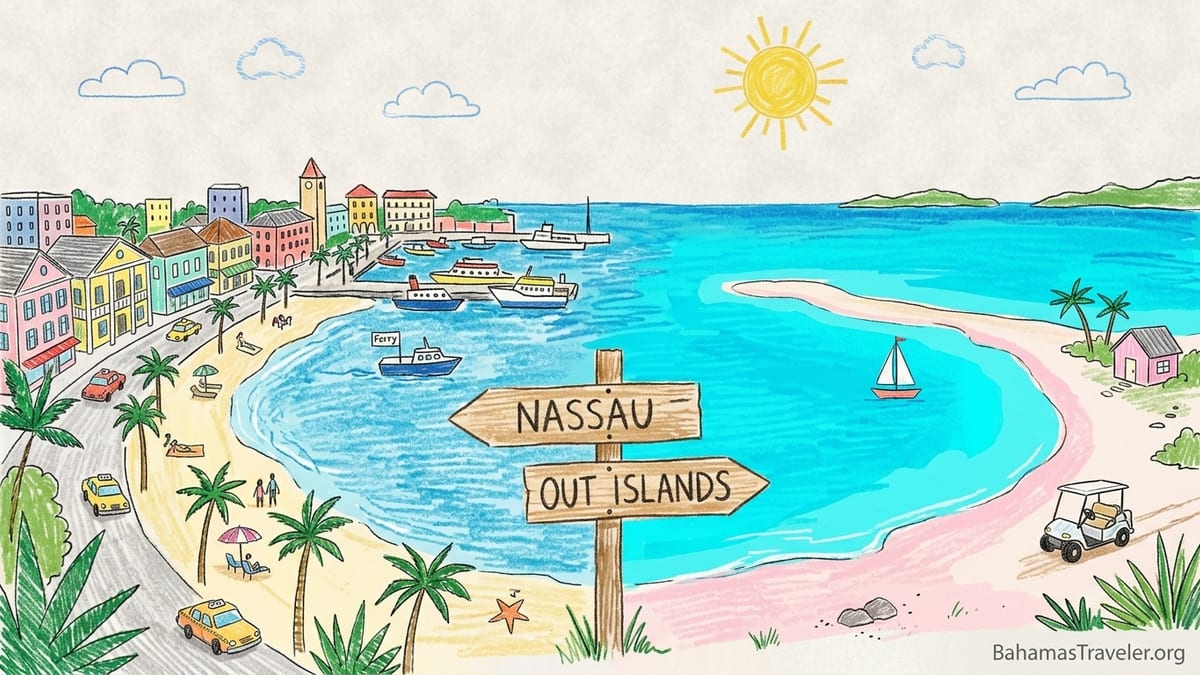
Which island should you sleep on first? My decision rule after multiple stays
If you want the easiest trip with the fewest moving parts, sleep on New Providence (Nassau) first, even if you plan to end in an Out Island. Nassau is where flight options concentrate, where late-arriving flights are least stressful, and where a “bad travel day” is recoverable because you still have restaurants, pharmacies, and real transportation at night. On my trips, starting in Nassau protected my vacation from airline delays and from the domino effect of missing the last connection to a smaller island.
If your Bahamas dream is specifically pink sand, sandbars, and quiet mornings, then the Out Island choice should come before the hotel choice. The practical reality is that many Out Island stays feel incredible when you’re there, but they are less forgiving with logistics: fewer flights per day, fewer late-night food options, and more “you need a plan” transportation. For example, there are nonstop flights each week from Nassau to Great Exuma (George Town area) on Bahamasair and Western Air, but you still have to align your travel day with limited schedules compared to Nassau’s steady flow.
My ideal repeat itinerary is a split stay: 2 to 3 nights in Nassau (usually Cable Beach for the easy dining and beach rhythm), then 3 to 6 nights on one Out Island based on your priorities. I’ve also done the reverse (Out Island first), and it felt riskier: if I landed late or weather shifted, I could end up burning a valuable resort night waiting for a connection that simply wasn’t happening until tomorrow.
Nassau and Cable Beach: the stay that felt the least “trapped”
Cable Beach is where I’ve felt the most like I could live a normal, enjoyable routine in the Bahamas instead of being managed by a resort schedule. I could wake up, get to the water quickly, and still have the option to leave my property for dinner without it becoming a negotiation with taxis and timing. Beach access here is straightforward, and the shoreline vibe is busy enough to feel energized but not so chaotic that every outing feels like an “event.”
The real advantage, though, is what happens after beach time. Staying around Cable Beach made it easier to do practical errands that become surprisingly important on a weeklong trip: grabbing snacks, picking up sunscreen you forgot, restocking water, and keeping the trip within budget by not buying every single thing from a resort bar. On nights when I didn’t want a big production, I could still find dinner without feeling like I was leaving my whole evening to chance.
Transportation felt predictable. Nassau taxi rides aren’t “cheap,” but Cable Beach didn’t force me into constant toll crossings or boat transfers to get anywhere. When I did want a bigger night out, it was realistic to plan dinner or a casino visit and still be back without feeling stranded. If you’re the kind of traveler who likes flexibility, Cable Beach is the Nassau area I’d choose again because it let me mix resort comfort with real-world convenience.
Paradise Island: iconic, polished, and easy to isolate yourself without meaning to
Paradise Island is the Bahamas stay that can feel like a destination inside the destination. The biggest emotional difference for me was how quickly it’s possible to slip into a self-contained routine where you eat, drink, and entertain yourself entirely within the resort zone. That can be exactly what you want for a short, celebratory trip. But on longer stays, I noticed the bubble effect: leaving for dinner, local sightseeing, or even a change of scenery required more intentional planning than it did from Nassau’s more practical areas.
Logistically, Paradise Island is connected to Nassau by two bridges, and there are pedestrian sidewalks on the bridge. That sounds simple, but in practice most travelers still use taxis, especially at night or in humidity, and that’s where the friction shows up: you start mentally weighing each crossing, and suddenly you’re eating where you are rather than where you actually want to be.
I also learned not to underestimate airport transfer psychology here. After landing at Nassau’s main airport, getting across to Paradise Island is a separate step that can feel minor on paper but feels bigger when you arrive tired, especially if you’re juggling bags, kids, or a late arrival. Paradise Island is a great “book it and relax” base. It’s just not the base I’d choose if my personal goal was to experience the Bahamas beyond the resort footprint every single day.
Exuma (Great Exuma): stunning water, but you need a transportation plan or you’ll feel pinned down
Exuma is where the water scenery felt the most like the Bahamas fantasy: bright shallows, quick “wow” moments, and day tours that genuinely look like the photos. The trade-off is that Great Exuma rewarded planning. When I stayed there, the best days were the ones where I had transportation sorted early and knew where I was sleeping relative to the next day’s boat tour check-in point.
From a current logistics standpoint, Exuma is reachable by air and by scheduled ferry depending on the day and operator. That matters because Exuma isn’t an island you want to “wing” after dark. If you arrive later than planned, the on-the-ground options narrow fast: not every part of the island has a dense cluster of restaurants, and some areas feel quiet enough at night that you’ll wish you’d already bought groceries and water.
Where I most regretted my own choices in Exuma was distance from what I had already paid for: a boat day. In the Bahamas, a “9:00 a.m. departure” often really means “you should be there early, calm, and ready.” If you’re far from the dock, you end up paying in stress or in taxi time and cost. The Exuma lesson I now follow is simple: book your sleep location around the tours you plan to do, not the other way around. And if you want to avoid feeling trapped at a resort, plan at least one grocery run early in the stay so dinners don’t become “whatever is closest right now.”
Eleuthera and Harbour Island: my favorite mix of beauty and character, with one big catch
Harbour Island delivered the most “this is why I came” beach feeling for me: the sand, the color, and the small-town charm that makes you slow down. It also delivered the most distinctive transportation reality: you do not casually “walk everywhere” the way you might in a compact city. This is a golf-cart place, and once I embraced that, the stay made sense.
On a repeat trip, I’d budget for a golf cart like it’s part of the accommodation cost, not an optional add-on. Recent rental pricing I’ve seen advertised by Harbour Island operators puts common daily rates in the neighborhood of about $90 per day for a 6-seater cart, with some companies showing higher daily numbers depending on the cart type and season. That matches what it felt like on the ground: golf carts are essential, and you pay for the freedom. The upside is that the island becomes effortless once you have wheels. The downside is that if you try to “save money” by skipping the cart, you may accidentally make the trip smaller than it should be.
The other catch is the multi-step arrival. Many travelers route via North Eleuthera and then use a short water taxi hop to Harbour Island, while others use the fast ferry from Nassau depending on the day and weather. That connection is the part I’d plan most carefully, because a missed ferry or delayed flight isn’t just a nuisance. It can turn into a lost night, and on Harbour Island that stings. My Harbour Island rule is: don’t book an arrival day that’s tight on connections, and don’t stay so far from your intended docks and water taxi points that you turn every transition into a paid transfer.
Grand Bahama (Freeport): the easiest “quick escape” island, especially if you’re coming from Florida
Grand Bahama felt like a practical Bahamas trip: wide roads, straightforward transportation, and a sense that the island is set up to move people efficiently. It’s also one of the clearest examples of why “getting there” changes the entire stay. Grand Bahama has both flight connectivity and a major ferry link from Florida, which can make it the most convenient island for a short vacation if you don’t want to route through Nassau at all.
On current schedules, Baleària Caribbean operates a Fort Lauderdale to Freeport route with published routes and schedules. Even if you don’t end up taking the ferry, simply having that option tends to shape the island’s travel ecosystem: transfers, day tours, and weekend travel patterns feel built around short-stay visitors.
For my own style of travel, Grand Bahama worked best when I treated it like a base for activities rather than a “hideaway.” It’s a good island if you want to get out on the water, book organized excursions, and still return to a setup where dinner and errands don’t require a scavenger hunt. If your ideal Bahamas is remote and whisper-quiet, this may not be the emotional match. But if your priority is to minimize stress and maximize time actually doing things, Grand Bahama is one I’d happily sleep on again.
Abaco: best when you commit to the boating-and-cays rhythm, not when you try to do it like Nassau
Abaco is the Bahamas stay that made the most sense once I aligned my expectations with what the islands are known for: cays, harbors, and that boat-centered, mariner vibe. When I tried to treat Abaco like a standard resort beach vacation, I found myself constantly comparing it to Nassau and feeling like I was “missing” the big-city convenience. When I committed to the Abaco rhythm, the stay clicked.
What staying in Abaco actually meant, day to day, was planning around water access and dock proximity. If your accommodation is too far from where you want to depart for cays and snorkeling, you can end up spending your mornings in transit rather than on the water. That sounds obvious, but it’s the most common self-inflicted wound in Out Island planning: you pick a pretty property, then realize your best experiences launch from somewhere else.
Inventory and access matter here, too. Abaco’s visitor flow often centers around Marsh Harbour for air access, then fans out via ferries, water taxis, and charter boats to the smaller cays. The practical traveler takeaway is: Abaco rewards travelers who love harbors, boat days, and a bit of planning. If you want spontaneous nightlife and easy, late-night dining without thinking, it’s not the most forgiving choice. If you want a Bahamas trip that feels nautical and local, it’s a strong one.
The Takeaway
If you’re choosing one island to sleep on with zero second-guessing, Nassau is the safest first base because it absorbs delays and gives you the most flexible mix of beaches, restaurants, and transportation. Within Nassau, Cable Beach is where I felt least trapped and most able to “walk out” into a normal dinner plan, while Paradise Island is the choice if you want a polished, all-in-one resort universe and don’t mind how easy it is to stay inside it.
If you’re choosing the island that delivered the most memorable, I-can’t-believe-this-is-real days for me, it’s the Out Islands, but each one comes with a distinct logistics personality. Exuma is the water-and-tours dream with a real need to stay close to your departure points. Eleuthera and Harbour Island are the pink-sand, golf-cart, small-town fantasy that rewards careful connection planning. Grand Bahama is the convenient, activity-friendly choice that can be reached by both air and Florida ferry schedules. Abaco is the best fit when you want to live in the harbor-and-cays world and build your stay around docks and water time.
What I’d do again, and what I recommend to friends making a booking decision, is splitting the trip: start with Nassau to stabilize logistics, then pick one Out Island to match your travel personality. Island selection isn’t step two. It’s step one, and everything else gets easier when you treat it that way.
FAQ
Q1. If I can only sleep on one island, which is the safest choice for logistics?
Nassau (New Providence) is the safest single base because it has the most flight options, the easiest transfers, and the widest spread of restaurants and services.
Q2. Is Cable Beach or Paradise Island better if I want to leave my resort for dinner?
Cable Beach generally felt easier for casual dinners and errands, while Paradise Island can feel more self-contained and often pushes you toward taxis for off-property nights.
Q3. Can I walk between Nassau and Paradise Island?
Yes. The bridge has pedestrian sidewalks, but many travelers still prefer taxis at night or in heat, especially if they’re dressed for dinner or carrying bags.
Q4. Is Exuma realistic without renting a car?
It can be, but you’ll need a plan. If your hotel is not near your tours’ departure points, relying only on taxis and transfers can add cost and stress quickly.
Q5. Is there a ferry from Nassau to Exuma?
There is scheduled ferry service sold by Bahamas Ferries on certain days and seasons, but it’s not the kind of service you should assume runs like a subway timetable. Check the operator schedule before you lock hotels.
Q6. How do you actually get to Harbour Island?
Most travelers fly into North Eleuthera and then take a short water taxi to Harbour Island, or they take the fast ferry from Nassau when it’s operating on their dates.
Q7. Do I really need a golf cart on Harbour Island?
In my experience, yes if you want freedom. Current advertised rates commonly land around $90 per day for a 6-seater cart, with variations by cart type and season.
Q8. What’s the easiest Out Island for a short trip from Florida?
Grand Bahama is one of the easiest because Freeport is reachable by flights and by the Fort Lauderdale to Freeport ferry route on Baleària Caribbean schedules.
Q9. Is Abaco a good choice if I want nightlife?
Abaco is better for a harbor-and-boat rhythm than for nightlife. If nightlife is a top priority, Nassau tends to be the more reliable base.
Q10. Should I split my trip between Nassau and an Out Island?
If you have a week or more, I’d do it. Starting in Nassau reduces missed-connection stress, and ending on an Out Island gives you the quieter, more memorable “postcard Bahamas” finish.