


On paper, Mayaguana looks like the Bahamas that many travelers dream about but rarely find. Official tourism descriptions call it one of the country’s most isolated and least developed islands, a place of footprint-free beaches and quiet fishing settlements where time moves slowly and visitor numbers stay low. That marketing is not wrong. What it does not fully spell out is how that seclusion feels in practice when you are the one booking the flight from Nassau, paying island prices, trying to find dinner after 8 p.m., or figuring out how to reach the best beaches without your own wheels. This article walks through a realistic, research-based version of that journey, from Nassau to Mayaguana and back, to help you decide if the island’s solitude suits you or will drive you crazy by day three.
Getting to Mayaguana: Rare Flights and Tight Connections
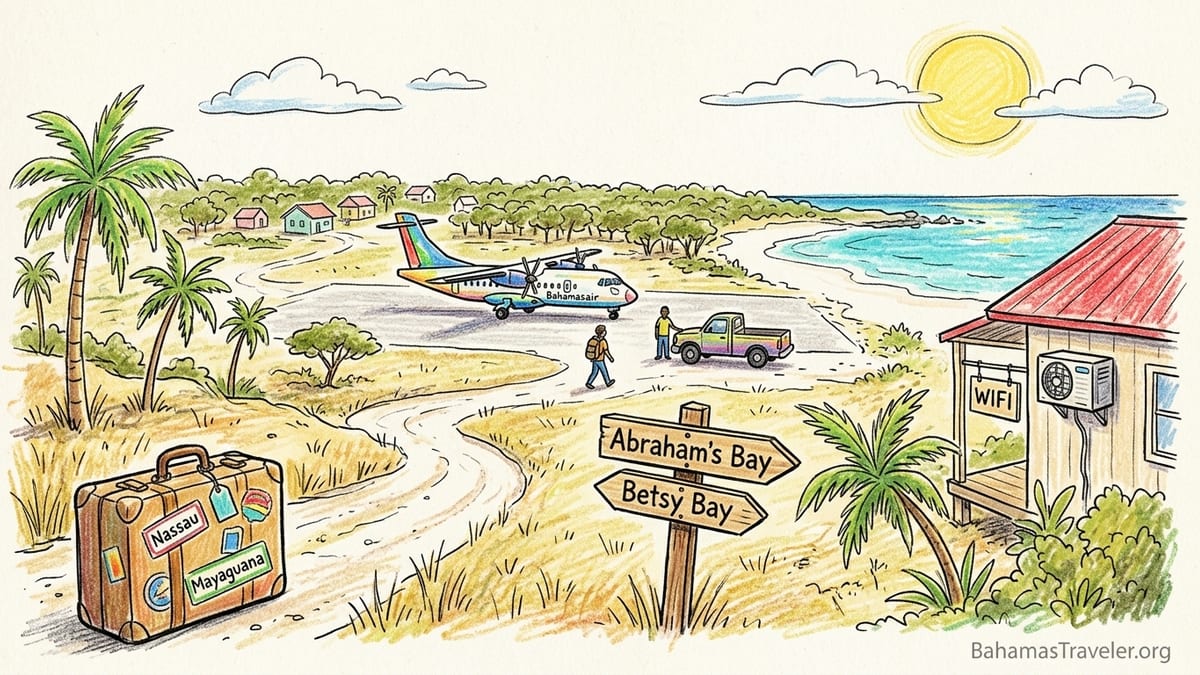
Reaching Mayaguana is the first signal that this is not a casual side trip. As of October 2026, Bahamasair lists Mayaguana’s Abraham’s Bay Airport as one of its domestic destinations from Nassau, with flights typically operated only a couple of days a week, often on small ATR aircraft. Public schedules show at least one direct Nassau to Mayaguana service, with flight times around one hour and thirty to fifty minutes and frequencies commonly clustered on Tuesdays and Fridays. In practical terms, that means a visitor trying to connect from North America or Europe has to build their entire itinerary around those limited days. Miss the outbound flight from Nassau and you may be waiting several days for the next chance to leave the capital.
On recent search checks, one-way fares on Bahamasair for Nassau to Mayaguana in high season often appeared in the range of approximately 160 to 260 US dollars before luggage and taxes, though exact prices fluctuate by date and advance purchase. Compared with the shorter, more frequent hops from Nassau to places like Exuma or Marsh Harbour, you are paying a similar or higher price for a much less flexible route. Travelers with long-haul international flights into Nassau need to build in a protective overnight stay in the capital rather than counting on same-day connections, especially during the summer storm season or late-year cold fronts, when strong crosswinds or heavy rain can disrupt schedules.
Coming home, the limited Nassau service creates another pinch point. If weather or operational issues delay the Mayaguana flight and you have an onward same-day ticket back to Miami, New York or London, the risk of misconnection is very real. In interviews and informal trip reports from other out-island routes, travelers often describe being rebooked a day or more later when a domestic flight is canceled. That may be an inconvenience in Nassau, where hotels are plentiful, but in Mayaguana it can mean extending a stay on an island with essentially no last-minute accommodation options and no guarantee of extra supplies. For anyone with tight vacation windows or work obligations immediately after travel, the infrequent schedule is a serious planning factor, not a minor detail.
All of this shapes your mindset long before landing. Rather than a spontaneous island hop, Mayaguana is a trip you commit to like an expedition: you set buffer days, accept that your outbound and return dates are largely fixed by the airline schedule, and understand that weather or mechanical issues could mean unexpected extra nights far from home.
First Impressions: Expectations Versus Reality on Arrival
Tourism photographs of Mayaguana tend to emphasize empty white sand bays, turquoise shallows and the soft light of late afternoon, with perhaps a small fishing skiff anchored just offshore. Those images are accurate in the narrow sense that such scenes do exist, especially near Abraham’s Bay and Betsy Bay, but they glide over the visual and practical reality of landing on a sparsely populated island with only a few hundred residents. Mayaguana Airport is a small facility outside Abraham’s Bay, often serving just the Bahamasair flight and occasional private aircraft. Stepping off the plane, you will not see rental car kiosks, taxi queues under branded awnings, or resort reps holding printed signs. Instead, you may find a couple of local drivers waiting because they know when the plane arrives, and a scatter of relatives greeting returning residents.
Before traveling, accommodation websites can foster an impression of rustic charm blended with comfort. Listings for small guesthouses or lodges usually show their very best room angle: fresh curtains, polished tile floors, a sea view from a balcony, perhaps a hammock strung between two palms. Descriptions often promise air conditioning, Wi-Fi, home-cooked seafood and “steps from the beach.” From afar, it can be easy to read that as comparable to a modest out-island resort on Exuma or Eleuthera. The reality is more basic. On Mayaguana, properties are typically family-run houses or simple lodges with a handful of rooms. Furnishings may be mismatched or older than the photographs suggest, linens and towels are practical rather than plush, and maintenance can lag in a salt-heavy climate where every hinge, lock and air-conditioning unit is under constant stress.
The quiet hits you quickly. Once the plane departs, the soundscape is mostly wind, waves in the distance and the occasional motorbike or pickup on the main road. There are no crowds in the streets, no vendors circling the airport car park, no resort shuttles cycling every fifteen minutes. If you arrive with the expectation of a small but busy beach town, this can feel almost unsettling. If your ideal is a sparsely inhabited island with more goats than visitors, the first hour on the ground may feel like you have finally arrived where you always wanted to be.
That contrast between marketing imagery and lived experience is important for planning. Mayaguana is not a cheaper, quieter version of Nassau or Exuma. It is something else entirely: an inhabited, working Bahamian community that happens to have extraordinary coastline and almost no tourism infrastructure.
Staying on the Island: Rooms, Air Conditioning and Internet
Published hotel directories from the Bahamas Ministry of Tourism show only a very small number of licensed accommodations on Mayaguana, often totaling just a few dozen rooms across the entire island. That alone changes the planning calculus. You are not choosing between a dozen resorts; you are choosing between perhaps one or two viable options in your price bracket, and you may need to coordinate directly by phone or email rather than relying on large booking platforms. During peak bonefishing or holiday weeks, it is realistic to assume that demand from repeat guests could soak up most available rooms.
Room quality on Mayaguana, based on descriptions from recent travelers and what can be observed in property photos, tends to be functional rather than stylish. Think tiled floors that are easy to sweep of sand, basic wooden or rattan furniture, ceiling fans and wall-mounted air-conditioning units. Air conditioning is often available, but power costs in the Bahamas are high, and systems may be older. That can mean louder compressors, less efficient cooling and the occasional overnight outage if island power drops. In practice, visitors have reported sleeping comfortably but not always achieving the “chilled hotel room” standard you might expect in Nassau or a major resort island.
Internet access illustrates the infrastructure gap even more sharply. While several Mayaguana guesthouses advertise Wi-Fi, connectivity relies on the island’s limited telecom backbone. Speeds are often enough for messaging and basic browsing but can become inconsistent or very slow during peak demand or bad weather. Video calls for remote work, large file uploads or streaming high-definition movies are likely to be frustrating or impossible. In comparison, a mid-range hotel on New Providence or a more developed out island will often have dedicated business-grade connections and troubleshooting support. Travelers who must remain connected for work should not count on Mayaguana as a reliable base.
Night-time comfort comes down to expectations. If your baseline is a boutique resort like those on Harbour Island or Cable Beach, Mayaguana rooms will feel spartan and sometimes overpriced for the level of finish. If you frame them instead as simple field accommodation on a very remote island, the trade-off for privacy and quiet becomes easier to accept, provided you choose a property that communicates clearly about what it does and does not offer.
Food, Water, Payment and the True Cost of Daily Life
Food and daily expenses are where the idea of a cheap, undiscovered island break meets the reality of living in a remote part of an already expensive country. The Bahamas has one of the higher costs of living in the region, with studies and local accounts consistently noting that grocery and restaurant prices in Nassau often exceed those in many major US cities. On a sparsely supplied island like Mayaguana, where almost everything is imported by mail boat or small cargo flights, prices tend to climb still further and choice shrinks accordingly.
There are no international supermarket chains, fast-food outlets or large liquor stores on Mayaguana. Instead, visitors rely on a handful of small local shops and occasional roadside or home-based cooks. When the weekly supply boat arrives at the government dock, residents often gather to buy fresh produce and restock basics. Between shipments, certain items can run low or sell out entirely. For a practical visitor, that means planning menus around what is available rather than expecting to find specific brands or specialty items. Bringing a small stash of snacks, coffee or tea from Nassau or home is both common and sensible.
Drinking water is another planning item. Tap water on out islands is often a mix of rainwater catchment and piped supply, with some households using bottled water for drinking. Many guesthouses will provide filtered or bottled water, sometimes included, sometimes for a small fee. Because of shipping costs and limited competition, a large bottle of drinking water can cost noticeably more than in the United States. Similar markups apply to beer or basic spirits. Travelers who are accustomed to resort minibars may actually appreciate the honesty of simply paying local store prices, but it is important to build those into your budget.
Perhaps the most important financial detail is how you will pay for anything. Multiple recent sources agree that Mayaguana has no commercial bank branches and no ATMs. Visitors cannot count on withdrawing cash on arrival. Some guesthouses may accept credit cards through mobile terminals, but connectivity issues can disrupt processing, and smaller shops, bars and drivers are very likely to prefer, or only accept, cash in Bahamian or US dollars. A cautious traveler will arrive with enough cash from Nassau to cover accommodation balances (if not prepaid), local meals, transport, gratuities and unexpected expenses for the entire stay. That can mean carrying several hundred dollars, which in turn requires sensible precautions such as using a room safe, split storage and avoiding public displays of cash.
Moving Around: Taxis, Local Drivers and Reaching the Best Beaches
In travel brochures, Mayaguana is usually represented by a single sweeping lagoon or a sandbar stretching off into the sea. In reality, the island is roughly 110 square miles, longer and larger than many visitors expect when they step off the plane. Abraham’s Bay, Betsy Bay and Pirate’s Well are separate small settlements linked by relatively quiet, sometimes potholed roads. The loveliest stretches of coast can be several miles from where you are staying, and there is no dedicated tourist shuttle system to take you there.
Rental cars, if available at all, are usually limited to a very small fleet owned by local operators. That can mean informal arrangements made through your guesthouse rather than a desk with standardized rates. Ballpark figures collected from other out islands, where conditions are similar, suggest daily costs in the region of 70 to 100 US dollars for a simple compact vehicle, often payable in cash and without the layered insurance and roadside-assistance safety net familiar from big international brands. Fuel itself is not cheap, as gasoline in the Bahamas generally costs more than in the mainland United States.
Travelers who do not or cannot drive face a more constrained experience. Local taxi-style transport on small islands typically operates through a handful of drivers who combine school, mail and errand runs with visitor pick-ups. A short transfer from the airport to a guesthouse in Abraham’s Bay might be priced in the range of 10 to 20 US dollars, while a longer trip to reach a more distant beach or settlement could cost significantly more. Because tourists are few, fares are usually negotiated per trip rather than by the meter. Over a three- or four-day stay, several beach trips, a couple of runs to small shops and an excursion pick-up can quietly add a substantial sum to your budget.
The practical impact is that access to Mayaguana’s best beaches is not as simple as walking out of a resort gate. Unless you are staying directly on a good swimming beach, you will either rent a vehicle or depend heavily on a small pool of local drivers. For some, this adds to the adventure and forces you to slow down, speak with residents and plan your days more carefully. For others, it may feel limiting or expensive, especially if you are accustomed to hopping into an inexpensive ride-share at will.
Excursions and Empty Beaches: Beauty Without Infrastructure
Mayaguana’s main draw is its coastline. The shallow lagoon and fringing reef create luminous turquoise water and long, rarely visited beaches that can feel almost private. Bonefishing on the surrounding flats, beachcombing after storms and snorkeling from shore are among the classic local experiences, sometimes arranged through small-scale guides who know the tides and channels. There are no big excursion desks, catamaran fleets or cruise-ship style activity schedules. Everything is arranged person-to-person.
That intimacy comes with limitations. If you want a guided bonefishing or snorkeling trip, you will usually need to arrange it well in advance, often through your accommodation, which will know which local captains are licensed and available. Because visitor numbers are low and fuel is expensive, rates per person can be higher than equivalent day trips from Nassau or Exuma, where operators fill larger boats. In return, you are paying for something most larger destinations cannot offer: a guide who grew up on the island showing you seldom-visited reefs or flats that see only a handful of anglers each month.
On shore, the beaches themselves are almost entirely natural. That is part of the charm and also part of the challenge. Do not expect lifeguards, rental loungers, fixed shade structures, changing rooms or beach bars. Access paths may be sandy tracks through scrub rather than manicured boardwalks, and there may be no toilets within easy reach. Sun exposure is intense, and without umbrellas or natural shade, a mid-day beach visit can become uncomfortable or unsafe for those sensitive to heat. Driftwood, seaweed and occasional marine debris are common, particularly after weather systems pass. Some visitors find this wildness thrilling, a reminder that they are far from crowds. Others interpret it as a lack of care or cleanliness.
Swimming and snorkeling also demand more personal responsibility. With no lifeguards and limited mobile coverage in some stretches of coast, you must honestly assess your abilities and the day’s conditions. Local advice is invaluable here. A cove that is placid at low tide can develop strong currents as the water turns, and shallow reefs can become hazardous in a swell. Experienced out-island travelers tend to plan water activities for the morning, keep a close eye on the wind, and scale back plans if conditions look marginal rather than assuming that someone official has already made that judgment for them.
Weather, Delays and How Seclusion Can Strain a Trip
Weather is a factor on any Bahamian island, but it plays a disproportionate role in a place served by only a few flights each week. May through November is hurricane season, with the highest statistical risk of storms often falling between August and October. Even outside storm events, passing tropical waves and fronts can bring days of squally showers, gusty winds and lower cloud bases that make operations more challenging for small aircraft. On a heavily trafficked route with multiple daily flights, delays can be absorbed by shifting passengers to later departures. On a route that might only see two or three flights a week, a single cancellation becomes a serious disruption.
For the visitor, that disruption can cut both ways. On arrival, a canceled flight may mean an unscheduled night or two in Nassau, which at least offers ample hotels and dining. On departure, it can mean extending your stay on Mayaguana even if your guesthouse has other bookings, then trying to rebook onward international legs from a place with limited connectivity and no airport customer service desks beyond the local airline presence. Travel insurance that covers missed connections and weather-related interruptions is not just a formality here; it is a practical tool for recouping some of the additional accommodation and change fees that can build up.
Even when flights operate as scheduled, weather shapes the on-island experience. High winds may make snorkeling trips uncomfortable or unsafe, reduce visibility on reefs, or drive seaweed onto previously pristine beaches. Strong sun, combined with a lack of built infrastructure such as shade pavilions and beach bars, can shorten daily excursions for visitors who are not acclimatized. Quiet, windless days can feel idyllic to some but oppressive to those used to air-conditioned interiors and frequent indoor diversions.
This all feeds into the psychological experience of seclusion. For a certain type of traveler, being naturally “forced” to slow down by weather, lack of transport and empty surroundings is a blessing. For others, especially those who thrive on choice and activity, two or three such days in a row can shift the mood from remote paradise to cabin fever. Honest self-assessment is crucial before booking: do you truly relish hours of reading, walking and sitting with your own thoughts, or do you primarily enjoy remote places when there is a structured activity on the schedule each day?
Who Mayaguana Really Suits, and How It Compares with Busier Islands
Compared with a more developed destination such as New Providence, where Nassau and the resort area of Cable Beach offer large hotels, casinos, multiple supermarkets, public buses and a selection of restaurants at every price point, Mayaguana feels like another country. In Nassau you can pay for almost everything by card, find ATMs in banks and shopping centers, choose between budget eateries and high-end dining, and book excursions from sailing trips to guided snorkeling without much advance planning. On Mayaguana, almost none of that applies. There are very few places to stay, even fewer places to eat, no bank and no ATM, and most activities only exist if you and a local guide agree on a time and price.
Cost-wise, visitors are often surprised that the simpler island is not significantly cheaper. A basic guesthouse room on Mayaguana can approach, and sometimes match, the nightly rates of a mid-range hotel on Nassau once taxes and service charges are included, simply because rooms are so limited and operating costs high. Food is rarely a bargain; even modest home-style meals reflect the underlying expenses of importing ingredients and operating in a tiny market. Transport, whether in the form of informal taxis or rented vehicles, spreads the cost of fuel and maintenance across far fewer paying customers than in a city. The reward is a level of peace and personal space that is almost impossible to buy in Nassau during peak months.
Travelers who are likely to thrive on Mayaguana fall into a few broad profiles. Dedicated anglers and divers who prioritize uncrowded waters, photographers and writers seeking landscapes free of resorts, and returning Bahamas visitors who have already stayed on larger islands often appreciate the combination of solitude and strong local identity. These guests tend to arrive prepared with cash, snacks, books, offline maps and a flexible attitude to schedules. They measure value less in thread counts or cocktails per day and more in the number of hours they spend outdoors without seeing another visitor.
The visitors most likely to become frustrated are those for whom seclusion is attractive in theory but who also crave choice, variety and convenience. Families with young children who need options for food and indoor distractions, travelers who do not cope well with heat without easy air-conditioned refuges, and anyone who feels anxious when internet or phone connectivity drops will probably be happier on islands like Exuma, Eleuthera or New Providence, where quiet beaches coexist with grocery stores, medical clinics and multiple daily flights.
The Takeaway
So, is Mayaguana worth visiting? The honest answer is that it depends more on your temperament and preparation than on any single feature of the island itself. The coastline is, by any reasonable standard, beautiful: long, lightly visited beaches, clear shallows, healthy seagrass and reef habitats, and a sense of space that even other Bahamian out islands sometimes struggle to match. Early mornings and late afternoons on the shore can feel almost impossibly serene, with only the sound of surf and birds for company. For travelers who actively seek places where tourism is still a side note to local life, that alone can justify the effort and cost.
What may feel inconvenient or overpriced is everything required to unlock that beauty. Flights from Nassau are infrequent and not cheap, with limited ability to recover from weather or operational disruptions. Guesthouse rooms are basic, yet priced in a way that reflects the Bahamas’ broader cost structure rather than backpacker fantasies. Food and water must be planned, paid for in cash, and accepted on local terms; there is no strolling out at 10 p.m. to try a new restaurant if you forget to eat earlier. Getting to and from the best beaches or fishing spots requires either self-driving on unfamiliar roads or repeating negotiations with a small pool of local drivers.
Travelers who should probably skip Mayaguana include first-time visitors to the Bahamas who want a broad introduction to the country, people with tight or inflexible flight schedules, and anyone who would feel stressed knowing that there is no reliable ATM, limited medical infrastructure and only a couple of ways off the island each week. For them, the combination of higher-than-expected costs and limited choices may overshadow the charm. On the other hand, travelers with previous out-island experience, a clear desire for solitude over entertainment, and a realistic budget for remote travel may find that Mayaguana delivers exactly what its tourism brochure promises: solitude and charm in almost equal measure.
If you are drawn to the idea of visiting, there are a few key arrangements worth making differently before you go. Build at least one buffer night in Nassau on each side of your Mayaguana flights. Confirm, in writing, your accommodation’s exact payment options, Wi-Fi setup, power situation and meal availability, rather than assuming anything based on typical resort norms. Bring sufficient cash, along with any essential medications, snacks and sun protection, since replacing them on island may be difficult or impossible. Discuss transport and any desired excursions with your host in advance, including indicative costs, so you are not improvising every day. Most importantly, arrive with a mindset that treats Mayaguana less like a resort destination and more like a remote community kindly allowing you to share its shores for a short time.
FAQ
Q1. Is Mayaguana a good first-time Bahamas destination?
For most travelers, no. First-time visitors usually benefit from the easier logistics, wider range of hotels and more consistent services found on New Providence, Exuma or Eleuthera before tackling an island as remote as Mayaguana.
Q2. How many days should I plan to stay on Mayaguana?
A realistic minimum is three full days on the island, surrounded by buffer nights in Nassau in case of flight changes. Stays of four to five days suit travelers who enjoy slow rhythms and do not need daily structured activities.
Q3. Can I rely on credit cards in Mayaguana?
No. While some accommodations may accept cards, the island has no bank branches or ATMs, and many small businesses and drivers prefer or only take cash. Bring enough Bahamian or US dollars from Nassau to cover your stay.
Q4. What are typical daily costs once I am on the island?
Expect out-island Bahamas price levels. Basic guesthouse rooms, simple meals, bottled water and local transport together can easily reach or exceed mid-range daily budgets from more developed Bahamian islands, even though the offerings are simpler.
Q5. Is it easy to rent a car on Mayaguana?
Availability is limited. You may be able to arrange a simple vehicle through your guesthouse or a local contact, often in cash and at rates similar to, or higher than, other out islands. There are no big international rental desks at the airport.
Q6. Are the beaches safe for swimming if there are no lifeguards?
The water can be calm and inviting, but there are no lifeguards, warning flags or formal safety systems. You must assess conditions yourself, seek local advice, stay within your abilities and avoid swimming alone in remote spots.
Q7. How reliable is the internet on Mayaguana?
Connectivity exists in some accommodations but is typically slow and occasionally unreliable, especially in bad weather. It is suitable for messaging and basic browsing, not for heavy remote work or streaming.
Q8. What happens if my flight from Mayaguana is canceled?
With only a few flights per week, a cancellation can mean an extra night or more on the island and potentially missed international connections. Travel insurance that covers delays and flexibility in onward plans are very important.
Q9. Is Mayaguana suitable for families with young children?
Only for very self-sufficient families who are comfortable with limited medical facilities, few structured activities and basic infrastructure. Most families with young children will be more comfortable on islands with more services and easier access to care.
Q10. Who is most likely to enjoy a trip to Mayaguana?
Experienced travelers who value solitude over nightlife, anglers and divers seeking uncrowded waters, photographers, and people comfortable planning ahead, carrying cash and accepting limited choices tend to find Mayaguana deeply rewarding.