


Landing on Mayaguana feels less like arriving at a resort island and more like being dropped at the edge of a quiet Bahamian neighborhood that happens to be surrounded by startlingly clear water. There are no big hotel signs outside Mayaguana Airport, no taxi rank with laminated price boards, and no rows of rental cars with clipboards waiting. What you do find is an airstrip outside a scattering of houses near Abraham's Bay, three small settlements connected by a paved road, and a coastline that rewards the travelers who are willing to plan ahead, slow down, and trade expectations of polished tourism for very real island life.
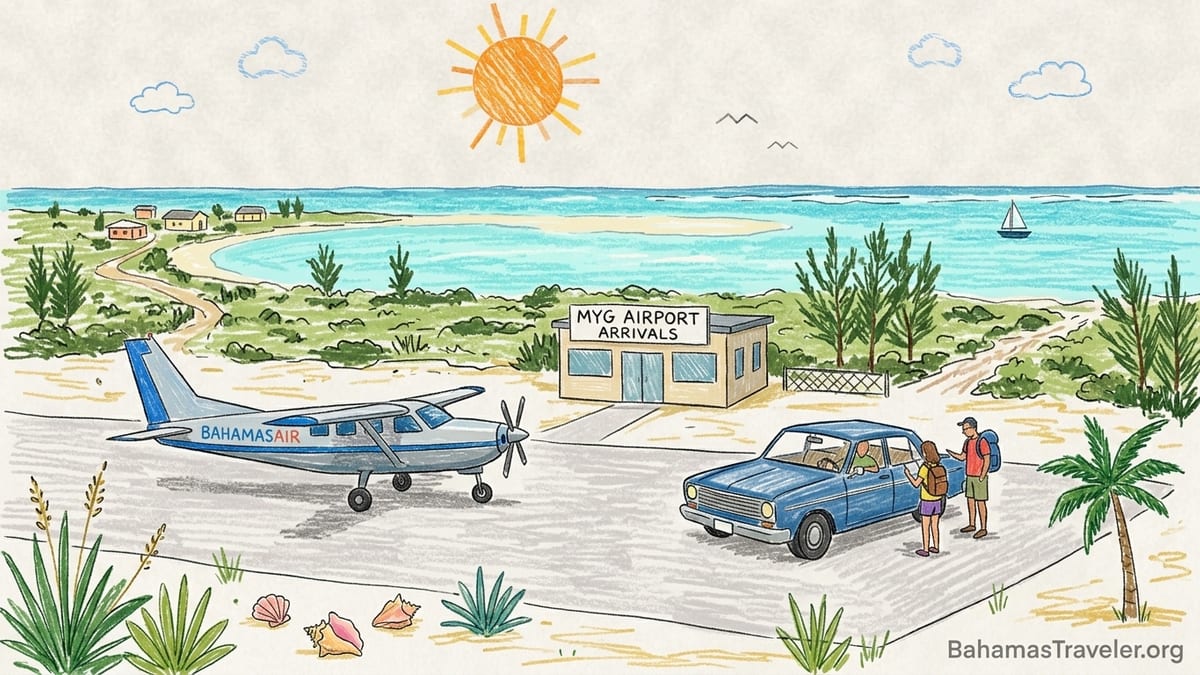
Arriving at Mayaguana Airport and Figuring Out Logistics
Mayaguana Airport, coded MYG, sits a short drive southeast of Abraham's Bay, the island's largest settlement. Flights arrive from Nassau on small Bahamasair aircraft or charter planes, usually only a few times a week, and the arrivals area is essentially a room that opens onto the parking lot. There are no formal taxi stands and no rental desks inside the building. Anyone planning to explore the island beyond a walkable radius of their lodging should arrange transport before stepping on the plane, either through their guesthouse or one of the small resorts that also serve non-guests for transfers when they have vehicles available.
On my visit, I had coordinated in advance with a guesthouse near Abraham's Bay, which in turn called a local driver from the settlement. We agreed on a flat fee in Bahamian dollars for the airport pickup and a daily rate for later point to point transfers between Abraham's Bay, Pirate's Well, and the northern beaches. The car that pulled up outside the terminal was an older Japanese sedan with a few sand-scuffed floor mats, not a marked taxi, but it was clean and the driver was used to shuttling the handful of visitors who land each week. This informal arrangement matched what other travelers I met described as normal for Mayaguana.
Because there is no full-scale rental agency, some visitors arrange what locals loosely call a "day rental" of a private vehicle, usually an SUV or pickup that belongs to a resident or accommodation owner. The rate I was quoted was about the cost of a mid-range Bahamas hotel room per day plus fuel, payable in cash. It came with clear expectations that rough track driving and night-time roaming off the main road were not encouraged. In the end I chose to rely on a driver, partly because he knew which sandy lanes were passable and which had turned to soft powder after recent dry weeks.
Distances on Mayaguana look short on a map but feel longer on the ground when there is only one main ribbon of pavement. From Abraham's Bay to Betsy Bay is only a few kilometers, and from Abraham's Bay up to Pirate's Well the drive is roughly 25 to 30 minutes along lightly trafficked road. The northern beaches, Horse Pond Beach, and the coastal stretch near Northwest Point sit beyond Pirate's Well on rougher surfaces. Having a realistic sense of those distances, and the fact that you cannot count on finding fuel or mechanical help in every corner, is essential before you start planning beach days.
Stocking Up and Settling into Abraham's Bay
Abraham's Bay functions as Mayaguana's administrative and practical hub. The settlement spreads along the island's broad southern bay rather than clustering in a dense village center. My driver dropped me at a small guesthouse a few minutes back from the water, a single story concrete building with simple rooms, ceiling fans, and backup water tanks. Air conditioning was available in my room, though islanders mentioned that not every budget option offers it, and that electricity costs contribute significantly to lodging rates.
Before checking in fully, I asked to be shown the closest places to buy supplies. Within Abraham's Bay there were a couple of small groceries and convenience shops that stocked tinned goods, basic produce when the mailboat had been in recently, and a limited selection of snacks, cooking oil, and drinks. Fresh items like lettuce and tomatoes sold out quickly after deliveries. I found shelf-stable milk, rice, pasta, and breakfast cereal without trouble, but specialty items such as plant-based milks or gluten-free products were not available. Visitors who rely on specific foods or medication should arrive with them in hand.
Because restaurant options are sparse, many accommodations on Mayaguana either include meals on request or expect guests to self-cater. In Abraham's Bay, a few home-style eateries and bar-grills open on selected days, usually in the late afternoon and evening, serving dishes like fried snapper, conch, rice and peas, and macaroni. On nights when those kitchens stayed dark, my guesthouse offered a simple plate of stewed chicken or fish for a set price that was similar to an inexpensive restaurant dinner in Nassau. Given the small number of visitors, I learned to ask each morning where it would be realistic to find a hot meal that evening.
After an hour of shopping and a quick meal, I walked the short distance from my accommodation to the shore of Abraham's Bay to get my first sense of the water. The bay here is extremely shallow for a long way out, protected by an outer reef that forms a pale turquoise strip on the horizon. At low tide the water over the inner sand flats dropped to ankle depth, with patches of exposed seagrass and conch tracks etched into the sand. For genuine swimming, local residents suggested visiting during mid to high tide or choosing a different stretch of coast entirely.
Exploring Abraham's Bay and Nearby Beaches
Abraham's Bay is often pictured in tourism photos as a wide blue bowl of water with an infinite sandbank. In person, it is gentler and more complicated. Along sections of shore where the settlement backs the bay, the sand is light beige and medium-grained, comfortable enough underfoot but not as powder-soft as some Exuma or Eleuthera beaches. In weedier pockets, seagrass washes up and collects in lines after rougher weather, and small shards of coral and shell can mix into the upper tide line.
Shade is limited along most of the settlement's waterfront. A few casuarina trees lean toward the water beside older houses, and there are occasional palms near small docks, but visitors who burn easily will be happier carrying a sun umbrella or timing longer walks for morning and late afternoon. I did not find any organized beach chair rentals or clusters of umbrellas in Abraham's Bay; the water, when the tide cooperated, belonged mostly to residents cooling off and a couple of children splashing after school.
Water clarity along the inner part of the bay was good on calm days, especially where a sand bottom dominated, but less photogenic on the days when light onshore winds stirred up silt. The outer barrier reef sat so far offshore that from the beach it was visible only as a darker band at the horizon. That distance means surf is usually limited at the shoreline, which keeps currents gentle but also means that, in many places, the water stays too shallow for full strokes even a long way from the sand. Abraham's Bay felt excellent for wading, paddling, and looking for sand dollars, but not ideal for a dedicated swim.
Mosquitoes and sand flies became noticeable after sunset on several evenings, particularly when the air was still and the tide was low. Locals used coil burners or light smoke from small yard fires to keep them away, and I was glad to have brought repellent with a high enough concentration of active ingredients to be effective in tropical conditions. During daytime, insects were only a minor irritation when I ventured into the more sheltered back-beach shrubs.
Northbound to Pirate's Well and Horse Pond Beach
To move beyond Abraham's Bay, I relied on the driver I had arranged on arrival. We agreed on a day rate that included a morning departure to Pirate's Well in the north, time for me to explore the settlement and nearby beaches, and an afternoon visit to Horse Pond Beach before returning south. With fuel, that full day of transport cost roughly what a short inter-island flight within the Bahamas might run, underscoring how important it is to budget realistically for logistics on a sparsely populated island.
The road to Pirate's Well passes through scrub and low coppice forest, with brief glimpses of coastline. Pirate's Well itself is a small settlement on the northern shore, more compact than Abraham's Bay. There is a sheltered anchorage offshore where yachts occasionally lie, and a simple dock area that serves as a landing point for the mailboat and local fishing skiffs. Near this dock, the beach is a narrow strip of sand mixed with broken coral and patches of beachrock, not the broad postcard stretch some might imagine, but perfectly suited for watching boats come and go.
For swimming, my driver steered us a short way east along the coast toward a more open stretch used by local families on calm days. Here the sand felt finer underfoot, with a gentle slope into clear water. On the morning we visited, light trade winds came from the east and created only a small chop at the surface. There were no lifeguards, of course, and no signage about currents, but local advice emphasized staying mindful of deeper channels that cut through the outer reef and can pull strongly on rougher days. On this visit, currents remained mild, and the only other people in the water were two children testing new goggles while a relative watched from the shade of a casuarina.
From Pirate's Well we continued by vehicle toward the island's northwest, in search of Horse Pond Beach. The final approach turned off the main road onto a rougher track that my driver described as passable in dry conditions and unreliable after heavy rain. Horse Pond revealed itself as a long, gently curving stretch of off-white sand where dunes meet low scrub and a few hardy trees. During my time there, the beach was empty except for our vehicle and some distant hoofprints likely left by roaming livestock. The sand here was softer and deeper than in Abraham's Bay, and the water just offshore shifted from pale jade to deep turquoise.
In terms of swimming safety, Horse Pond Beach demanded more attention. There was a modest shore break that could knock unsteady swimmers off balance, and small lateral currents tugged along the beach. The water clarity, however, was impressive. Standing knee-deep, I could see individual ripples in the sand several meters in front of me, and small schools of fish flashed by in the low swells. Shade was limited to the scrub back from the high tide line, and in midday sun the open sand grew very hot, encouraging shorter sessions rather than lingering sprawled afternoons.
Snorkeling and Local Boat Outings from the North Coast
Snorkeling was one of my main reasons for visiting Mayaguana, and it quickly became clear that shore-accessible spots alone would not let me experience the healthier reefs described by divers who know the island. Through a small resort in Pirate's Well that doubles as a simple base for anglers and divers, I arranged a half day boat outing focused on nearby reef snorkel sites. The booking was made in person two days before departure, paid in cash in Bahamian dollars, and hinged on the sea state remaining relatively calm along the northwest coast.
On the morning of the trip, I joined two other guests and a local captain who had been working these waters for years. The boat was a modest outboard-powered open vessel, with a sun shade rigged over part of the deck and basic safety gear in view. Masks, snorkels, and fins were provided, but the captain encouraged guests who own their own equipment to bring it, acknowledging that while his sets were serviceable they showed regular use and tropical sun wear.
Our first reef stop lay off the northwest point of Mayaguana, not far from the broad bay often described as a natural aquarium. There, in water roughly between three and six meters deep, the coral heads rose from a sandy bottom and hosted brain coral formations, sea fans, and clusters of small reef fish. In visibility that reached tens of meters on this calm day, I watched blue tangs, sergeant majors, and a pair of shy parrotfish grazing along the coral. A hawksbill turtle cruised by at a distance. The captain took care to brief us about staying clear of coral, avoiding any touching, and not pursuing wildlife.
Later in the morning, we shifted to a second site closer to shore near one of the northern beaches. Here the reef was patchier, with more areas of bare sand between coral outcrops, and the effect of previous storm damage was more visible. Even so, the water clarity remained high, and the sense of isolation was profound. No other boats came within sight during our entire trip, and the only sounds were snorkel breaths, gull calls, and the hum of the outboard when we moved between sites. The total cost of the excursion, including fuel and guiding, equaled roughly what a half day group snorkeling trip might cost from a busy Bahamian hub, with the difference that here we had the reef entirely to ourselves.
The resort that organized the outing also offered deeper scuba dives and fishing trips when there is enough visitor demand, but Mayaguana's limited tourism numbers mean that guests should not expect daily departures. Coordinating plans by direct phone call or in-person conversation once on the island is key, and having enough flexibility in your schedule to shift excursions for weather or group size makes success more likely.
Booby Cay as a Protected Habitat, Not a Playground
East of Mayaguana lies Booby Cay, a low, scrubby island that rarely features in mainstream brochures but is critically important in conservation terms. It provides habitat for nesting seabirds, including brown boobies, and is the last refuge for an iguana that has disappeared from the main island of Mayaguana itself. Conservation documents prepared for the Bahamas identify Booby Cay and its surrounding waters as a sensitive site, and researchers have recommended formal protection focused on iguanas and seabirds.
During my stay, several locals in Pirate's Well mentioned that in previous years visitors sometimes arranged informal boat trips to land on Booby Cay for picnics and bird watching. More recently, awareness of the island's ecological value has grown, and the message I heard consistently was that any access should be vetted through the appropriate authorities, starting with the Bahamas National Trust or the relevant government offices, before stepping ashore. A couple of boatmen said they no longer encourage landings there without clear guidance, choosing instead to skirt the island at a respectful distance for those interested in seeing birds from the water.
Given the limited and sometimes conflicting information, I decided not to visit Booby Cay in person. From a distance offshore, its low profile, pale rock faces, and fringe of vegetation were visible, with the occasional speck of a soaring bird against the sky. I came away with the strong sense that, for now, the most responsible way for travelers to experience Booby Cay is either through scientific or conservation work that has explicit permission, or by observing from a boat without landing.
For visitors planning a trip, that means Booby Cay should not be treated as a default beach picnic destination. Instead, view it as a reminder that on a sparsely developed island, some of the most appealingly wild places are also the most vulnerable. When arranging any coastal boat tour around Mayaguana, it is worth raising the subject of sensitive habitats directly, asking your captain how they handle areas like Booby Cay, and being prepared to accept that the best answer from a conservation perspective may involve keeping your distance.
Daily Costs, Meals, and Evenings Without a Nightlife Scene
Spending a few days on Mayaguana can cost either less or more than a trip to a busier Bahamian island, depending on how you approach lodging and transport. Very generally, basic guesthouse rooms in Abraham's Bay and simple cottages in Pirate's Well were quoted at nightly rates that would be considered mid-budget in Nassau. Prices fluctuated somewhat based on season and whether at least one daily meal was included. More comfortable resort-style rooms with air conditioning and on-site dining tracked closer to what you might pay at a small out-island inn elsewhere in the Bahamas.
Transportation often makes up a significant share of daily expenses. My own costs for a full day with a driver, including trips between settlements and out to beach access tracks, came close to the cost of lodging itself. Shorter transfers, such as a one-way ride from Abraham's Bay to Pirate's Well, were proportionally less but still reflected the reality that there are only a handful of vehicles regularly available to serve visitors. Fuel, imported by ship, is not cheap, and that cost flows through to every ride.
Meals varied in price but followed a recognizable pattern for small Bahamian settlements. A plate of fried fish, rice and peas, and salad at a local spot in Abraham's Bay or Pirate's Well cost roughly what you might expect at a modest restaurant in a Family Island town, while more elaborate seafood dinners at a resort or guesthouse that offers multi-course meals understandably cost more. Groceries from the small shops, when available, were somewhat higher in price than in Nassau but reasonable considering the island's reliance on the mailboat system for supplies.
Evenings on Mayaguana are quiet in a way that many visitors, used to bars and live music on other islands, may not anticipate. After sunset, the streets of Abraham's Bay fall mostly silent, apart from a few gatherings at local bars or under yard lights where neighbors chat. There is no cluster of tourist bars or beach clubs, and organized entertainment is rare outside of occasional community events and homecoming festivals that take place at specific times of year. My nights involved reading on the porch, listening to frogs and distant music from a single speaker, and walking short distances to watch stars where street lighting was minimal. That rhythm felt restorative but could surprise travelers expecting a more social scene.
Expectations, Realities, and How Long to Stay
Before traveling, my sense of Mayaguana was largely shaped by images provided by tourism offices and enthusiastic blog posts that described endless empty beaches and "untouched" reefs. Those photographs, taken on perfect weather days from flattering angles, were not false, but they were incomplete. In reality, some beaches have patches of litter washed in from distant shores, especially along windward stretches. Seagrass accumulates after certain winds. A few storm-twisted casuarina stumps interrupt the postcard lines, and old plastic bottles and fishing rope still lodge in pockets of rock if no one has cleaned them recently.
Transportation and supplies also felt more fragile than glossy marketing suggests. If the mailboat is delayed, grocery shelves thin out. If the sole working vehicle at a small guesthouse develops a mechanical problem, your planned outing might shift by a day. Rain can turn a sandy back road into a track that islanders prefer to avoid until it dries, and the same reef that keeps Abraham's Bay calm can focus wave energy enough elsewhere to make swimming ill-advised on a windy afternoon.
That said, what Mayaguana offered in exchange was a sense of honesty. When I asked locals whether a particular beach would be "perfect" on a given day, they answered with nuance about wind direction, tide, and whether jellyfish had been sighted recently. When I admitted that some of the sand seemed coarser than photos implied, residents laughed and said that photographers know exactly which angles to use. The island does have long sections of beautiful sand and genuinely clear water, but it also has working waterfronts, rusting boat trailers, and bits of fishing gear drying on lines.
For most travelers interested in a genuinely enjoyable stay that balances exploration and downtime, I would recommend planning a minimum of four full days on Mayaguana, not counting travel days. That allows time for at least one trip to the northern beaches and a snorkeling outing, a day or two focused on the southern coast near Abraham's Bay, and space for at least one plan to change due to weather or logistics. Those who want to fish, dive, or wait patiently for ideal snorkeling conditions could easily fill a week, provided they embrace the realities of limited schedules and the slow pace that defines this corner of the Bahamas.
The Takeaway
By the time I boarded my departing flight at Mayaguana Airport, the island had reshaped my understanding of what "undeveloped" can mean in the Caribbean. Rather than a blank slate of empty beaches, Mayaguana is a lived-in place where fishing boats launch from narrow coves, children ride bicycles along the only main road, and a few small businesses quietly support both residents and the trickle of visitors who make the effort to come.
If I were to return for one beach in particular, Horse Pond Beach would be my first stop. Its soft sand, luminous water, and sense of solitude felt special, even if the shore break required respect and the lack of shade meant shorter visits or early starts. Among the more easily reached stretches, the swimming spot east of Pirate's Well offered the best blend of accessible sand, clear water, and a touch of local presence that kept it from feeling like a set for a deserted island film.
The hardest aspects of Mayaguana were not the lack of big resorts but the practical details: arranging transport without formal rentals, planning meals around limited restaurant hours and mailboat deliveries, and accepting that organized activities like snorkeling trips operate only when there is enough demand and cooperative weather. Travelers who need firm schedules or a wide array of backup options may find the island challenging.
For those willing to adapt, though, Mayaguana provides something increasingly rare in the region: an opportunity to spend time on a Bahamian island where tourism exists but does not yet dictate the rhythm of daily life. The trade-off is fewer conveniences and a need for patience. The reward is standing on a quiet strand at the end of a long day, listening to the surf without another visitor in sight, and knowing that this calm is not curated but simply the way the island has carried on for years.
FAQ
Q1. How do I get to Mayaguana from Nassau?
Flights connect Nassau to Mayaguana Airport on small regional aircraft, usually only a few times per week, so it is important to check current schedules in advance and plan around limited service.
Q2. Is it possible to rent a car on Mayaguana?
There is no formal rental car desk at the airport; most visitors either arrange a local driver through their lodging or work out an informal day rental of a resident's vehicle with clear terms on use and fuel.
Q3. Which settlement is best as a base for first-time visitors?
Abraham's Bay is the most practical base because it hosts the main administrative offices, several small groceries, and a handful of guesthouses, while still providing easy access to the southern shoreline.
Q4. Are the beaches on Mayaguana really empty?
Some stretches, such as Horse Pond Beach, can be completely empty on weekdays, but others near settlements often have local residents using the water, and wind and tides can leave patches of seaweed or litter.
Q5. Where can I snorkel on Mayaguana?
Shore snorkeling is possible in a few northern spots, but the healthiest reefs are reached by boat from Pirate's Well or nearby resorts that organize guided outings when weather and demand allow.
Q6. Can I visit Booby Cay during my trip?
Booby Cay is an ecologically sensitive island important for seabirds and iguanas; visitors should only consider approaching it after confirming current rules with conservation authorities and local guides, and in many cases viewing it from the water is the most responsible choice.
Q7. What should I budget for daily expenses on Mayaguana?
Plan for mid-range Bahamian guesthouse rates, meal prices similar to other small islands, and transport costs that can be significant because vehicles and fuel are limited, especially if hiring a driver for full days.
Q8. How many days are enough for a first visit?
Four full days on the island, not counting travel days, generally allow time to explore Abraham's Bay, reach the northern beaches, fit in a snorkeling outing, and absorb the slower rhythm without rushing.
Q9. Are there restaurants and nightlife on Mayaguana?
There are a few small eateries and bars in the settlements, but opening hours are limited and there is no conventional tourist nightlife scene; evenings tend to be quiet and low key.
Q10. Is Mayaguana suitable for very independent travelers?
Yes, as long as travelers are comfortable with limited services, flexible plans, and the need to arrange transport and activities directly with local residents rather than relying on packaged options.