


The first time I fell for the Family Islands, it wasn’t a headline moment. It was small: a morning in the Exumas when the trade wind finally eased, the water turned glassy, and our skiff stopped slapping long enough for everyone to relax into the day. The second time, I learned the other side of the Bahamas equation: the same islands can feel completely different when the wind is up, the seas are rough, and the schedule that looked easy on paper suddenly hinges on whether a mailboat or ferry actually runs. If you’re trying to plan the best time to visit the Family Islands, “sunny” isn’t enough. You need to think about heat and humidity, wind and sea state, water temperature, crowds, and especially the Homecomings and regattas that can flip a quiet settlement into a full-on community celebration overnight.
What “Best Time” Really Means In The Family Islands
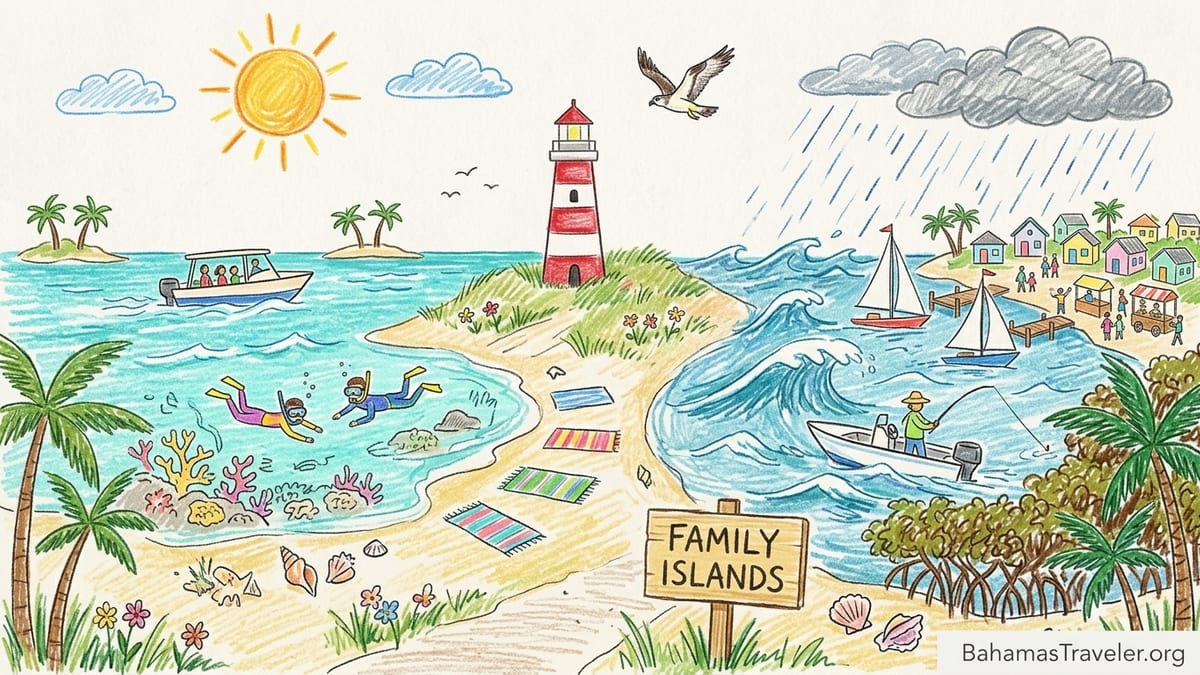
The Family Islands are not Nassau. The rhythms are slower, the infrastructure is thinner, and the weather has more leverage over your day. On my trips, the biggest difference wasn’t the air temperature, it was the wind. When the breeze was light, island-hopping felt effortless: short rides, easy snorkel drops, smooth dock landings, and long beach afternoons that ended with a comfortable walk back to the room. When the wind was up, the same plan turned into a damp, salty grind: spray in your face, pounding rides, and a constant calculation of which side of an island was sheltered enough to enjoy.
That’s why “best time” is personal. If you’re coming mainly for beaches and a few easy excursions, you can tolerate more wind and cooler water. If you’re coming for boating, snorkeling, scuba, or fishing, wind and sea state matter as much as sunshine. A day can be bright and still feel challenging offshore if the chop is relentless. In the Family Islands, the difference between a perfect day and a frustrating one is often a forecast detail, not a temperature headline.
The other missing piece in most guides is culture. Homecomings and regattas are not background entertainment. They’re family reunions at island scale, and they can reshape everything: lodging availability, restaurant hours, even how late music carries across a harbor. The Bahamian government describes Homecoming as a widespread Family Island tradition, with people returning by air or mailboat for cultural and community events. If you time your trip with one, you don’t just “attend an event,” you witness a community reassemble itself.
Dry Season vs. Wet Season: How It Felt On The Water
The Bahamas’ dry season broadly runs from November through April, and it shows up in the way your day feels. On my winter and early-spring days in the islands, I remember stepping outside in the morning and feeling comfortable right away: warm sun, but not suffocating. Evenings could cool off enough that I actually wanted a light layer after dinner, especially if we’d been wet all day and the breeze stayed up.
But “dry” doesn’t mean “calm.” Winter and early spring can be breezy, and that breeze is the make-or-break for boating and snorkeling. When it’s blowing, you can still have a great trip, but you plan around shelter. On those windier days, we chose leeward beaches, tucked snorkel spots, and shorter crossings. Fishing guides adjusted routes and timings, because the same wind that keeps the air pleasant can also build a chop that beats up a small boat and makes long runs less enjoyable.
By late spring into summer, the islands feel softer in a different way. The water is warmer and more inviting for long swims, and you don’t get that “quick chill” when you climb back into a boat. The trade-off is heat and humidity. The kind of humidity that makes you drink more than you think you need, and makes a mid-day walk to a settlement store feel like a workout. If you’re planning long beach days in July or August, shade becomes a strategy, not a luxury.
Wet season generally arrives around late spring and runs through fall. It’s not constant rain, it’s more like a pattern of build-ups: clouds that stack in the afternoon, quick heavy showers, then sun again. Those showers can be a relief, but they can also interrupt long boat days, and they reduce your tolerance for long, exposed rides if you’re already hot and sticky.
Hurricane Season And What It Changes (Even On Blue-Sky Days)
Officially, Atlantic hurricane season runs from June 1 through November 30. That date range matters for more than storms. It affects how you should book, how you should insure, and how flexible your itinerary needs to be. Even if a storm never forms near you, the wider weather pattern of late summer and early fall can bring squalls, higher seas, and forecast uncertainty that ripples into ferry schedules and small-plane operations.
I’ve learned that the emotional difference is real, too. In April, you can commit to a boat day with confidence and feel like the weather is on your side. In September, you can wake up to perfect turquoise water and still feel a little on edge because you’re watching the tropics and checking updates. That doesn’t mean you should avoid hurricane season outright, but it does mean you should plan like an adult: choose refundable rates when possible, avoid stacking too many tight connections, and budget time for a day that gets re-routed or scrubbed.
Inter-island transport is where hurricane season becomes tangible. The Family Islands depend on boats and small aircraft, and both are weather-sensitive. If your plan requires a precise same-day connection between a ferry, a taxi, and a check-in window at a small property, shoulder season and hurricane season magnify the risk. The best planning move is to treat travel days as travel days and not wedge in a “must-do” tour that depends on perfect conditions.
If you do travel in peak hurricane months, I’d make your “big ticket” experiences more flexible. Instead of booking one non-refundable full-day charter, consider splitting into shorter half-days, or choose operators who can pivot to sheltered waters. In the Exumas, for example, a day that’s too rough for an exposed crossing can still be a great day inside calmer cuts and lee-side shallows, if your captain is willing to adjust.
Month-By-Month Reality: Weather, Crowds, And Water Temperature
December through March is the classic high season feel: lower humidity, comfortable daytime warmth, and the best chance of cool evenings where dinner outside feels perfect. The trade-off is that this is also when many travelers escape winter, so flights and rooms can be pricier and harder to snag at the last minute. Water temperatures are cooler than many first-timers expect. It’s still the Bahamas, but if you’re used to bathtub water, longer snorkel sessions can start to feel chilly, especially if the wind is up and you’re repeatedly climbing in and out of a boat.
April is the month I keep circling back to. The Bahamas Department of Meteorology notes the dry season runs into April, and April is also when sunshine averages peak in New Providence. In my experience, April is when the islands feel like they’ve exhaled: warm days without the summer heaviness, and enough predictability to plan longer boat days. Crowds can still be present around popular spring break windows, but compared with mid-winter, the overall vibe on the Family Islands tends to feel more spacious.
May is where the weather starts leaning into summer. Nassau climate averages show rainfall rising into May compared with winter months, and you can feel the atmosphere thicken. For travelers, May can be a sweet spot if you like warmer water and don’t mind the first hints of afternoon showers. It’s also when you should begin thinking more seriously about travel insurance if your plans stretch later into summer.
June through August brings heat, higher humidity, and a bigger chance of heavy downpours, but also the warmest water for swimming and snorkeling. If you’re coming for beach time and you love warm ocean, this is your season. The cost is comfort. In the middle of the day, I found myself naturally seeking shade and timing active excursions earlier. It’s doable, but the “best time” depends on whether you want to feel energized at 2 p.m. or you’re okay with a slower, siesta-style pace.
September and October are the gamble months. Nassau climate averages still show high humidity and significant rainfall, and it’s also within the heart of hurricane season. The upside is that you can sometimes find better deals and fewer visitors. The downside is that your dream itinerary might require a plan B and a plan C. If you choose these months, I’d pick one base island, book flexible cancellations, and treat any inter-island hops as optional bonuses rather than the backbone of the trip.
November is a transition back toward the drier, more comfortable season. It can still feel summery, but with fewer extremes than September and October. It’s also psychologically easier than peak hurricane months, even though the official season still runs through November 30.
What Wind, Rough Seas, And Rain Actually Changed On My Trips
On calm days, the Family Islands feel like you’re traveling inside a postcard: short, easy boat rides between cays, snorkel stops that take five minutes to reach, and beaches where you can stay as long as you want without the ocean “pushing back.” Those are the days when you can stack experiences: snorkel, beach picnic, a second snorkel, then a sunset cruise, all without feeling wrung out.
On windy days, the experience becomes physical. You feel it in your knees and lower back on a small boat, you taste the salt, and you start doing math: is this crossing worth it, or should we stay in the lee? Snorkeling changes too. Even if the water is clear, surface chop makes it harder to relax, and it can turn a casual swim into a workout. If you’re a first-time snorkeler, wind is the difference between “I could do this all day” and “I’m done after 20 minutes.”
Rain, when it came, wasn’t usually an all-day washout. It was often sharp and loud, especially in warmer months: a sudden downpour that sent us under a roof or into the boat’s console area, followed by steam rising off the dock when the sun returned. What rain did change was timing. A late afternoon shower could cut into a long beach stretch, and if it arrived with gusts, it could make an already-choppy channel feel more unsettled.
Cooler evenings mattered most after water time. In winter and early spring, I noticed that the moment I stopped moving, I cooled down fast. After a long snorkel, the boat ride back could feel chilly if the wind stayed up. It’s the kind of detail that makes a thin windbreaker or a dry long-sleeve top feel like the smartest thing you packed, especially if you’re doing multiple water sessions in a day.
Fishing And Diving Seasonality: Matching Your Trip To What You Want To Catch Or See
If you’re building your trip around fishing, the Bahamas is not a single season story. A Bahamian government fisheries sector review notes that the peak of billfish and wahoo fishing occurs from April to June, with tournaments held on islands including Abaco, Grand Bahama, and Cat Island. That lines up nicely with what many travelers already want: spring weather that’s comfortable on deck, with enough stability for offshore runs on good days.
Flats fishing has a different rhythm. Bonefish are a signature species across the islands, and destinations like Andros, Abaco, Bimini, and Grand Bahama are frequently highlighted for bonefishing. For travelers who want a culturally rich trip with a fishing spine, it’s worth watching current tournament calendars. The Bahamas Ministry of Tourism announced the 2nd Annual Bahamas Bonefishing Tournament Series set across Andros, Long Island, and Exuma from September through November 2026, with significant cash and prize totals. Even if you’re not competing, those dates can mean extra energy on-island and more anglers booking guides.
For diving and snorkeling comfort, water temperature matters less as a number and more as a feeling over time. The Bahamas tourism diving FAQs provide a month-by-month wetsuit guidance: thicker suits recommended in January through March, lighter in warmer months. The practical takeaway is that winter water can be completely enjoyable, but if you plan to be in the water for repeated sessions, you’ll appreciate a little neoprene. In April and May, many people find the balance easier: warm enough to stay in longer, but not yet the peak heat on land.
Visibility and sea state are your other variables. A day can have warm water and still be frustrating if wind-driven surface chop makes snorkeling tiring. Conversely, a cooler day can be magical if the sea is flat and the light is good. If you want the best odds of long, pleasant water time, plan for late April into May, and stay flexible with your daily schedule so you can chase the calm.
Homecomings And Regattas: When Quiet Islands Turn Electric
In the Family Islands, Homecoming isn’t a tourist add-on. It’s an island’s family and friends returning. The Bahamian government describes Homecoming as a festival celebrated on most inhabited islands, rooted in people with island ties coming back for reunion and community events, often with sporting events and tournaments woven in. For travelers, that means something rare: you can see the islands not only as destinations, but as hometowns.
What does that feel like in practice? The best way I can explain it is that the island’s volume changes. The settlement is busier, music is more present, and there’s a sense of everyone being out and about at once. You might find a fish fry atmosphere that feels less like a planned “show” and more like a real gathering: grills going, kids running around, dominoes and local sports, and neighbors greeting people who haven’t been home in years. If you’ve only ever visited the Bahamas in resort mode, Homecoming week can be the moment the country becomes legible.
Regattas are the other major cultural hinge. The National Family Island Regatta is one of the biggest, drawing crews and crowds and turning George Town, Exuma into a sailing capital for the week. Multiple current listings for 2026 place the National Family Island Regatta in George Town, Exuma on April 21 to April 25, 2026, with reporting from Bahamian media also covering those dates. If you want to see the Bahamas at full voice without being in Nassau, this is a compelling week to plan around.
Homecomings can be more localized but just as transformative. For example, Tourism Today lists Palmetto Point Homecoming in Eleuthera for May 20 to May 25, 2026, tied to the Whit Monday holiday week. Those are the kinds of dates that matter because lodging that feels “easy” in a normal week can suddenly become limited, and restaurant hours can shift around events and family gatherings.
My practical advice: if you want cultural immersion, pick a Homecoming or regatta and commit early. If you want quiet beaches and a low-key vibe, avoid those dates, or stay in a smaller outlying settlement where you can dip in for an evening and retreat to calm afterward.
Planning It Like I Would Next Time (And The Month I’d Choose)
If I were booking my next Family Islands trip today, I would personally choose April, and I’d aim for the first half of the month if my schedule allowed. The reason is simple: it’s the best overall balance I’ve felt between comfort on land and comfort on the water. The dry-season pattern is still in play, evenings are pleasant, and the islands are inviting for long days outside. You’re also lining up with prime boating and fishing conditions more often than not, without the heavy summer humidity that can make mid-day feel like a endurance test.
There’s also an events reason to like late April if you want energy without a full winter crowd. The National Family Island Regatta in Exuma (April 21 to 25, 2026) is an example of how April can deliver a once-a-year cultural experience on a Family Island that’s typically laid-back. If you plan around a major regatta week, you need to book early and accept that prices can be higher, but you’ll get something you can’t replicate in a random week.
For travelers who want a calmer April, you can go earlier in the month or pick a different island than Great Exuma during regatta week. Eleuthera and its settlements can be a strong alternative if your priorities are beaches, local food, and day trips that don’t require long exposed crossings. Abaco can be excellent for boating as well, particularly in protected waters, though conditions always depend on the day’s wind.
What I would not do next time is over-schedule inter-island transport. The Family Islands reward slack in the itinerary. I’d build in one buffer day for every major transfer, and I’d choose at least one island where I could be happy doing nothing but beach, a short snorkel, and dinner for three days straight. That’s not laziness, it’s respecting the variables that actually move the needle: wind, sea state, and local timing.
The other planning move I’d make is packing for the reality of boat spray and temperature swings. Even in warm months, a fast ride with wind can cool you down. A thin wind layer, a dry top, reef-safe sunscreen, and a rash guard are the difference between “let’s do one more snorkel” and “I’m cold and done.” In the Family Islands, comfort is what unlocks adventure.
The Takeaway
The best time to visit the Bahamas’ Family Islands is when the weather lets you live the trip you imagined. For most travelers, that sweet spot is late March through May, with April as my personal top pick because it balances comfortable air, improving water warmth, and strong odds for smooth boating days. Winter can be gorgeous and drier but often breezier and cooler in the water. Summer delivers the warmest ocean but demands respect for heat, humidity, and heavier showers. Early fall can be the best deal on paper but the most fragile for tight itineraries because it sits inside the June-to-November hurricane season.
If you want the Bahamas to feel like a community, not just a landscape, time your trip with a Homecoming or a regatta. Those weeks can change everything: the crowd level, the energy, and the access to cultural moments you won’t stumble into by accident. Plan early, stay flexible, and let the islands set the tempo. That’s when the Family Islands become more than a vacation. They become a place you want to return to.
FAQ
Q1. What are the Family Islands in the Bahamas?
They’re the Out Islands beyond Nassau and Paradise Island, including places like Exuma, Eleuthera, Abaco, Andros, Bimini, Long Island, Cat Island, and more.
Q2. What month is the best overall time to visit the Family Islands?
April is my top choice overall for a balance of comfortable weather, good boating conditions, and a lively but not overwhelming travel season.
Q3. When is hurricane season in the Bahamas?
Atlantic hurricane season officially runs from June 1 through November 30, and it can affect forecasts, seas, and travel logistics even without a direct storm.
Q4. When is the National Family Island Regatta in Exuma in 2026?
It is scheduled for April 21 to April 25, 2026 in George Town, Exuma, and it is one of the most culture-packed weeks to visit.
Q5. What is a Bahamas Homecoming, and why does it matter for travelers?
Homecoming is a Family Island tradition where people return to their home island, often arriving by air or mailboat, for community events that can include Junkanoo, music, food, and sports.
Q6. Is the water cold in the Bahamas in winter?
It can feel cool during long snorkels, especially if it’s windy. Many travelers are comfortable with a light wetsuit or neoprene top in January through March.
Q7. Which months are best for snorkeling and boat days?
Late March through May often gives the best mix of calmer seas and warming water, with April and May being especially comfortable for extended time in the ocean.
Q8. What months are best for offshore sportfishing like billfish and wahoo?
April through June is widely cited as a peak window for billfish and wahoo in the Bahamas, and it aligns well with pleasant spring conditions on the water.
Q9. Are Homecoming and regatta weeks more expensive?
They can be. Rooms and flights can tighten, and some islands feel fully booked. If you want to visit during those weeks, plan and reserve earlier than you normally would.
Q10. How should I plan inter-island transport for a Family Islands trip?
Build in buffer time, avoid tight same-day connections, and treat weather as a real factor. A flexible itinerary is the best upgrade you can buy in the Family Islands.