


Nassau and New Providence sit at the edge of some of the clearest water in the Caribbean, with shallow reefs, photogenic shipwrecks, shark aggregations and even an underwater sculpture park all within a short boat ride of the cruise pier. The challenge for visitors is not finding a tour, but choosing the right one. This guide breaks down Nassau’s main underwater options, from easy mask-and-fins snorkeling to advanced shark dives, with realistic pricing, requirements and expectations based on the latest offerings in late 2026.
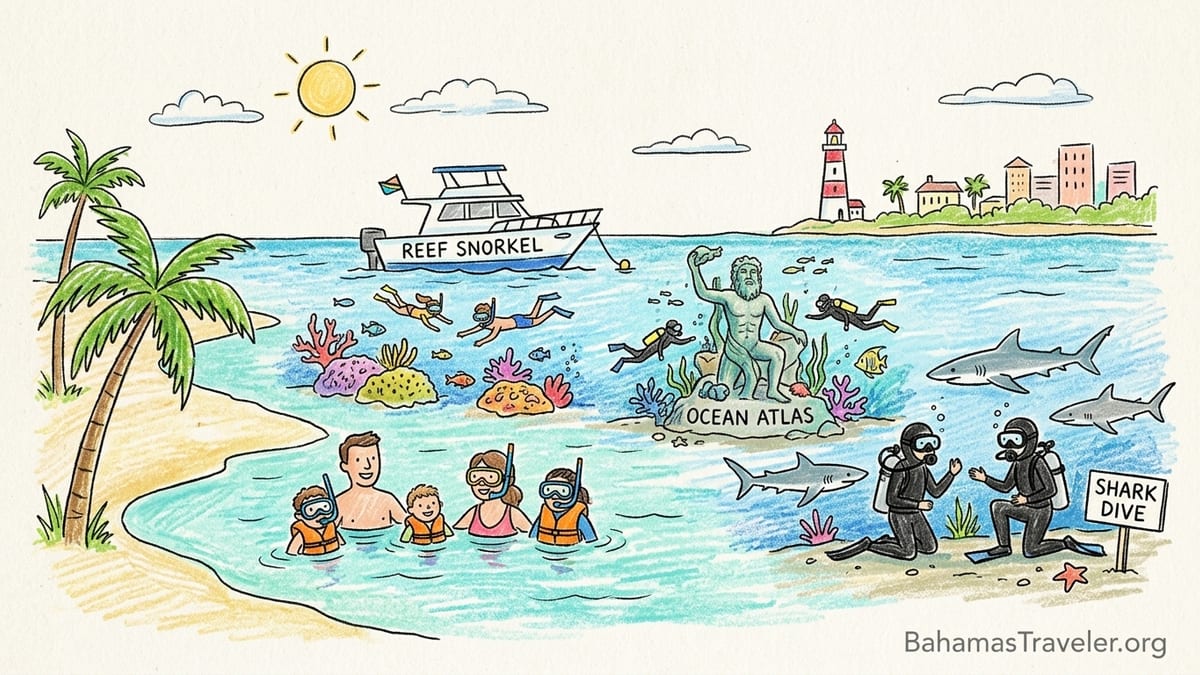
How Nassau’s Underwater Experiences Fit Together
New Providence offers several distinct underwater experiences that often get bundled together in brochure language. In practice, you will be choosing between simple shore snorkeling from New Providence itself, half-day or full-day boat trips to nearby reefs and islets such as Rose Island, sculpture and art-focused snorkeling at Clifton Heritage National Park, introductory scuba for beginners, two-tank excursions for certified divers and specialized shark dives. Some operators, such as Stuart Cove’s Dive Bahamas based at Coral Harbour on the southwest side of the island, package many of these options in one program, while others focus on a single style of trip.
It is important to distinguish what is physically realistic for your group. A family with young children in Nassau for only six hours on a cruise call will have a very different day from a certified diver staying a week at a resort. Depth, currents, swim distances, and how much time you actually spend in the water vary enormously between a guided Clifton snorkel, a three-stop Rose Island reef tour, and a two-tank shark dive. Throughout this guide, references to New Providence mean experiences that start and end on the main island, even if the boat crosses to small nearby cays, while services on more distant islands such as the Exumas are treated as separate day trips that require more travel time.
Water clarity in the Nassau area is usually excellent, often in the 60 to 100 foot visibility range in dry, calm weather. That said, the difference between looking down from the surface over a five foot deep patch reef and hovering as a diver at 45 feet on a wreck surrounded by fish is dramatic. Shore snorkeling gives a forgiving, shallow introduction. Multi-stop boat tours unlock healthier outer reefs and more marine life. Certified diving and shark trips place you directly into the deeper strata where larger fish and big animals cruise. Matching your comfort level and qualifications to the right slice of this underwater ladder is the key to a memorable and safe experience.
Beginner-Friendly Shore Snorkeling from New Providence
For absolute beginners or cautious swimmers, the calmest introduction to Nassau’s underwater world is usually a guided shore-based snorkel. Several resorts along Cable Beach and Paradise Island have small house reefs just off the sand, often in six to ten feet of water, that can be explored with minimal boat time. Conditions on these inshore sites are more affected by crowds and occasional sand stirred up by waves, but the gentle depth range and quick access back to shore make them ideal for first timers and younger children under close supervision.
Clifton Heritage National Park, on the western tip of New Providence, has emerged as one of the island’s most practical spots for easy snorkeling directly from shore. The park sells snorkeling as an add-on activity and lists two main options: a guided tour with rental gear at about 75 US dollars per person, and a self-guided snorkel option with rental equipment at about 50 dollars per person. These prices cover the snorkeling component and gear, but general park admission, which is also required to access the beach and trails, appears as a separate line item. As of late 2026, posted admission for the standard heritage tour and park access runs in the region of 60 dollars for adult non-residents, less for children and seniors, so visitors should factor this into their total cost rather than assuming that the snorkeling price alone covers entry.
Shore snorkeling around New Providence typically involves depths from chest deep down to perhaps 15 feet at the outer edge of the patch reefs. Swim distances are short and the guide, if you book one, will usually keep the group within an easy surface swim of the beach. Equipment on these programs tends to be basic but adequate: simple plastic-frame masks, snorkels with splash guards and open-heel fins. If you are sensitive about fit, bringing your own mask can make a big difference. Currents are usually modest, though windy days from the north or east can push chop onto exposed beaches and reduce clarity. Marine life near shore is more about colorful small fish and soft corals than big animals, and it would be unrealistic to expect turtles or sharks on a brief shallow session from the beach.
Reef and Wreck Snorkeling Boat Trips
The classic Nassau snorkeling image, clear blue water over a reef slope with clouds of yellowtail snapper, usually comes from a dedicated reef boat trip rather than from the beach. Operators running from both the cruise pier area and Paradise Island offer half-day excursions that visit two or three offshore reefs or shallow wrecks in one outing. Travel time to these sites is often 20 to 40 minutes each way, with total trip durations of three to four hours, which fits within most cruise ship schedules while still giving around 60 to 90 minutes in the water across multiple stops.
Prices as of autumn 2026 sit roughly in the 110 to 150 US dollar range for standard shared-boat snorkeling trips from Nassau, according to tour consolidators and several operator sites focused on Rose Island and nearby cays. A typical example is a four hour reef snorkel and private beach stop package around Rose Island or Green Cay priced at about 120 to 130 dollars per adult, including mask, fins, snorkel, life jackets, and soft drinks. Some tours push higher, into the 250 to 300 dollar per person range, when they add high profile stops such as swimming pigs along with snorkeling and lunch. At the other end, a small number of basic half-day cruises price their boat at a fixed 700 to 800 dollars for up to six or eight guests, which can be economical for families or groups.
Boat-based snorkeling gains you access to clearer water over healthier reef structures, at depths usually between 10 and 25 feet beneath the surface. Many Nassau-area snorkel tours provide buoyancy vests or noodles, and crew members remain in the water to supervise guests. The swim can feel more exposed for nervous first timers because you are in open water, although the boats anchor close enough that a steady surface swimmer can return in a few minutes. On calm days visibility can be striking. In windy weather or after prolonged southerly swells, crews occasionally adjust which side of the island or which cays they visit to find lee conditions. If the seas are too rough or thunderstorms build, an honest operator will cancel or reschedule rather than force a bumpy crossing to outer sites.
Rose Island, roughly a 20 to 30 minute ride from Nassau by powerboat, is a centerpiece of many reef snorkeling tours. Excursions often blend a reef or turtle stop at a nearby cay, a shallow snorkel over coral heads and sea fans, and beach time at a private club with simple facilities. Snorkeling depths here are similar to other boat sites, generally from 8 to 20 feet, with the added bonus of sea turtles over seagrass in certain spots. Boat tours that emphasize turtle encounters, such as those that combine Green Cay turtle watching with a Rose Island beach bar, should be understood as viewing wild animals in their habitat. Turtles are not guaranteed. Guests should keep a respectful distance and avoid chasing or touching them, even if others in the water behave differently.
Clifton Heritage’s Ocean Atlas and Underwater Sculpture Garden
One of Nassau’s most distinctive snorkeling experiences is the underwater sculpture garden off Clifton Heritage National Park, anchored by the monumental Ocean Atlas figure. Unlike natural reefs or wrecks, this site blends marine art with coral restoration concepts. Large sculptural forms placed in shallow water create artificial relief where corals, sponges and fish can colonize, while also serving as a cultural focal point that connects visitors to Bahamian and environmental themes. The installation lies just offshore from the park’s beach access on the southwest corner of New Providence, and is reachable by a short boat shuttle or supervised surface swim, depending on conditions and the package you book.
Clifton Heritage’s current snorkeling offerings center on guided and self-guided options. The park advertises a guided snorkel including rental equipment at about 75 US dollars per person and a self-guided snorkel option with gear at about 50 dollars. It is essential to note that these prices are listed under a snorkeling section, while park admissions for the broader heritage tour, trails and beaches are separate on the same page. As a result, a visitor coming specifically for the sculpture garden should anticipate two charges: one for entry or the guided heritage tour, and one for the snorkeling component if they want equipment and a guide in the water. The combination still remains competitively priced compared with boat-only sculpture excursions sold through cruise lines, but surprises at the ticket window are common when travelers do not read the separate categories closely.
Conditions at the sculpture garden are shaped by its proximity to shore. Depths near Ocean Atlas are typically in the 15 to 20 foot range. Confident snorkelers can free-dive down briefly to see details, but the sculptures are visible from the surface in normal visibility. Because you are within a protected bay, currents are usually modest, though wind from the open Atlantic can still stir up chop and sand on rough days. Visibility is decent but not as pristine as outer reefs, and marine life is more about schooling reef fish, young corals and the occasional barracuda or ray than about big pelagic species. For photographers, the sculptures offer compelling shapes, but it is worth bringing a red filter or using basic color correction settings, because even at 15 feet depth colors shift toward blue and green.
From an ethical standpoint, the sculpture garden can lighten pressure on natural reefs by giving visitors an alternative focal point. That only works, however, if guests treat the site gently. Standing on sculptures, grabbing corals that have begun to grow on the artwork, or kicking up sand over the installation all reduce its ecological value. Guides at Clifton generally give a short briefing about not touching coral or wildlife and remind guests to keep their fins up when swimming near the pieces. Listening carefully and following these guidelines not only protects the site but also improves your photographs, because clear water and undamaged surfaces make for better images.
Introductory Scuba Options for Non-Certified Divers
Nassau has long marketed itself as a place where curious beginners can try scuba for the first time on shallow reefs and movie-set wrecks. Operators such as Stuart Cove’s Dive Bahamas and resort-based programs on Paradise Island offer versions of an introductory dive experience often labeled as Discover Scuba or resort scuba. These programs are distinct from full certification courses. You do not leave as a certified diver and cannot book advanced or independent dives afterward, but you do get a structured pool or shallow-water lesson followed by one or two closely supervised open water dives to moderate depths.
As of late 2026, Stuart Cove’s lists several beginner-focused offerings, including an introductory scuba course that combines a morning training session with shallow guided dives and a separate SNUBA program, which is a surface-supplied air system bridging the gap between snorkeling and scuba. Exact published prices fluctuate seasonally and are often discounted for online advance booking, but recent ranges for beginner dive experiences around Nassau cluster in the 170 to 220 US dollar bracket per person for a half-day outing with equipment, instruction and hotel or cruise port transfers. Introductory SNUBA runs somewhat less in some cases, while full open-water certification courses over multiple days cost more.
These beginner dives typically limit depth to around 30 to 40 feet and require you to complete a standard diving medical questionnaire before participation. Questions cover conditions such as asthma, heart disease, recent surgeries and certain medications. If you answer yes to specific items, operators usually request a physician’s clearance note. Age minimums vary, but many introductory programs in the Bahamas will accept children of 10 or 12 years and older, provided a parent or guardian signs waivers and the child is comfortable in the water. Wetsuits are often offered as optional rentals for a modest fee on top of the course price, since water temperatures around Nassau hover in the mid to high 70s Fahrenheit in winter and low 80s in summer. Guests prone to feeling cold do better in a shorty suit even on short dives.
Because you are breathing compressed air and descending beyond basic snorkel depths, it is important not to treat beginner scuba as a casual ride. You will be given safety instructions about equalizing your ears, monitoring your air, and never holding your breath while ascending. A reputable operator will keep ratios low, often no more than two to four students per instructor underwater. Anyone who cannot pass a simple swim test or who panics during the shallow-water skills session should not be pushed to continue to deeper water the same day. First timers who only arrived on the island that morning after a long flight may be tired and dehydrated, which can add stress. If you are unsure about your comfort level, a guided snorkel or SNUBA line system may be a better fit.
Certified Diver Excursions and Wreck Sites
Certified divers visiting New Providence can choose from a mix of shallow reefs, wall dives and photogenic wrecks. Stuart Cove’s, which runs daily two-tank trips from its Coral Harbour base, remains the primary large-boat operator. Smaller dive shops also offer charters, and some resort-based operations focus on guests staying in-house. Trip prices for certified divers in the Nassau area generally fall in the 150 to 190 US dollar range for a standard two-tank morning charter with tanks and weights included, and often hotel or cruise port pickup bundled. Full gear rental, including BCD, regulator, wetsuit, mask, fins and computer, adds another 35 to 50 dollars per day if you are not traveling with your own kit.
Dive sites off New Providence are typically reached in 20 to 45 minutes. The first dive of a two-tank trip is normally the deeper one, somewhere between 60 and 80 feet on a wall or larger wreck, while the second dive is shallower, in the 30 to 50 foot range on a reef or smaller ship. Wrecks near Nassau have become famous as film locations. Some trips visit wrecks used in James Bond movies and other productions. Visibility is usually excellent and Caribbean reef sharks are a regular, though not guaranteed, presence on many reef and wreck dives in the area even when the trip is not marketed as a dedicated shark dive.
Certified excursions require proof of training. Operators will ask to see your certification card from an agency such as PADI, SSI, NAUI or similar, and may request evidence of recent diving if your last logged dive was several years ago. Without a card, most shops will not take you on certified-level dives, both for safety and insurance reasons. They may steer you toward a refresher course or an introductory program instead. Medical requirements mirror those for beginner dives, with a standard form and the expectation that divers with certain conditions bring clearance from a doctor. In practice, experienced divers are expected to monitor their own limits, but boat staff in Nassau are used to a wide range of skill levels and will brief accordingly.
For underwater photographers, certified dives unlock more creative possibilities than snorkeling. Shooting from 60 feet over a wreck with sharks circling at eye level is very different from looking down from the surface. Many Nassau-area boats allow cameras on board without extra fees, though large housings should be secured carefully during boat rides. Currents on New Providence dive sites are usually manageable, but a mild drift along a wall or across a reef is common. A modest level of fitness helps, and divers should be honest about their air consumption and buoyancy control. Those who have not dived in more than a year often benefit from requesting a slower-paced site and perhaps tagging along with a divemaster on their first day back in the water.
Shark-Diving Experiences and Safety Requirements
Nassau is one of the most accessible places in the world to dive with Caribbean reef sharks, and Stuart Cove’s branded Shark Adventure remains the best known offering. This program is marketed strictly to certified divers, not to first timers. The standard format is a two-tank trip where the first dive is a regular reef or wreck in an area where sharks are commonly seen, followed by a second dive at a fixed feeding site where a feeder wearing protective gear presents fish on a pole spear to a circling group of sharks while divers kneel on the bottom. Typical depths for the feeding portion are around 35 to 45 feet, shallow enough for long bottom times but deep enough to give sharks space above and around the group.
As of late 2026, publicly listed prices for dedicated shark dives in the Bahamas vary by operator, but day-boat shark trips from Nassau for certified divers commonly sit in the 185 to 230 US dollar bracket for a two-tank charter with tanks and weights. Gear rental and photos or videos are extra. Operators require at minimum an entry-level open water certification card, with some preferring proof of about 20 logged dives or at least recent experience in similar conditions. Age limits tend to be stricter for shark dives than for regular trips, with many insisting that participants be at least 15 or 16 years old, and some shark liveaboard programs in the region requiring a minimum age of 18 along with advanced certification.
All shark-diving participants must complete the same medical questionnaire as other scuba divers, and those with cardiovascular, respiratory or neurological issues should take particular care. The physical demands of a shark dive are not extreme for someone who is already a competent diver, since the dives are relatively shallow and often involve kneeling in place for much of the feeding show. However, the psychological demand of being surrounded by large predators at close range can be intense. No responsible guide should ever encourage a non-certified diver, a nervous beginner, or anyone who is uncomfortable underwater to join a shark dive as their first or only scuba experience in Nassau.
From an ethical wildlife-viewing perspective, shark dives are controversial. Proponents argue that controlled provisioning at fixed sites channels tourist pressure away from natural hunting grounds and builds public appreciation for sharks, which can support conservation. Critics worry that regular feeding may alter shark behavior around humans. If you choose to participate, follow the operator’s briefing to the letter. That usually means keeping your hands tucked in, avoiding sudden movements, not reaching out to touch sharks as they pass, and maintaining eye contact with the feeder and safety divers. Choose operators that emphasize education, avoid baiting sharks near beaches used by swimmers, and support local conservation messaging. If you are uneasy with shark feeding, you can still see sharks on many regular wreck and reef dives around New Providence without attending a feeding event.
Practicalities: Visibility, Gear, Weather and Cancellations
Nassau’s turquoise clarity is a major draw, but there are still daily and seasonal fluctuations to consider. In winter months, passing cold fronts can bring north winds and short, choppy seas, reducing surface comfort on boat rides and stirring silt near the shore. Outer reefs, which face the open Atlantic, may experience surge, while leeward sites remain calmer. Visibility after a windy spell may drop from well over 80 feet to closer to 40 or 50 feet, which is still good by many standards but less postcard-perfect. Summer and early autumn often bring calmer seas but a higher risk of afternoon thunderstorms and tropical systems. Responsible operators monitor marine forecasts and are quick to cancel or move trips when thunderstorms or strong winds build in the area.
Most Nassau snorkel and dive operators publish cancellation policies that allow full refunds or free rescheduling if the company itself calls off the trip due to bad weather or unsafe marine conditions. What this means in practice is that if high winds make a crossing to Rose Island uncomfortable, your captain may choose a more sheltered reef inside the island chain, or if lightning is in the area, the trip may be delayed, shortened or canceled outright. Travelers should not expect to dictate exact sites or routes on shared excursions. Private charters offer more flexibility but are still bounded by safety decisions made by the captain. Travel insurance that covers missed excursions due to weather can be worth considering during hurricane season.
Water temperature around New Providence ranges from about 75 to 78 degrees Fahrenheit in mid-winter to 82 to 84 degrees in late summer. For snorkeling, many visitors are comfortable in standard swimwear, especially on short sessions near shore. Those prone to chill or planning multiple long snorkels in one day often rent a 2 to 3 millimeter shorty wetsuit, commonly available from operators for an additional fee in the range of 10 to 20 dollars per day. Scuba divers usually wear at least a shorty in winter and may opt for a full 3 millimeter suit if they get cold easily or plan several dives. Wetsuits also provide basic protection against sun, jellyfish stings and coral scrapes, making them valuable even when the water feels warm at first entry.
Equipment quality varies between operators, but established providers in Nassau typically maintain modern masks, snorkels, fins and BCDs, and many include life jackets or snorkel vests on boat trips. What they cannot guarantee is a perfect fit for every face or foot, which is why experienced snorkelers and divers often travel with their own mask. Ear infections and mask leaks are among the most common irritations reported by visitors. Using defog solution or baby shampoo provided on board, rinsing gear in fresh water after use, and not overtightening mask straps can all improve comfort. For both snorkeling and diving, reef-safe sunscreen applied at least 20 minutes before entering the water helps protect fragile corals from chemical damage while still shielding your skin.
Who Should Book What: Tailored Recommendations
First-time snorkelers who want a gentler introduction and are uneasy about deep water should start with shore-based or guided shallow snorkels. Clifton Heritage’s guided snorkel layered onto a day exploring the park’s land-based history is a good example. You get staff supervision, rental equipment and calm water within a short swim of the beach, plus the visual interest of the Ocean Atlas sculpture. If you prefer to avoid the extra park admission cost and have limited funds, hotel-based snorkel programs along Cable Beach or Paradise Island may be enough to learn basic skills, though marine life density will be lower.
Families with children who are strong swimmers but still young often gravitate toward half-day reef and Rose Island trips. A four hour cruise that includes one reef stop and one beach club visit gives variety without overwhelming them. Look for tours that mention instruction or guided snorkeling rather than simply dropping guests in the water. Confirm age minimums, which for many Nassau snorkeling boats sit around 6 to 8 years old, and check whether child-sized life jackets and fins are available. Early departures are usually calmer and less crowded. Parents of teenagers who are confident swimmers can consider introductory scuba as a shared experience, but only if the teen expresses genuine interest and meets medical guidelines.
Experienced scuba divers visiting Nassau for a short stay are best served by booking at least one two-tank morning with a reputable dive shop and, if they are comfortable and qualified, adding a shark-specific charter on a second day. Bringing certification cards, logbooks and any personal gear such as computers or regulators streamlines the process. Divers keen on photography or wrecks should mention this when booking so the operator can recommend appropriate days or boats. Those who have not dived recently should ask for a checkout or guided orientation dive on an easier reef before tackling deeper walls or shark feeds.
Underwater photographers with limited time in Nassau often get the most varied portfolio by combining a sculpture snorkel and a reef or wreck dive. For instance, a morning certified two-tank trip with a wreck and a sharky reef, followed by an afternoon visit to Clifton Heritage’s sculpture garden on another day, delivers both natural and cultural imagery. If you are confined to a single cruise stop with only a few usable hours, prioritize either a well-reviewed reef snorkeling boat that departs close to your ship or a park-based snorkel at Clifton with pre-arranged transportation. Trying to squeeze in a full shark dive or certification-oriented beginner course in a very tight port window risks rushing safety procedures.
Travelers with mobility limitations or those who tire easily should be candid with operators about their needs. Climbing boat ladders, managing gear on a moving deck and swimming against mild current are standard parts of most boat trips. For some, a calm shore snorkel with a flotation device and a patient guide is far more enjoyable than any full-day outer island excursion. Visitors with serious medical conditions should consult a doctor before planning scuba or even vigorous snorkeling, and be prepared to show physician clearance when asked. No reputable operator in Nassau should encourage advanced underwater activities for guests who do not meet the documented requirements.
The Takeaway
Nassau and New Providence deliver an unusually wide spectrum of underwater experiences within easy reach of a major cruise and flight hub. You can float in six feet of water over a sculpture garden at Clifton Heritage, fin along outer reefs off Rose Island, peer into movie-set wrecks as a certified diver, or sit eye to eye with circling Caribbean reef sharks, all within a few miles of downtown. The key is choosing the level of intensity and complexity that matches your skills, comfort and schedule, while keeping realistic expectations about marine life sightings, depth and conditions.
For most visitors, the smartest approach is to start simple and build up. A shallow guided snorkel teaches comfort with mask and fins. A multi-stop reef boat tour adds variety and better coral. An introductory scuba or SNUBA session opens the door to the underwater world for those who fall in love with it. Fully certified divers can then layer in wrecks and shark dives once they have solid experience. Throughout, respecting safety briefings, filling out medical questionnaires honestly, and treating wildlife and reefs with care will reward you with clearer memories and better stories than any rushed checklist of activities.
FAQ
Q1. Do I need to be a strong swimmer to snorkel in Nassau?
Basic snorkeling from shore or on calm boat trips does not require athletic swimming ability, but you should be comfortable in the water and able to float and kick with fins. Many operators provide life vests or noodles, and guided tours such as those at Clifton Heritage keep groups in sheltered, shallow areas. If you cannot swim at all, limit yourself to very shallow water under close supervision and consider a flotation vest.
Q2. How much should I budget for a good reef snorkeling tour from Nassau in 2026?
As of late 2026, shared half-day reef and Rose Island snorkeling trips from Nassau typically cost between 110 and 150 US dollars per adult, including basic gear and soft drinks. Trips that add swimming pigs or elaborate beach club extras often range from 250 to 300 dollars per person. Private half-day charters for small groups usually start around 700 dollars for several hours on the water, with snorkel equipment and captain included.
Q3. Is snorkeling at Clifton Heritage’s Ocean Atlas suitable for children?
The sculpture garden off Clifton Heritage sits in relatively shallow, protected water and can be suitable for older children who are comfortable in the sea. Families should factor in park admission plus the guided or self-guided snorkel fee and be prepared for short surface swims over water that can reach 15 to 20 feet deep. Young kids should wear life jackets or snorkel vests, stay close to an adult and follow guides’ instructions about not standing on corals or sculptures.
Q4. Can I go on a shark dive in Nassau if I am not a certified scuba diver?
No. Dedicated shark dives from Nassau are marketed to certified divers only and require at least an entry-level open water certification card. Operators will not knowingly take non-certified guests on shark dives, both for safety and liability reasons. If you are interested in seeing sharks and are not certified, your options are to snorkel natural shark habitats on standard reef trips where sharks sometimes appear or to pursue full scuba training at another time and return for a shark dive later.
Q5. What paperwork do operators require before scuba diving?
Certified divers must show a valid certification card and usually complete a standard medical questionnaire and liability waiver. Anyone booking an introductory scuba course will also fill out a medical form, and those who answer yes to certain conditions, such as heart or lung disease or recent surgery, are often asked to provide a doctor’s clearance. Bringing your certification card, dive insurance information if you have it, and any recent medical notes speeds up check-in.
Q6. Will I definitely see turtles or sharks on a Nassau snorkeling tour?
No wild animal sighting is guaranteed. Some Rose Island and Green Cay snorkel trips have strong track records for turtle sightings, and many Nassau-area reefs host Caribbean reef sharks, but weather, time of day and chance all play a role. Booking tours that visit known turtle grass beds or sharky reefs improves your odds, yet you should still value the experience for its clear water and coral rather than any single species.
Q7. Do I need a wetsuit for snorkeling or diving around New Providence?
Water temperatures around Nassau range from the mid 70s Fahrenheit in winter to low 80s in summer. Many snorkelers are comfortable without wetsuits on short outings, especially in warmer months, but people who get cold easily or plan multiple long swims appreciate a 2 to 3 millimeter shorty. Scuba divers typically wear at least a shorty in winter and may choose a full 3 millimeter suit. Most operators rent wetsuits for a modest additional fee.
Q8. How do bad weather and high winds affect snorkeling and dive trips?
Strong winds can create choppy seas, reduce visibility and make crossings to outer islands such as Rose Island uncomfortable or unsafe. In such conditions, captains may switch to more sheltered inshore reefs, shorten the itinerary or cancel trips altogether. Thunderstorms and lightning usually trigger delays or cancellations. Reputable operators offer refunds or rescheduling when they cancel for safety reasons, but travelers should not assume that every specific site will be reachable on the day of their booking.
Q9. What should I look for in an ethical wildlife and reef experience?
Choose operators who give clear briefings about not touching corals, turtles, sharks or other wildlife, discourage feeding fish outside controlled programs, and promote reef-safe sunscreen. On shark dives, look for companies that keep activities away from busy swim beaches and include conservation messaging. As a guest, you can contribute by maintaining good buoyancy, keeping your fins away from the bottom, disposing of trash properly and speaking up if you see others standing on coral heads.
Q10. I only have a few hours in Nassau from a cruise ship. What is the best underwater activity?
If your port call is short, a three to four hour reef snorkeling or Rose Island trip that departs near the cruise terminal is usually the most practical. These tours typically include transport, gear and at least one reef stop, and still return you to the ship with a time cushion. Alternatively, pre-arranging a transfer to Clifton Heritage for a guided snorkel at the sculpture garden can work if your ship stays in port most of the day. Trying to fit a full certification course or advanced shark dive into a very tight schedule is not advisable.