


The Bahamas looks like a poster from 30,000 feet. On the sand, it’s more complicated and that’s why I keep returning. The color of the water can flip from neon turquoise to slate in the span of a squall. A beach that photographs perfectly at noon can be a fussy swim at 4 p.m. when the wind shifts and the chop arrives. And on islands where “public beach” and “private resort access” blur at the edges, the best swimming days are often the ones you planned around the small practical things: where you can actually enter the water, where you can find shade that isn’t attached to a hotel wristband, and whether the tide is moving the way you need for a calm, safe snorkel.
Nassau and Paradise Island: where the easy swim isn’t always the prettiest view
I like Nassau for how quickly you can go from “I landed” to “I’m floating.” The water here can be bathtub-warm in late summer. During my most recent swims on New Providence’s north shore, the sea felt almost silky, the kind of warmth that makes you stay in far longer than you planned, then realize you’ve turned into a pruney version of yourself. A regional marine forecast for Monday, September 21, 2026 showed gentle winds and low seas early in the week, with a stronger swell and higher seas expected later in the week as a front approaches. That tracks with the rhythm I’ve felt on these beaches: mornings can be glassy, and then the surface gets busy as the day heats up.
Cable Beach is the Nassau beach I’d actually swim at again, not just stroll. The sand is fine and pale, with that soft squeak underfoot when it’s dry, and a slightly heavier, packed feel at the waterline after a brief rain. The entry is forgiving. I could wade in to knee depth without a sudden drop, then keep walking until the water hit my waist, and only later did it deepen enough to swim without touching. On calmer mornings, the water clarity is good enough to see my feet and the shadow of small baitfish flickering in and out of the shallows. In the afternoon, when the breeze freshened, the same water turned milky near shore as the little waves worried the sand into suspension, and that was my cue to stop chasing “perfect clarity” and simply enjoy the easy buoyancy.
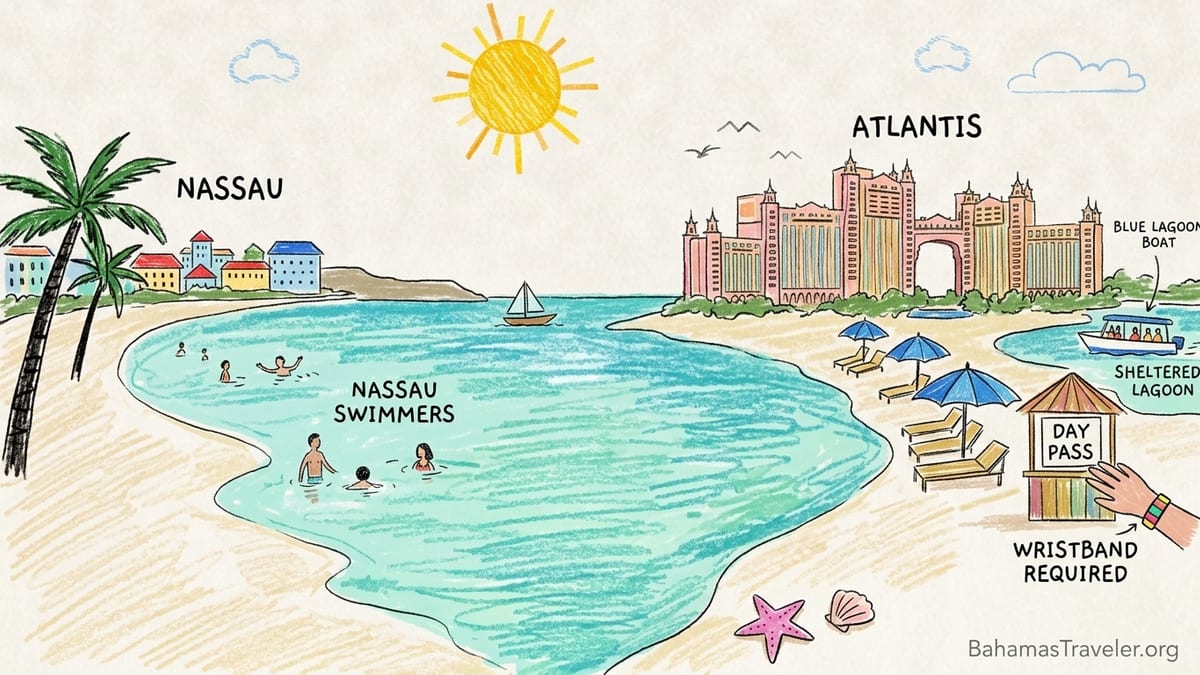
Paradise Island is where the visuals can be unreal but the logistics can get real fast. The sand and water along the island’s Atlantic-facing side can be stunning, yet the experience changes depending on exactly where you set your towel and what access you’re using. Atlantis, for example, makes it clear that non-registered guests need a Day Pass for access to its resort beaches and outdoor areas that are otherwise restricted, and day passes are limited and wristband-controlled. That doesn’t mean you can’t touch the ocean without paying, but it does mean the day can turn into a scavenger hunt for what counts as “the beach” versus “the resort beach setup.” On days when I wanted a relaxed, no-decision swim, I treated Paradise Island as a “choose your access first” beach day.
One Nassau-area swim that surprised me was the kind that feels almost too controlled to be interesting: Blue Lagoon Island (Salt Cay). It’s close to Nassau and sells beach-day packages with round-trip boat transfer and facilities included, and the pricing is clearly published for the core beach day package. The swim itself is the point. In the sheltered lagoon water, the surface stayed calmer than the open shore, and the depth built gradually in a way that felt friendly for floaters and families. The tradeoff is that you are on a schedule and you feel it when the crowd arrives in a wave off a boat. I still remember the beach changing by the hour: early arrivals spread out, midday brought clustered groups around shade and gear rentals, and by the last stretch the shoreline looked a little churned up from constant foot traffic, with the waterline less pristine than the morning’s first mirror-slick lap.