


I went to The Bahamas thinking island hopping would feel like bouncing between beach neighborhoods. It is not. The distances may look short on a map, but every move involves a real transport system with its own rules: limited sailing days, small-plane baggage limits, weather that can shut everything down, and enough waiting around that half your day can vanish between two islands. This is the practical, first-person transport diary of what I actually did by ferry and by plane, plus the route research I wish I had done earlier for the connections I did not personally take.
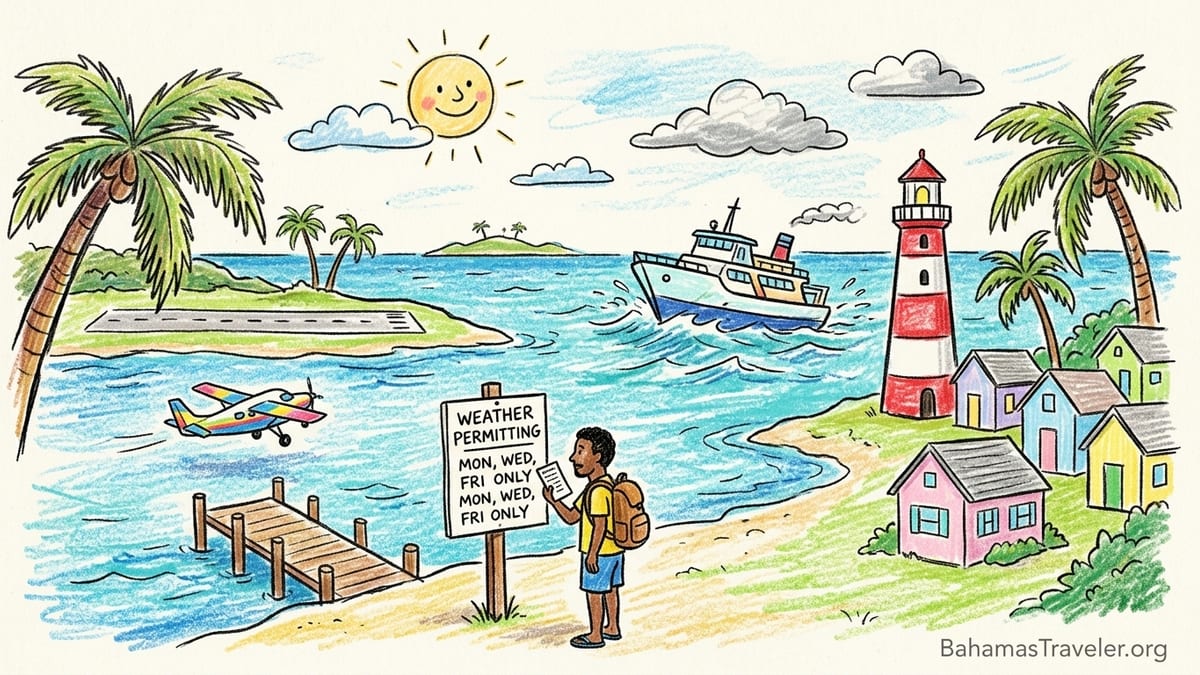
Before You Move: The Mindset Shift That Saves Your Trip
The first lesson I learned is that in The Bahamas, “nearby” does not mean “easy.” Nassau is a hub, not a downtown you can quickly pop out of. Most islands have one small airport, limited ground transport, and schedules that are built around daylight, demand, and sea conditions. That means you plan island hopping like you would plan separate destinations, not like you would plan day trips inside one city.
I also learned to build what I now call a weather buffer. Bahamas Ferries posts that schedules are weather permitting, and they can delay or cancel sailings when conditions are unsafe. Even if the sky over Nassau looks fine, conditions en route or at the destination dock can be rough enough to change everything. When I planned too tightly, I felt like I was racing the clock rather than enjoying the islands.
Finally, I stopped assuming daily service. Some connections that sound obvious on paper operate only on selected days. A good example is the high-speed passenger ferry linking Nassau with Spanish Wells and Harbour Island on specific weekdays, not every day. Once you understand that constraint early, your accommodations and transfers get easier, and your stress level drops.