


On a recent stay on Paradise Island, I decided to test one of the most heavily advertised day trips in Nassau: a ferry-based beach day on Blue Lagoon Island. Travel brochures often blur the line between the two islands, but Blue Lagoon is a separate private island that you must reach by boat, even though it is marketed everywhere on Paradise Island. I booked a standard beach package, followed the instructions to the Paradise Island Ferry Terminal, and spent a full day comparing what was promised with what actually happened on the ground, minute by minute and dollar by dollar.
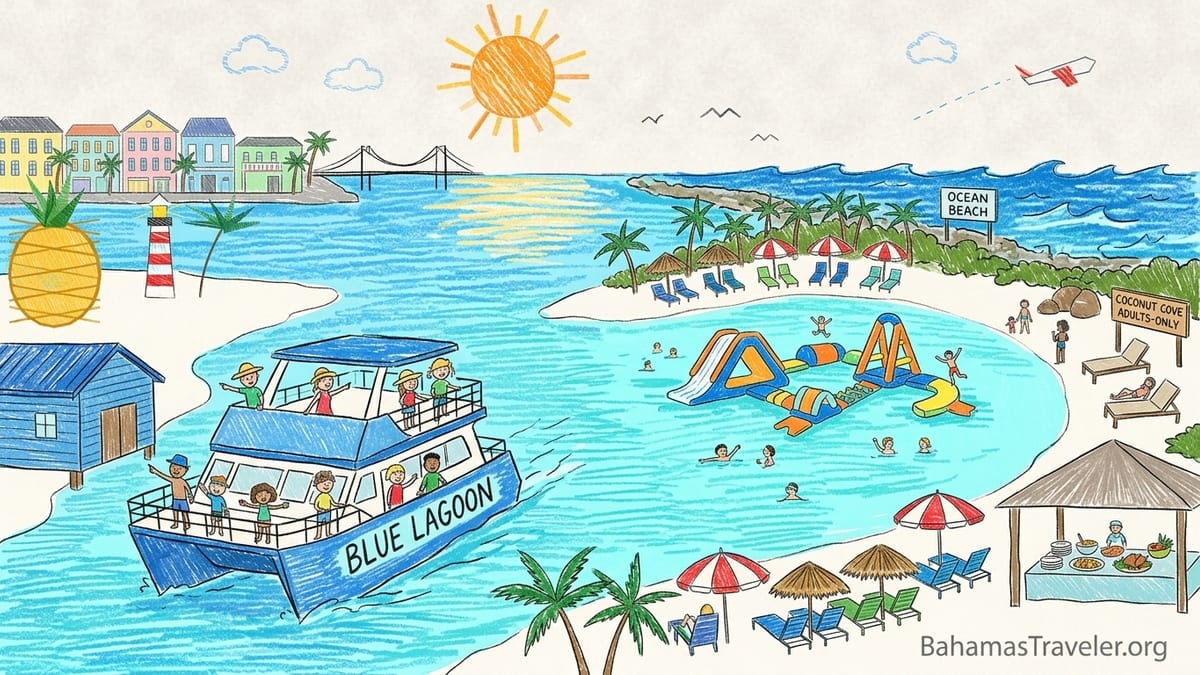
Booking the Blue Lagoon Beach Day From Paradise Island
I booked directly through the operator that runs Blue Lagoon Island and the Dolphin Encounters marine facility. Their website listed several options, including a basic Beach Day, an Adults Only Beach Day, and various dolphin, sea lion, stingray and shark encounters. For this visit I chose the regular Blue Lagoon Beach Day to see what most travelers actually experience, then compared it with details of the adults-only packages that cruise lines and the operator promote separately.
At the time of booking in October 2026, the official Bahamas tourism listing for Blue Lagoon Island promoted a Beach Day package that included round-trip boat transfer from Nassau or Paradise Island, lunch, free access to the inflatable Aqua Park, and use of beach facilities, sports and game equipment. Adult pricing on that listing was around 69 US dollars for the standard beach day, with children priced lower. Exact online checkout prices can vary slightly based on taxes, promotions and where you book, but my final cost for one adult, including VAT and fees, came in just under 80 US dollars.
The booking engine offered morning and midday departures. Because I wanted maximum time on the island, I chose an early morning ferry, scheduled for 9:30 a.m. from the Paradise Island Ferry Terminal. My voucher confirmed that check-in opened about 30 to 45 minutes before departure and stressed that boarding closes 15 minutes prior. It also stated clearly that dolphin and other animal encounters are separate products and not included in a regular beach admission, even though promotional images often feature dolphins in almost every frame.
Payment was handled entirely online by credit card and a confirmation email arrived within minutes. The email included my ferry time, barcoded e-ticket, and a short note that Blue Lagoon is a cashless destination that accepts major credit cards for on-island purchases, information that later proved important when I considered renting water sports equipment and buying drinks at the bar.
Getting to the Paradise Island Ferry Terminal and Boarding
Paradise Island can be confusing for first-time visitors, with resort docks, cruise tenders and independent tour boats all sharing a tight stretch of Nassau Harbour. My confirmation specified the Paradise Island Ferry Terminal as the departure point, which is separate from the cruise pier in downtown Nassau. From my hotel near Atlantis it was about a 10 to 15 minute walk, following the harbor past small souvenir stalls until the Blue Lagoon check-in desks came into view.
Check-in was straightforward. Staff scanned my printed voucher and verified my ID, then handed me a colored wristband that matched my excursion type. Families heading to dolphin or sea lion programs received different colored bands, a subtle but important reminder that those activities required their own pre-booked slots. The staff reiterated that my ticket covered the ferry, access to the main lagoon and beach areas, buffet-style lunch and basic beach games, but not premium animal programs or motorized water sports.
Because I arrived about 40 minutes before the scheduled 9:30 a.m. departure, there was some waiting involved. Passengers gathered in a shaded staging area near the dock, with views across the water to Nassau’s pastel colonial buildings and the bridges back to the main island. Boarding began approximately 20 minutes before departure. The crew directed us down a ramp onto a large double-decker catamaran-style ferry that operates as a shuttle to Blue Lagoon several times a day.
On this morning the ferry was roughly three-quarters full, with a mix of cruise passengers wearing ship-branded stickers and independent travelers staying at Paradise Island resorts. The lower deck offered shaded bench seating, while the open upper deck delivered better harbor views at the cost of more sun exposure. I chose an upper-deck bench near the starboard rail to watch the route out through Nassau Harbour.
The Ferry Ride Through Nassau Harbour
Once untied from the dock, the ferry eased away and began a scenic 30 to 40 minute transit through Nassau Harbour toward Blue Lagoon Island. The captain provided a brief safety announcement and pointed out that life jackets were stored overhead. The sea inside the harbor was calm, with only a gentle chop from passing tour boats, and the catamaran hulls handled it with minimal motion. Anyone with mild sensitivity to seasickness would likely find this ride manageable on a typical calm morning.
As we moved eastward, the skyline of Nassau slid past on one side while the luxury villas and resort towers of Paradise Island framed the other. Several fellow passengers pointed out high-profile celebrity homes that local guides often mention during harbor cruises. The upper deck gave unobstructed views of these properties, the cruise pier in the distance and the turquoise channel that eventually opens toward the open Atlantic.
Comfort onboard was basic but adequate. Seating consisted of molded benches without padding, and there were no seatbelts, but the ride did not demand them. A small bar counter on the lower deck sold soft drinks and basic snacks, but this was not a floating party boat. Sound levels remained surprisingly low aside from the hum of the engines and the wind across the bow. For travelers used to shorter resort shuttles, the nearly half-hour ride feels like an excursion in its own right rather than a quick transfer.
As we approached Blue Lagoon Island, the developed shoreline of Nassau receded and the view shifted to the low, palm-covered silhouette of Salt Cay, the island’s official name. The ferry slowed to navigate into the calm inner lagoon, which is partly enclosed and naturally sheltered. That transition from open harbor to a still turquoise basin, ringed by bright white sand and swaying palms, delivered the kind of “private island” arrival the marketing promises.
First Impressions and Comparing Expectations on Arrival
The ferry dock at Blue Lagoon Island sits slightly away from the main swimming area, so after disembarking we followed staff along a sandy path. Signage separated day guests for the standard beach, adults-only section and those with timed dolphin or sea lion programs at the Dolphin Encounters facility. The island felt busy but not chaotic, with several hundred people dispersing in different directions.
Promotional materials describe Blue Lagoon as a classic Bahamian hideaway with a hidden lagoon, coral reefs and coconut palms. The reality on the ground aligned fairly well with that description, although this is a commercial operation rather than a deserted cay. The sheltered lagoon was indeed calm and glassy, especially compared with the ocean side of the island, which had more noticeable waves. Families with small children immediately gravitated to the lagoon beach, which offers shallow entry and very little surge.
From the standard beach guest perspective, the main question on arrival was whether there would be enough lounge chairs in decent locations. Staff had already lined rows of blue loungers along the lagoon shore, with a second tier set back under the fringe of palms. On my visit there were more chairs than people, and I had no trouble finding a front-row lounger with a clear lagoon view. Umbrellas were more limited. Fixed palapas and some standalone umbrellas provided shade for a portion of chairs, but many loungers were fully exposed. Travelers who arrive on later ferries might find themselves walking further back to locate partial shade.
The general atmosphere matched the “relaxing private island” advertising, but it is important to understand that Blue Lagoon is not an extension of Paradise Island itself. Once you are on the cay, you are in a self-contained facility with set ferry times, centralized restaurants and designated recreation zones. You cannot simply stroll off to a neighboring resort the way you could along Cabbage Beach on Paradise Island.
Beach Areas, Lagoon Swimming and the Aqua Park
The heart of the standard beach day is the broad lagoon shoreline. The sand here is soft and pale, raked regularly to clear seaweed and debris. Entry into the water is gentle, with a shallow gradient that allows children to splash close to shore while adults stand waist-deep only a few steps farther out. On my visit the water clarity was high enough to see my feet and small fish gliding past, although this is not a dedicated snorkeling reef.
For stronger swimmers and older kids, the inflatable Aqua Park was a significant draw. The official description of the Beach Day package includes complimentary access to this floating obstacle course, which consists of slides, climbing elements and balance beams anchored in deeper water inside the lagoon. Guests receive life vests and timed sessions to control numbers on the inflatables. The Aqua Park does introduce more noise and energy to the central part of the lagoon, so those seeking quiet might prefer chairs toward the edges of the main beach or on alternate coves.
On the ocean side of the island, the waves were higher and the sand slightly coarser, with stronger currents that staff monitored closely. Standard beach guests can usually explore different stretches of shoreline, though some adults-only or VIP areas are roped off and reserved for those packages. During my walk-around, the contrast was clear: the lagoon side delivered a placid, family-friendly scene, while the outer beach felt more like a classic Atlantic-facing Bahamian shore with more movement and sound.
In terms of facilities, the island provides restrooms, freshwater showers, changing rooms, bars, snack shacks and a central restaurant that serves the included lunch. There are also kiosks for water sports rentals, from kayaks and paddleboards to snorkel sets. Pricing for these rentals was posted onsite and payable by major credit card, with no cash accepted, consistent with the operator’s cashless policy.
Lunch, Amenities and Real Time on the Island
Beach Day admission includes a buffet-style lunch served under shaded pavilions. On my visit, staff announced lunch by wristband group to keep lines moving smoothly. The buffet offered grilled chicken, a local-style fish dish, rice and peas, green salad, coleslaw, fresh fruit and cookies. The quality was comparable to a midrange resort buffet: nothing gourmet, but flavorful and generously portioned. Iced tea, lemonade and water were available at no extra cost, while alcoholic beverages carried a separate charge at nearby bars.
Because Blue Lagoon operates on fixed ferry schedules, the true value of the package depends heavily on how much usable time you actually have between arrival and departure. My morning ferry docked around 10:10 a.m. and the return for standard guests was scheduled at 3:00 p.m., which yielded roughly four and a half to five hours on the island after subtracting walking and orientation. Of that time, I spent about 30 minutes on lunch, another 20 or so queuing briefly at the bar and restrooms, and the rest split between swimming, reading on a lounger and exploring the paths along the shore.
The changing rooms were serviceable rather than luxurious. They consisted of simple stalls with doors, hooks for clothing and overhead lighting, located near the central facilities hub. Cleanliness was acceptable in the late morning but naturally declined as more guests cycled through. Anyone who prefers more privacy and comfort might want to arrive already in swimwear under light clothing and simply use the changing areas to rinse and freshen before departure.
In addition to the included elements, there were several opportunities to spend more. I purchased an iced coffee from a small café counter and considered renting a stand-up paddleboard for an hour. The posted rental prices and bar tabs can add up quickly, especially for families, so the final cost of a “simple” beach day can easily double if you add specialty drinks, rentals and gift shop purchases to the base ticket price.
Animal Encounters, Extra Costs and Welfare Questions
Blue Lagoon Island is also home to Dolphin Encounters, a marine facility offering dolphin swims, dolphin encounters, sea lion encounters, stingray programs and, more recently, shark-focused experiences. It is important to emphasize that none of these are included with a standard Beach Day admission. Each program requires its own booking, scheduled time slot and additional fee that often exceeds the cost of the beach day itself.
During my visit I observed but did not personally participate in a dolphin encounter. Guests in these programs were fitted with life vests and led onto shallow platforms where they interacted with dolphins under trainer supervision, posing for photos and receiving splashes or gentle pushes through the water. Photography from the sidelines is restricted. Signs and staff indicate that only the facility’s photographers can capture images during the encounters, which are later sold in bundled photo packages that can add another substantial cost to the day.
From a welfare standpoint, visitors will notice that the dolphins and sea lions live in netted ocean enclosures formed within the natural lagoon. The water is tidal and open to the sea, rather than a chlorinated pool, which is a positive aspect compared with some older marine parks. However, these are still captive programs. Travelers who avoid marine mammal attractions on ethical grounds will want to stick to the beach, Aqua Park and non-animal activities, which can easily fill a full day without entering the encounter zones.
For those who do book an encounter, it is wise to factor in the total package cost: Beach Day admission, encounter fee, potential photo package, and any transport arranged through a cruise line. The all-in amount for a family of four can climb into several hundreds of dollars once everything is combined, far beyond the headline price of the beach-only ticket.
Standard Beach Day vs Adults-Only Packages
While I experienced the regular Beach Day firsthand, I gathered detailed information about the adults-only options that many cruise lines and the operator itself now highlight. Several major cruise brands sell an Adults Only Beach Day or VIP Beach at Blue Lagoon product. Pricing in October 2026 typically falls in the range of roughly 120 to 140 US dollars per adult when booked through a cruise line, noticeably higher than the standard beach ticket.
These adults-only packages usually include access to a separate, quieter beach section, often branded as a VIP or Coconut Cove area, along with larger lounge chairs, a more secluded setting, and an included Bahamian-style lunch similar in content to the standard buffet. A key difference is the beverage package. Descriptions from cruise lines and the operator mention unlimited Bahama Mamas and a selection of nonalcoholic drinks such as fruit punch, lemonade, iced tea and bottled water in the adults-only zone, whereas standard beach day guests must purchase cocktails individually.
The physical location of the adults-only beach varies slightly by configuration, but it typically occupies an area that faces either the ocean side or a less trafficked cove, away from the inflatable Aqua Park and family play areas. Recent announcements from the operator in early 2026 highlight a renovated and expanded Adults Only Beach with an emphasis on preserving the natural landscape and reducing environmental impact, suggesting that this area has been upgraded with new shade structures, landscaping and possibly more sustainable materials.
For couples or groups of adults traveling without children, the trade-off comes down to cost versus atmosphere. If your priority is quiet, shade, attentive bar service and avoiding the shrieks that often accompany a floating obstacle course, then the adults-only package provides those benefits in a controlled setting. If you primarily want calm water and do not mind sharing the sand with families, the standard Beach Day delivers essentially the same lagoon and island scenery for significantly less money, leaving room in your budget for a few drinks or a water-sports rental without approaching the all-inclusive price point.
Schedules, Delays and Cruise Passenger Logistics
Blue Lagoon Island operates its ferries on a published schedule, with multiple departures each day from the Paradise Island Ferry Terminal and the cruise pier area in Nassau. My outbound and return trips departed close to the listed times, but staff cautioned that weather, sea conditions and operational considerations can cause changes. They recommended that cruise passengers in particular double-check departure times during check-in and pay attention to announcement boards on the island.
One logistical detail that can surprise guests is that not all returns drop you at exactly the same dock where you boarded. Cruisers who start from the pier adjacent to their ship may find that the return ferry uses a nearby but different landing, requiring a short walk through the port area. Similarly, independent travelers beginning at Paradise Island need to confirm whether their chosen departure and return are specifically from the Paradise Island Ferry Terminal or from downtown Nassau, since the operator can run separate routes and times for different groups.
For guests booking through a cruise line, the shore excursion team usually coordinates ferry schedules with the ship’s all-aboard time and provides a meeting point near the gangway. Independent travelers staying at Paradise Island hotels must manage transfers themselves. In my case, walking between my hotel and the ferry terminal was easy, but visitors staying in downtown Nassau or Cable Beach would need to allow extra time for a taxi ride across the bridge to Paradise Island. Given the fixed nature of the ferries, missing a departure can significantly cut into your beach time or, in the worst case for cruisers, risk a late return to the ship.
The November 2023 capsizing of a Blue Lagoon tourist ferry, which resulted in a passenger fatality, has understandably heightened traveler sensitivity to safety. Current operations include routine verbal safety briefings, visible life jackets and crew presence during boarding and disembarkation. While no excursion can eliminate risk entirely, it is reasonable for passengers to pay attention to safety instructions, choose seating that feels comfortable for them and consider sea conditions when deciding whether to ride on the upper or lower deck.
The Takeaway
So did a day on Blue Lagoon Island deliver a better beach experience than simply staying on Paradise Island itself? The answer depends on what you value. In my case, the calm, enclosed lagoon, curated facilities and “boat trip plus beach” combination felt distinctly different from walking out to Cabbage Beach or relaxing at a resort pool. The ferry ride through Nassau Harbour, with its skyline views and glimpse of island life along the water, added a sense of journey that a standard resort day lacks.
From a value standpoint, the standard Beach Day from Paradise Island provided a solid experience for the roughly 80 US dollars I ultimately paid after taxes. I received a scenic round-trip ferry ride, reliable access to loungers on a well-kept beach, calm lagoon swimming, a decent buffet lunch and several hours of unstructured relaxation. The extras, from bar drinks to water-sports rentals, could easily have doubled my spending, but they were optional and clearly priced.
Personally, I would not book an animal encounter on top of the beach day. The combination of additional cost, restrictions on personal photography and ongoing debates about marine mammal captivity makes the beach-only experience feel both simpler and more comfortable ethically. Observing the dolphins and sea lions from a distance while focusing on the island’s natural beauty offered enough interest without adding scheduled programs to an otherwise relaxed day.
If I return, I would choose one of two paths. Traveling with family, I would book the same standard Beach Day from Paradise Island and simply arrive on the earliest ferry to secure shaded chairs and maximize time before the Aqua Park gets busy. Traveling as a couple or with adult friends, I would strongly consider the adults-only package for the quieter atmosphere and included drinks, but only if the price difference over the basic ticket stayed within a range that felt reasonable. Either way, I would still plan at least one full day on Paradise Island’s own beaches and pools, then treat Blue Lagoon as a complementary island-hopping experience rather than a complete replacement.
FAQ
Q1. Is Blue Lagoon Island part of Paradise Island?
Blue Lagoon Island is a separate private island, also known as Salt Cay, located a short ferry ride from Nassau and Paradise Island. You must travel there by boat.
Q2. Where does the ferry to Blue Lagoon depart from if I am staying on Paradise Island?
Most independent Blue Lagoon Beach Day bookings for resort guests use the Paradise Island Ferry Terminal, a short walk from major hotels near Nassau Harbour. Always confirm your specific departure point on your voucher.
Q3. How much does a standard Blue Lagoon Beach Day cost?
Official tourism information in late 2026 lists adult Beach Day prices around 69 US dollars before taxes and fees, with children paying less. Final amounts vary slightly depending on where you book.
Q4. What is included in a regular Blue Lagoon Beach Day ticket?
A standard Beach Day typically includes round-trip ferry transport, access to the main beach and lagoon areas, use of lounge chairs, buffet-style lunch, basic beach games and entry to the inflatable Aqua Park.
Q5. Are dolphin, sea lion, stingray or shark encounters included in the Beach Day?
No. All animal encounter programs on Blue Lagoon Island require separate bookings and additional payment. A regular Beach Day ticket does not include these activities.
Q6. What is the difference between the standard Beach Day and the adults-only package?
The adults-only package usually provides access to a quieter, child-free beach area, larger loungers, an included lunch similar to the main buffet and unlimited selected drinks such as Bahama Mamas and soft beverages, at a higher price point.
Q7. How much time will I actually have on Blue Lagoon Island?
With a morning departure from Paradise Island and an afternoon return, most guests enjoy roughly four and a half to five hours on the island, allowing for walking time, lunch and some queueing at facilities.
Q8. Can I pay with cash on Blue Lagoon Island?
Blue Lagoon operates as a largely cashless destination. On-island purchases such as drinks, rentals and gift shop items are paid by major credit card, so you should not rely on cash alone.
Q9. Is the ferry ride suitable for people who get seasick?
The ferry travels through relatively sheltered Nassau Harbour and then into a calm lagoon. On typical days the ride is gentle, but those prone to motion sickness may prefer shaded lower-deck seating and may want to take precautions.
Q10. Is Blue Lagoon better than staying on the beach at Paradise Island?
Blue Lagoon offers a different experience: a scenic ferry ride, a sheltered lagoon and a curated private island setting. Paradise Island beaches are more flexible and accessible. Many travelers enjoy doing both, using Blue Lagoon as a structured day trip rather than a replacement for their resort beach.