


Paradise Island is one of the Caribbean’s most restaurant-heavy resort destinations, with Atlantis alone listing dozens of venues. Yet many visitors arrive unsure how much meals really cost, where non-guests can eat, whether they need Aquaventure access, or how to enjoy a splurge dinner without blowing the budget on every breakfast and lunch. This guide focuses on Atlantis dining, Marina Village and nearby affordable options, using current information to help you plan realistic meals before you land in the Bahamas.
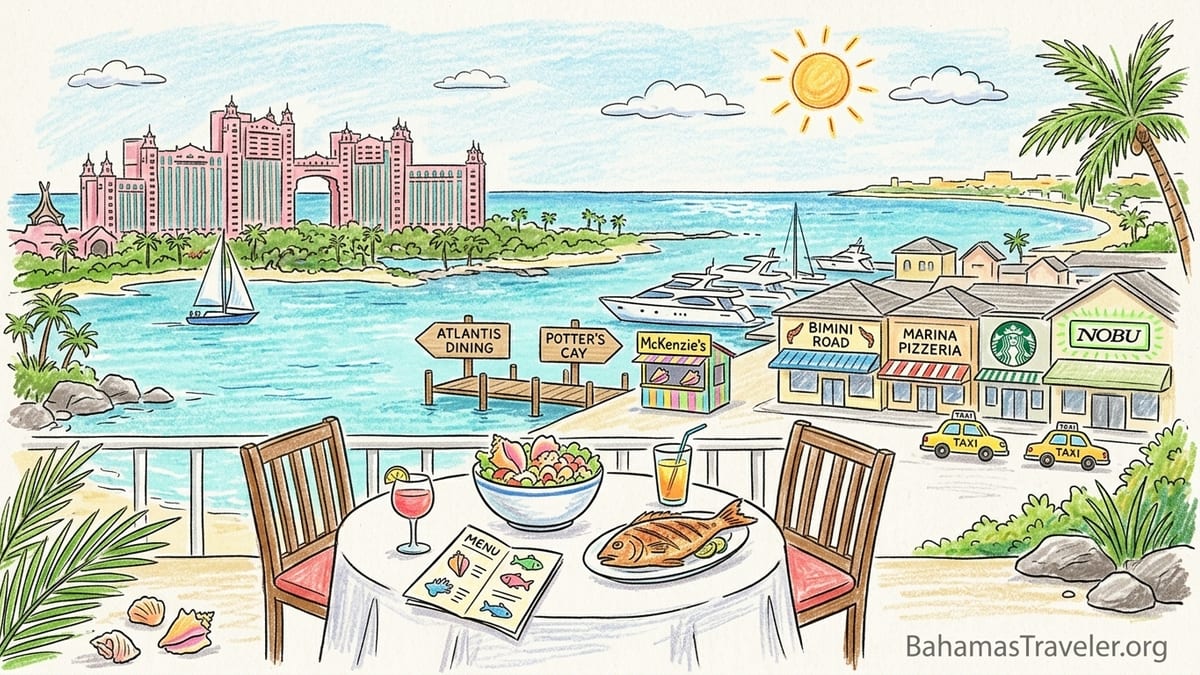
Understanding Dining at Atlantis and Paradise Island
Atlantis Paradise Island functions almost like a self-contained dining city. Within the resort you will find high-end celebrity chef restaurants such as Fish by José Andrés, Nobu and Paranza by Michael White, along with steakhouses, buffets, pool grills, pizzerias and grab-and-go counters. A resort newsletter from March 2026 lists venues such as Amber, Bimini Road, Café Martinique, Carmine’s, Claudio’s, Chop Stix, Fish, Marina Pizzeria, Paranza, Nobu, Poseidon’s Table, Seafire Steakhouse, Sip Sip and others open for dinner, which gives a sense of just how concentrated the options are on property.
Prices across Atlantis are high compared with many mainland U.S. destinations. Recent visitor reports from 2025 and 2026 describe dinner for two at Fish or Nobu commonly running around 250 to 300 U.S. dollars including tip when ordering an appetizer to share, two mains, a dessert and a modestly priced bottle of wine. One family mentioned a simple kids’ butter noodles dish at Fish priced in the low 20-dollar range, which underlines how quickly a full family meal can add up once drinks and tax are factored in.
There is no requirement to buy an Aquaventure waterpark pass to dine at Atlantis restaurants. Non-resort guests can access the resort, casino and Marina Village on foot or by taxi and may book restaurant reservations. What Aquaventure controls is entry to the water slides and pools, not to the restaurants. However, security may be tighter during peak holidays and you should bring a photo ID and your reservation confirmation if you are not staying on site.
Menu prices and automatic service charges are also important to understand. The Bahamas value-added tax currently runs in the low double digits, and most Atlantis venues add an automatic service charge around 15 percent to the bill. Combined with VAT, diners often see 25 percent or more added to menu prices. For example, a 40-dollar entrée effectively costs around 50 dollars once tax and service are included, before any extra tip. When budgeting, multiply menu totals by about 1.25 to 1.30 to estimate the final cost.
Special-Occasion Dining: Fish, Nobu, Paranza and DUNE
For many visitors, one premium dinner is a highlight of a Paradise Island trip. At Atlantis, the three most prominent special-occasion choices are Fish by José Andrés, Nobu and Paranza. Off-property but still on Paradise Island, DUNE at The Ocean Club provides a quieter ultra-luxury alternative with expansive ocean views.
Fish by José Andrés, located in The Cove, focuses on Bahamian seafood interpreted through the lens of a Michelin-recognized chef. The room is light, modern and stylish, with a lively but not overly loud atmosphere that works well for both romantic dates and special celebrations. The menu centers on local catches, including conch, snapper and lionfish, along with Spanish-influenced small plates. Recent diners describe dinner for two with one shared appetizer, two seafood mains, shared dessert and one or two cocktails coming in near 250 to 300 dollars after tax and the included service charge.
Nobu, just off the casino floor, offers a darker, more dramatic setting framed by a glowing green entrance and a soundtrack of low-level lounge music. Compared with Fish, Nobu’s atmosphere feels more cosmopolitan and high-energy, especially on weekends when casino traffic is heavy. The menu follows the global Nobu template with dishes like miso black cod, rock shrimp tempura and an extensive sushi list. While Atlantis does not publish full a la carte prices online, pricing at other Nobu locations in 2026 suggests signature dishes like miso black cod commonly fall in the 45 to 55 dollar range, with specialty rolls in the mid 20s to low 30s per roll. Reports from guests at Atlantis indicate total bills are in line with Fish once drinks, tax and service are added.
Paranza by Michael White, also in The Cove, brings upscale Italian seafood with a more intimate, candlelit feel than either Fish or Nobu. The room blends coastal Italian touches with modern design, and the menu is built around house-made pastas and delicately prepared fish. Events held in 2026 for the Nassau Paradise Island Wine and Food Festival list Chef Michael White dinners and master classes with ticket prices in the 250 to 300 dollar range per person with wine pairings, which hints at the level of the restaurant itself. A realistic expectation for a three-course dinner for two with a bottle of mid-range wine is again roughly 250 to 350 dollars after service and VAT.
DUNE at The Ocean Club, a Four Seasons property east of Atlantis, is not part of the Atlantis complex but is easily reached by taxi and is open to non-hotel guests with reservations. It sits directly above the beach, with many tables offering views of the Atlantic and a quieter, more serene vibe than the casino-adjacent venues. DUNE’s kitchen highlights refined French-Asian flavors and fresh seafood. Menu prices are comparable to Atlantis fine dining, with many mains around the 50-dollar mark. Because The Ocean Club is not tied to Aquaventure, outside guests simply check in at the security gate for their dinner reservation.
Reservations are strongly recommended at all four restaurants, especially during school holidays, U.S. Thanksgiving, Christmas, New Year’s and Easter. Atlantis uses online booking tools and phone reservations for Fish, Nobu and Paranza, while DUNE reservations are managed via The Ocean Club. Dress codes at these venues are described as resort elegant. Men usually wear collared shirts and long pants or dress shorts, women opt for sundresses or smart separates, and closed-toe shoes are preferred for evening. Children are welcome at Fish and Paranza and more common during earlier seatings, while Nobu and DUNE lean more adult in feel later in the evening.
Romantic Dinners, Ambiance and What You Will Spend
Paradise Island is well suited to romantic travel, but the ambiance differs significantly between the main special-occasion restaurants. Couples looking for a sense of place often gravitate toward Fish or DUNE, both of which lean into ocean themes and local flavors. At Fish, couples can share dishes like conch fritters, whole grilled local fish or lionfish preparations that highlight Bahamas conservation efforts. At DUNE, terrace tables set above the beach pair the sound of the surf with candlelight, providing one of the most classically romantic dining backdrops on the island.
Nobu, by contrast, offers romance more in the metropolitan sense. The lighting is low, tables are close, and the energy from the nearby casino filters through, which some couples enjoy as a contrast to quiet beach days. Sharing plates of sushi, sashimi and small hot dishes encourages a relaxed, grazing style of meal. Paranza sits in between these two extremes. Its room is softer and more intimate than Nobu, but it remains firmly indoors with polished, refined energy rather than overt beachiness. House-made pastas and seafood crudos help the experience feel indulgent.
In practical budget terms, a romantic three-course meal for two including a shared appetizer, two mains, one dessert and a bottle of mid-range wine at any of these venues is likely to fall in the 250 to 350 dollar range, inclusive of the automatic service charge and VAT. Couples who choose cocktails instead of a bottle of wine may shave a small amount off that total, but once you add a second round of drinks, dessert and coffee, bills tend to converge around similar numbers. To keep costs predictable, some visitors choose to skip dessert or stick to a glass of wine each, reducing a luxury evening to closer to 180 to 220 dollars for two.
Because the resort adds a service charge, you are not required to tip extra, though some guests add a small additional gratuity for exceptional service. If you are trying to keep to a strict budget, check the bill carefully to confirm service has already been included before deciding on any top-up gratuity. For special occasions like anniversaries or honeymoons, you can note this when booking. While comped items are not guaranteed, staff sometimes acknowledge celebrations with a personalized dessert plate or greeting.
Bahamian Food: Bimini Road, McKenzie’s Fresh Conch and Local Alternatives
Many visitors want at least one meal that feels distinctly Bahamian. At Atlantis, Bimini Road in Marina Village is the resort’s most visible Bahamian-themed restaurant, with brightly colored decor, live music on some evenings, and a menu of conch fritters, cracked conch, grilled fish, peas and rice and plantains. It is family-friendly and lively rather than formal. You can expect mains such as cracked conch or jerk chicken in the approximate 30-dollar range, with appetizers in the mid-teens. For a family of four sharing one or two appetizers, four mains and non-alcoholic drinks, a realistic dinner bill including VAT and service could fall around 180 to 230 dollars.
For a more local experience, many Bahamas regulars recommend McKenzie’s Fresh Conch at Potter’s Cay Dock, which sits under the bridge between Nassau and Paradise Island. It is accessible by short taxi ride from Atlantis, and non-resort guests often stop here before or after a day at the beach. McKenzie’s is a simple, open-air spot that specializes in conch salad made to order, along with cracked conch and fried fish. Pricing tends to be significantly lower than resort restaurants, with conch salad portions broadly reported in the mid-teens to around 20 dollars, though exact current prices fluctuate with supply and inflation. Seating is informal and you will be eating among locals and day workers as well as tourists.
Other casual Bahamian choices cluster around Potter’s Cay and downtown Nassau, reachable by taxi from Paradise Island. Food trucks and small shacks serve dishes like stewed fish, boil fish, baked macaroni, chicken, ribs and traditional sides. Posts from 2026 mention full plates in the mid-teens to low 20-dollar range at many of these vendors. Although these spots can be more budget-friendly, visitors should understand that they are not priced like street food in some lower-cost countries. Ingredients and imports are expensive in the Bahamas, and even simple dishes rarely feel cheap in absolute terms.
If you want Bahamian flavors within Atlantis but prefer something more polished than a dockside stall, consider mixing a Marina Village dinner at Bimini Road with a separate outing to McKenzie’s or a Potter’s Cay vendor at lunchtime. This lets you compare resort and local interpretations of similar ingredients without committing every night of your trip to leaving the resort. Always check opening times, as some Potter’s Cay stalls close early or shut on certain days, and weather can affect operations.
Casual Family Restaurants, Quick Lunches and Breakfast
Atlantis and Marina Village provide a broad spectrum of casual restaurants aimed at families. In Marina Village, you will find familiar names such as Johnny Rockets and Starbucks alongside island-branded concepts like Bimini Road, Café Martinique and Pisces seafood. Johnny Rockets offers burgers, fries, shakes and salads in a setting that feels familiar to many North American travelers. Accounting for resort pricing, expect burgers in the mid to high teens, sides in the single digits and shakes roughly in the low teens. A family of four can easily spend 80 to 120 dollars here with drinks once VAT and service are added.
Within Atlantis, venues like Marina Pizzeria, poolside grills and quick-service counters provide fast lunches and snacks. Marina Pizzeria sells whole pies and by-the-slice options. While detailed 2026 pricing is not widely published, recent visitor accounts describe a casual lunch of a shared pizza, two salads and soft drinks for a family of four totaling roughly 80 to 100 dollars after tax and service. Pool grills selling items like burgers, chicken sandwiches and fries often run in a similar range for a basic lunch.
Breakfast is one of the easiest meals to overspend on inside large resorts. Atlantis offers expansive breakfast buffets at venues such as Poseidon’s Table, but these come at a premium, with adult per-person prices that can approach or exceed 40 dollars before tax and service in peak seasons. Ordering a la carte in coffee shops or café-style venues, or stocking your room with simple items like cereal bars and fruit from an off-property grocery stop, can substantially reduce costs over a four or five-night stay.
Children’s menus are available at many Atlantis restaurants, including several of the fine dining locations. Reports from recent years mention kids’ items, such as plain pasta or grilled chicken, starting around the low 20-dollar range at higher-end venues, with more modest pricing at pizzerias and burger outlets. Parents should ask to see the kids’ menu when seated, as it is not always offered automatically. Dietary needs like vegetarian, vegan and gluten-free are generally manageable at Atlantis, but it is best to notify your server of any specific allergies. Fish, Nobu and Paranza in particular handle seafood and shellfish, so cross-contact is a concern that staff are accustomed to managing.
Lower-Cost Meals and Options for Non-Atlantis Guests
While nothing on Paradise Island feels genuinely cheap, there are ways to reduce food costs compared with eating every meal at the most expensive resort restaurants. Non-Atlantis guests have full access to Marina Village and many casual outlets inside Atlantis, without buying a day pass. You can walk into Marina Village, eat at Johnny Rockets, Bimini Road or grab coffee and pastries at Starbucks without setting foot inside the waterpark. Outside of Atlantis, restaurants such as Anthony’s, located across from Marina Village, draw both locals and visitors with mid-range pricing on pizzas, pastas and Bahamian-influenced dishes.
Venturing farther, Potter’s Cay Dock and downtown Nassau present options where full meals are more likely to fall in the mid-teens to low 20s per person for generous plates of seafood, chicken or ribs. However, taxis to and from Paradise Island add to the effective cost, especially in the evenings. Visitors weighing a 15-dollar conch salad against a 30-dollar resort appetizer should factor in a round-trip taxi that may run around 40 to 50 dollars, depending on traffic and time of day. For groups or families, the savings may still be meaningful, but solo travelers might find the net cost difference relatively small.
One widely used approach is to combine grocery runs and simple in-room breakfasts with strategically chosen resort meals. Many taxis from the airport will stop at a supermarket on the way to Paradise Island for a brief shop, allowing you to buy cereal, fruit, snacks and drinks at more reasonable prices than resort convenience stores. Drinking tap water in the Bahamas is generally considered safe in Nassau and Paradise Island, but many visitors prefer bottled water. Purchasing large bottles or cases off property and refilling smaller containers can save several dollars per person per day.
For non-Atlantis guests staying elsewhere on Paradise Island or downtown, Atlantis dining remains accessible. You can reserve Fish, Nobu or Paranza for a single special night while relying on your own hotel’s breakfast options, fast-casual spots near your accommodation, and local restaurants in Nassau. Parking near Atlantis is limited and mostly geared toward registered guests, so many visitors rely on taxis or ride services instead of driving. Those staying at nearby hotels like Comfort Suites can walk into Marina Village and the Atlantis casino area in a few minutes, giving easy access to both premium and affordable options without a car.
Seasonal Closures, Renovations and How to Check
Paradise Island’s dining landscape is not static. Menus, prices and even which venues operate can shift from year to year, and sometimes from week to week during shoulder seasons. In 2026 Atlantis has been updating areas around The Cove, and some food and beverage outlets in that zone may close temporarily or operate with limited hours during renovations. The resort’s own weekly Atlantean newsletter, distributed on site and occasionally posted online, is one of the best ways to confirm which venues are open during your stay.
Seasonality also affects hours and offerings. During peak periods such as Christmas to New Year’s, U.S. spring break and major festival weeks associated with the Nassau Paradise Island Wine and Food Festival, Atlantis tends to run extended hours and offer special tasting menus or events at Fish, Nobu, Paranza and Café Martinique. These can be exciting opportunities for food lovers, but they may also crowd out regular reservations or push prices up for set menus. Off-peak months, particularly late summer and early fall, can see certain restaurants close on specific days or for multi-week breaks.
Outside of Atlantis, weather and local events can influence whether dockside and food truck vendors at Potter’s Cay operate on any given day. Heavy rain, high wind or stormy seas can limit seafood deliveries and shutter some stalls. This makes it important to remain flexible. If you plan a special outing to McKenzie’s Fresh Conch, for example, consider having a backup option in downtown Nassau in case a stall is closed when you arrive.
Because official websites may not list every short-term change, a good practice is to verify closer to your travel dates using up-to-date resort newsletters, recent guest reviews and direct calls to the hotel or restaurant. This is particularly important if a specific venue such as Fish, Paranza or DUNE is a centerpiece of your trip. Asking about dress codes, children’s policies, and dietary accommodations at the time of confirming your reservation can also prevent surprises after arrival.
Practical Three-Day and Five-Day Dining Plans
To help you balance one or two spectacular meals with more manageable everyday spending, it can be helpful to sketch a loose meal plan before you go. The following examples assume two adults and two children staying on Paradise Island, but the structure works for couples or solo travelers with slight adjustments to restaurant choices and portion sizes.
For a three-day visit, consider dedicating one evening to a premium dinner, one to mid-range Bahamian flavors and one to a simpler casual night. On Day 1, after arrival, you might explore Marina Village and have a relaxed dinner at Bimini Road. Sharing a couple of appetizers, ordering mains for everyone and sticking to non-alcoholic drinks could land your bill around 200 dollars after tax and service, giving your first night a sense of place without the full fine-dining price tag. Stop at a supermarket en route from the airport for breakfast supplies, so Day 2 and 3 mornings can be handled in the room with fruit, yogurt and pastries.
On Day 2, plan pool or beach time and eat a quick lunch at Marina Pizzeria or a pool grill. Budget 80 to 100 dollars for a family lunch that includes pizza or burgers and soft drinks. For dinner, book your big night: Fish, Nobu, Paranza or DUNE depending on your preference. Aim for an early time if you are traveling with kids, and plan for 250 to 300 dollars including drinks and service. On Day 3, keep food simple to compensate. Have in-room breakfast, then take a taxi over the bridge late morning to McKenzie’s Fresh Conch or a Potter’s Cay stall for lunch. With plates in the mid-teens to low 20s, lunch for four might land between 70 and 100 dollars plus taxis. That evening, you could either use remaining groceries, grab sandwiches in Marina Village, or return to a casual favorite, saving your final splurge for cocktails or desserts instead of a second big dinner.
For a five-day itinerary, spacing out premium and mid-range meals helps. Day 1 can mirror the three-day plan with a Marina Village dinner at Bimini Road or Johnny Rockets, depending on whether the family feels more adventurous or wants something familiar. Day 2 might feature a casual lunch at a pool grill and a mid-priced dinner at Seafire Steakhouse, Carmine’s or another Atlantis restaurant that sits between pizza and the top fine dining tier in pricing, with a target bill of roughly 180 to 240 dollars for four.
Day 3 could be a full excursion day to downtown Nassau or a boat tour, with lunch at a local restaurant or Potter’s Cay and a very light dinner, perhaps just snacks or sandwiches back at the hotel if everyone returns tired and sun-soaked. Day 4 becomes your premium dinner night at Fish, Nobu, Paranza or DUNE. By this point you have saved a bit through using in-room breakfasts and lower-key lunches, making a 300-dollar evening more comfortable. Day 5 can close with flexibility. If there is a favorite spot, return there, or try Café Martinique or another Marina Village restaurant that offers views of the yachts and a sense of occasion without tipping into the very highest price range every night.
In both the three-day and five-day plans, the central idea is to commit to only one or at most two true fine-dining dinners during a short stay, while being deliberate about breakfasts and lunches. Grabbing a 10-dollar pastry and a coffee outside the resort, eating groceries in the room, or sharing a pizza for lunch significantly reduces the total food budget, freeing up funds for that one memorable meal where you fully relax into the Atlantis or Ocean Club experience without constant mental arithmetic.
The Takeaway
Dining on Paradise Island, and especially at Atlantis, can be one of the most enjoyable aspects of a Bahamas trip if you walk in with accurate expectations and a plan. The resort is home to destination restaurants like Fish by José Andrés, Nobu and Paranza, along with DUNE at The Ocean Club just up the road, all of which deliver special-occasion experiences at price points comparable to major American and European cities. At the same time, Marina Village, poolside grills, pizzerias and local spots like McKenzie’s Fresh Conch or downtown Nassau eateries offer ways to experience Bahamian flavors and familiar comfort food without breaking the bank each day.
Key to success is understanding that taxes and automatic service charges significantly increase the effective price of every menu item, that reservations and loose dress codes still shape the feel of fine-dining evenings, and that non-Atlantis guests can access most restaurants without an Aquaventure pass. By combining a supermarket stop, in-room breakfasts, occasional local lunches and carefully chosen premium dinners, you can enjoy both the high-gloss Atlantis culinary scene and the more grounded food culture of the Bahamas in a single trip.
Before you travel, check current restaurant openings, renovation updates around The Cove, and any seasonal closures, particularly if one specific venue is central to your plans. Then sketch a simple three or five-day meal plan that designates one premium night, one or two Bahamian-focused meals and several casual, budget-conscious breakfasts and lunches. With that preparation, the concentration of resort restaurants on Paradise Island transforms from a confusing maze into a menu of possibilities that you can navigate with confidence.
FAQ
Q1. Do I need to be an Atlantis hotel guest to eat at Fish, Nobu or Paranza?
Non-hotel guests may dine at these restaurants without purchasing an Aquaventure pass. You can enter the resort area on foot or by taxi and should bring your reservation confirmation and photo ID, especially during busy periods.
Q2. How much should I budget for a romantic three-course dinner for two at Atlantis?
For Fish, Nobu or Paranza, a realistic budget for two adults ordering a shared appetizer, two mains, a shared dessert and a bottle of mid-range wine is around 250 to 350 U.S. dollars, including VAT and the automatic service charge.
Q3. Are children welcome at the fine dining restaurants in Atlantis?
Children are welcome at Fish and Paranza and often dine there during earlier seatings. Nobu and DUNE tend to feel more adult in the late evening, but families still visit, and many venues offer kids’ menus with simpler dishes.
Q4. What is the typical dress code for Atlantis fine dining?
The stated standard is resort elegant. Men usually wear collared shirts with long pants or dress shorts and closed-toe shoes, while women opt for sundresses or smart separates. Beachwear, wet clothing and flip-flops are generally discouraged at dinner.
Q5. How expensive is a casual family dinner at Marina Village?
At places such as Bimini Road or Johnny Rockets, a family of four can expect a dinner bill in the 150 to 230 dollar range once VAT and service are added, depending on drinks and whether appetizers or desserts are included.
Q6. Where can I find authentic Bahamian food near Atlantis?
Bimini Road in Marina Village offers resort-style Bahamian dishes, while McKenzie’s Fresh Conch and other vendors at Potter’s Cay Dock across the bridge provide more local, open-air experiences with conch salad, cracked conch and fried fish.
Q7. Can I eat on Paradise Island without spending resort-level prices every meal?
Yes. Combining a supermarket stop for in-room breakfasts, occasional lunches at Potter’s Cay or downtown Nassau, and mid-priced dinners at Marina Village or nearby restaurants like Anthony’s allows you to reserve Atlantis fine dining for just one or two special nights.
Q8. Are there good options for vegetarians and people with food allergies?
Most Atlantis restaurants, including Fish, Nobu and Paranza, can accommodate vegetarians and common dietary restrictions. Always tell your server about allergies, especially shellfish, so the kitchen can minimize cross-contact and suggest suitable dishes.
Q9. How do taxes and service charges work on restaurant bills in the Bahamas?
Most resort restaurants add an automatic service charge around 15 percent, and value-added tax is applied on top. The combined effect often adds 25 percent or more to menu prices, so a 40-dollar entrée might appear closer to 50 dollars on your final bill.
Q10. How far in advance should I make dinner reservations for Atlantis restaurants?
For peak travel periods such as holidays and school breaks, try to book Fish, Nobu, Paranza or DUNE several weeks in advance. Outside peak times, reserving a few days ahead is usually enough, although same-day bookings can be difficult for prime hours.