


Atlantis Paradise Island in the Bahamas is one of those bucket-list resorts that looks irresistible in photos: pink towers framing a turquoise lagoon, soaring water slides, dolphins and rays gliding through clear pools, and a long sweep of white-sand beach. It also has a reputation for expensive surprises. To find out whether Atlantis is genuinely worth the money, I built a trip around a three-night stay, tracked every receipt and compared the experience with cheaper ways to enjoy Paradise Island, from day passes to nearby hotels that include Aquaventure access.
What I Expected Before Booking Atlantis
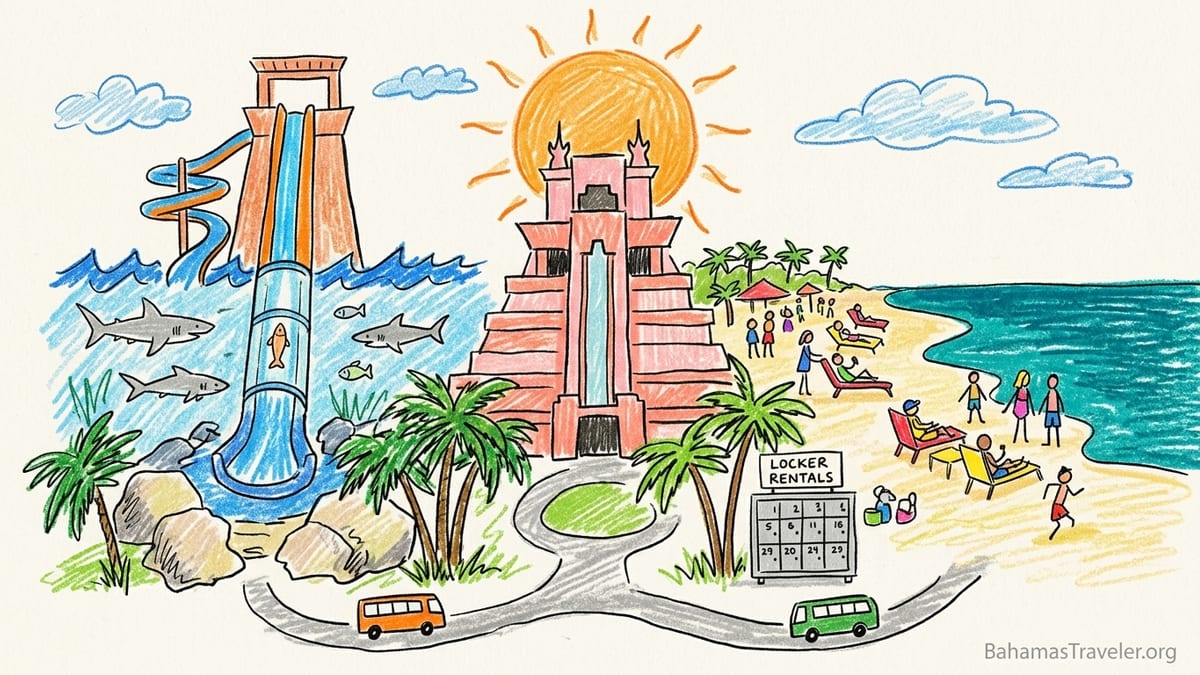
I arrived at Atlantis with high expectations and a fair amount of skepticism. On one hand, Aquaventure is repeatedly described as one of the best resort water parks in the world, with 20 swimming areas, 11 water slides and a mile-long rapids river spread across roughly 140 acres, plus access to several beaches and extensive marine habitats. I fully expected the slides and aquariums to be the highlight, and I assumed that once I paid for a room, most of the fun would be included.
On the other hand, I had read enough traveler reports to know that Atlantis is not an all-inclusive resort. The official terms make clear that nightly rates are subject to substantial added taxes, resort fees and mandatory gratuities, and that nearly every restaurant bill carries 10 percent VAT and 15 percent service on top of menu prices. I expected the final bill to come in significantly higher than any headline rate or package, especially for food and drinks.
For this trip, I booked three nights at The Royal, which is the iconic central tower most people associate with Atlantis and a good middle-ground choice between the renovated but simpler Coral and the higher-end Cove and Reef towers. My goal was to experience the resort as a typical couple might: staying on property, using Aquaventure every day, sampling midrange and one higher-end restaurant, and adding one signature marine experience. Throughout the stay I tracked actual costs for two adults, and then used the same price lists and receipts to model what a family of four would likely spend on the identical itinerary.
I also set specific questions before arrival: Would three nights really be enough to enjoy Aquaventure, the beach and the marine exhibits without feeling rushed. Would we actually use all the facilities the resort fee is meant to cover. And, most importantly, once every tax, fee and unplanned snack was added up, would I feel that Atlantis delivered value that justifies the bill.
What the Room Really Cost: Rates, Taxes and Mandatory Fees
For a realistic benchmark, I used a peak shoulder period when many families travel, in this case mid-March. A flexible rate at The Royal for a standard king room was advertised around 520 US dollars per night before taxes and fees. That number bears little resemblance to what hits your credit card once everything is added.
Atlantis currently applies a combined 21 percent to the nightly room rate that bundles 10 percent VAT with local tourism and promotional levies, plus a daily resort fee and nightly mandatory gratuities per person over age 12. For The Royal, the resort fee is 70 dollars per night plus 7 dollars VAT, totaling 77 dollars per room, and standard mandatory gratuities can run up to 14 dollars per person per night for guests 12 and older. For a couple, that means 28 dollars in nightly gratuities added to the bill before you even order a drink by the pool.
On my three-night booking, the math looked like this for two adults in one room. The base room total was approximately 1,560 dollars. The 21 percent in VAT and levies added about 328 dollars. Resort fees came to 231 dollars for three nights, and mandatory gratuities for two adults added another 84 dollars. By the time I checked in, the room portion alone was just over 2,200 dollars for three nights, or roughly 733 dollars per night all-in, before transportation, meals or activities. A family of four with two teenagers in the same room would see the nightly gratuities roughly double again, adding about 168 dollars over three nights and pushing the room-related cost closer to 2,400 dollars.
In return, those resort fees and taxes include full access to Aquaventure, the marine habitats and exhibits, several beaches and the main fitness center, along with in-resort shuttle transportation between towers. These inclusions are important, because they explain why a room that starts in the 500-dollar range can still represent better value than paying for day passes if you genuinely plan to spend multiple days on the slides and at the pools.
Hidden or Underestimated Expenses: Food, Transport and Add-Ons
The real sticker shock at Atlantis is not the room. It is everything that follows the moment you scan your room key at a restaurant or bar. To keep the comparison grounded, I logged each charge for a couple over three full days, then extrapolated for a family of four, assuming two adults and two children ordering from the same venues.
Airport transfers from Nassau’s Lynden Pindling International Airport to Paradise Island are not included. A standard taxi from the airport to Atlantis typically runs 40 to 50 dollars one way, plus a small fee per bag, with a travel time of 30 to 40 minutes depending on traffic. For two adults with light luggage, my taxi cost 48 dollars plus a modest tip, and the return run was similar. That meant about 100 dollars round trip, or closer to 120 dollars for a family with larger bags.
Breakfast was the first real budget test. At a casual on-site venue, a simple breakfast of coffee and a hot item such as eggs or a breakfast sandwich for two came to around 50 to 60 dollars, once VAT and service were added. A more substantial buffet in the main towers priced closer to 40 to 45 dollars per person before tax and service, so a couple could easily spend 110 to 120 dollars for a single buffet breakfast. During my stay I mixed one buffet morning with grab-and-go options and coffee the other days. Across three mornings, breakfast for two came to approximately 220 dollars. For a family of four, mirroring this pattern could push breakfast close to 400 dollars over three days.
Lunch inside Aquaventure was similarly pricey. At one poolside concession stand, a burger combo, fries and a soft drink cost in the mid-20-dollar range before tax and service, with pizza slices and basic salads not far behind. A modest lunch of two combo meals and one shared snack for a couple routinely came to 60 to 70 dollars with tax and gratuity. Over three days, daytime food and nonalcoholic drinks easily reached 200 dollars for two. A family of four buying individual drinks and meals could expect to spend 360 to 420 dollars for lunch alone over the same period.
Dinners made the biggest dent. A midrange sit-down restaurant at Atlantis, with one appetizer to share, two mains, a dessert and one drink each, commonly produced a bill of 150 to 200 dollars for two adults once VAT and service charge were included. For a single splurge night at a signature venue with seafood or steak, my bill climbed closer to 260 dollars for two. Over three nights, dinner costs for a couple totaled around 550 to 600 dollars. For a family of four, even ordering conservatively, three dinners on property can easily reach 900 to 1,200 dollars if everyone orders a main and one shared dessert, and teenagers add soft drinks or mocktails.
Drinks in general are a silent budget killer. A cocktail by the pool often lands around 18 to 20 dollars before tax and service. Two cocktails each afternoon plus one with dinner can add more than 100 dollars per day for a couple, or 300 dollars over a three-night stay. I limited alcohol to one drink per person per day, and still saw roughly 150 dollars in bar charges.
Then there are the extras. A small locker by a major slide tower to keep phones and wallets secure for the day cost in the ballpark of 15 to 20 dollars per day. Renting one for two full Aquaventure days added about 35 dollars to my bill. A shallow-water dolphin or sea lion encounter in the resort’s marine area, booked on-site, started around the mid- to high-100-dollar range per person. I priced a dolphin experience for two adults at about 350 dollars total once taxes were included, and chose a slightly less expensive stingray and snorkel program that came to just over 250 dollars for two.
When I added everything, three nights at Atlantis for two adults, including room, taxes and fees, airport taxis, basic breakfasts and lunches, sit-down dinners, a handful of cocktails, lockers and one paid marine activity, landed in the region of 3,600 dollars. The same pattern for a family of four, with two children participating in the marine encounter and ordering their own meals, would realistically fall in the 5,000 to 5,500 dollar range before flights.
What Was Truly Included: Aquaventure, Marine Habitats and Free Activities
For those fees to feel remotely justified, the included amenities need to be both excellent and heavily used. At Atlantis, hotel guests genuinely receive unlimited access to Aquaventure on each day of their stay. That access covers all the major water slides and rides, the lazy and rapids rivers, 20 or more pools and a long stretch of beach and lagoon areas. Wristbands are issued daily and linked to your room, so once you have your band and your towel, you do not pay again to ride the slides.
The resort’s large marine habitats and aquariums are also part of the base experience. You can wander through The Dig, a network of underwater-themed tunnels and viewing windows, and the Predator Lagoon walkways to see sharks, rays and other fish without paying an admission charge. There are also open-air lagoons around the property with turtles, sawfish and other sea life, and these can easily fill several hours over a stay. At night, illuminated tanks and walkways make these areas feel dramatic and quite different from the daytime experience, again without costing extra.
Other included items that held real value were the main fitness center access, basic beach chairs and towels at Aquaventure and the beaches, and the free shuttle buses between towers. Those buses matter because the resort is physically large. Walking from The Royal to parts of The Reef or Cove can take 15 to 20 minutes at a normal pace, and while the paths are attractive, they add up when you have already spent hours climbing slide towers in the sun.
What is not included, beyond food and drinks, are the structured kids’ programs at Atlantis Kids Adventures, most marine encounters at the dedicated marine center, and premium pool experiences like reserved cabanas. Daytime children’s club sessions are typically priced per block of time, and a half-day program for one child can sit in the high two-digit to low three-digit range once tax is added. Cabana rentals around the prime pools and at The Cove and Reef can cost several hundred dollars per day, which only makes sense if you are planning to stay put in that area for most of the day and are sharing the cost with another family.
Best Experiences: Slides, Sea Life and Beach Time
From a pure enjoyment perspective, Aquaventure delivered. The slide complexes offer a satisfying mix of high-thrill drops and more relaxed tube rides, and the mile-long river that mixes rapids with gentler stretches became the place where we spent the most time. On our first full day, we were in the park from about 9:30 in the morning until 4 in the afternoon, with a short break for lunch, and still did not manage to ride every slide twice.
Wait times varied considerably by time of day and tower. On that first day, marquee slides like the near-vertical drop through a clear tunnel in the shark-filled lagoon attracted 20- to 30-minute waits by late morning, while family tube slides remained closer to 10 to 15 minutes. The next day, arriving right at opening, we managed to ride three major slides in under an hour before lines built up. For families with younger children, the dedicated kids’ areas with shorter slides and shallow pools were lively but manageable, and wait times rarely exceeded a few minutes.
The marine habitats were another highlight. Being able to walk through large underwater viewing tunnels and outdoor bridges several times a day, without worrying about a separate ticket, made the property feel more like a compact marine park wrapped around a hotel. Watching staff feed rays or sharks during scheduled sessions was both engaging and, importantly for the budget, free once you had your room key.
Beach time at Atlantis felt more mixed, but still provided some of the most memorable moments of the trip. The main stretch of beach in front of the resort alternated between busy and pleasantly spaced, depending on the time of day. Mid-morning, when many guests were still in the water park, there were plenty of loungers and space. By mid-afternoon on a sunny day, open loungers near the water were limited, especially near the main entrances, although you could walk a bit farther down to find quieter patches. Sunsets over the ocean, with the Atlantis towers glowing behind, were the sort of postcard scenes many travelers imagine when they first consider the resort.
Where Atlantis Fell Short: Crowds, Commercialization and Missed Value
For all its strengths, Atlantis sometimes felt more like a theme park with hotel rooms attached than a relaxing island escape, and that perception has real consequences for value. The first issue was crowding. At peak times, slide towers backed up with long lines, restaurant reservations were difficult to secure at popular times, and some pools felt busy enough that finding two chairs together in the shade required planning or luck.
Restaurant pricing and the ever-present add-ons reinforced a sense of commercial pressure. Almost every transaction involved scanning a room key, watching a pre-filled 15 percent gratuity appear on the bill and then being prompted to add more if desired. Even quick-service stands selling bottled water and basic snacks produced bills that would buy full meals in many beach towns elsewhere in the Caribbean. Travelers who arrive expecting resort pricing but not full-on destination-resort markups are likely to feel as if they are being charged premium rates at every turn.
The resort’s scale was both a feature and a disadvantage. While free shuttles connected the towers and main pool zones, walking distances could be significant if you happened to be at one end of the property when you realized your dinner reservation was at the other. Families with small children or strollers will find that transitions between room, water park and dining venues eat into the day more than expected. That naturally leads to using a smaller share of what you are paying for.
Finally, some areas showed signs of wear that contrasted with the high nightly rates and luxury branding. Public corridors in heavily trafficked zones had scuffed paint and dated decor in places, though the main lobby areas and newer towers were more polished. None of this made the stay unpleasant, but when the final bill approached that of a high-end all-inclusive resort elsewhere in the region, the expectation of seamless quality was not always met.
What I Would Do Differently Next Time: Room Choices, Meal Strategy and Alternatives
Knowing what I know now, my first change would be to think more strategically about room category and length of stay. Three nights felt just long enough to sample Aquaventure, the marine habitats and one off-property outing into Nassau, but there was little downtime. For families who want a mix of water-park action and genuine beach relaxation, four nights would be more comfortable. That said, because of the compounding impact of resort fees and food, I would be reluctant to stretch a stay much longer without adjusting the spending pattern significantly.
In terms of towers, The Royal offers central access to Aquaventure and the main marine areas. For travelers primarily focused on slides and kids’ activities, it is the most practical base, even if the rooms are less luxurious than at The Cove or The Reef. The higher nightly resort fees and gratuities at the luxury towers only make sense if you will use their quieter pools and beach zones extensively, which many first-timers do not. I would advise a family whose top priorities are slides and budget control to choose The Royal or Coral over The Cove or Reef.
Meal strategy is the second big area for adjustment. If returning, I would skip the breakfast buffet on most days and instead stock the in-room mini fridge with yogurt, fruit and pastries from an off-property supermarket stop en route from the airport, supplementing with coffee purchased on site. That could easily cut breakfast spending in half. For lunch, I would plan one or two days of simple poolside food and at least one day eating a bit later at a more substantial restaurant off the main water park circuit or even over the bridge in Nassau, where prices are often lower.
I would also consider Atlantis dining plans very carefully. While they can provide psychological comfort by pre-paying for two meals per day, the math rarely beats a disciplined pay-as-you-go approach unless you plan to eat large multi-course dinners every single night. For many guests, a combination of one splurge dinner on property, one midrange meal and one or two casual or off-site dinners offers better value and more variety.
For travelers primarily interested in experiencing Aquaventure rather than living in it for several days, I would seriously consider either booking a room at Comfort Suites on Paradise Island, which has historically included Atlantis water-park access for its guests, or purchasing a dedicated Aquaventure day pass while staying elsewhere. A day pass can be costly, but for cruise passengers or guests at smaller all-inclusive resorts that prioritize beach and dining quality over water-park features, it may be the ideal compromise.
Comparing Atlantis to Other Ways to Enjoy Paradise Island
Staying inside Atlantis is only one way to enjoy Paradise Island. Comfort Suites, located a short walk from the main resort, has in recent years offered complimentary access to Atlantis facilities, including Aquaventure, as part of its room rate. Nightly rates at Comfort Suites are often significantly lower than the main Atlantis towers, and published examples in 2026 show rooms in the mid-300-dollar range per night for multiple guests during some periods, compared with 500 dollars or more before fees at The Royal. However, policies around the timing and conditions for receiving Atlantis wristbands have tightened at times, so travelers need to confirm current rules directly with the hotel before relying on this strategy.
Another option is staying at a smaller all-inclusive resort either on Paradise Island or in nearby Nassau and combining that with an Aquaventure day pass. Day pass pricing changes with demand and season, but it commonly lands in the low- to mid-100-dollar range per person for a full-day Aquaventure ticket. For a couple who loves water parks and wants one intense day of slides followed by quieter beach days with included food and drink at their primary hotel, this hybrid model can provide better overall value and more variety than three or four consecutive nights at Atlantis.
Families with children who are more interested in the beach than in climbing slide towers might also find better value by choosing a beachfront resort where meals and non-motorized water sports are part of the nightly rate. They can then either skip Atlantis entirely or purchase a single-day Aquaventure pass as a highlight. This avoids paying Atlantis resort fees for multiple days when you may only be in the water park for one.
Finally, cruise passengers calling at Nassau for the day can access Aquaventure through ship-sponsored excursions or independently purchased day passes. In that scenario, a single intense day at Atlantis followed by a return to the ship’s inclusive dining and evening entertainment often delivers the best cost-to-fun ratio, especially for those who are not interested in the casino or high-end shopping on property.
Is Atlantis Worth the Price? Different Travelers, Different Verdicts
For a couple, my three-night Atlantis stay functioned as a concentrated theme-park-meets-beach vacation that cost roughly what a week at a midrange Caribbean all-inclusive might run. The key question is whether you see Aquaventure and the marine exhibits as once-in-a-decade experiences, or as a nice-to-have add-on to a beach holiday. If you love water slides, are willing to make full days of it, and accept that you will spend heavily on food and drink, then yes, Atlantis can feel worth the splurge for a short stay.
For families with younger children, Atlantis shines when kids are old enough to enjoy the slides and splash zones but still thrilled by aquariums and shallow lagoons. These families tend to use the included amenities the most thoroughly, riding slides early, cooling off in kids’ pools midday, and wandering the marine habitats in the evening. Their biggest challenge is food cost, especially with picky eaters who do not finish large portions. Careful planning, including bringing some snacks from home and mixing on-site and off-site dining, becomes essential.
Families with teenagers face a different calculus. Teens often want the bigger slides, later nights at the arcade or music venues, and more independence. They can extract a lot of value from the water park, but they also drive up the food and beverage bill significantly. For these families, Atlantis can be worth it if the focus is squarely on action and if expectations about cost are set early. If teenagers are more interested in snorkeling, boating or exploring local culture beyond the resort, a smaller property with targeted excursions may offer better value.
Luxury travelers and honeymooners who prioritize quiet, service-intensive stays and gourmet dining might find that the atmosphere at Atlantis, particularly around the main pools, feels too busy and commercial for the price. They may be better served at a high-end adults-focused resort elsewhere in the Bahamas, using an Aquaventure day pass to satisfy curiosity about Atlantis while sleeping and dining in a more tranquil environment.
The Takeaway
After three nights of tracking every room charge, receipt and locker rental, my conclusion is that Atlantis Paradise Island can be worth the money for a specific type of traveler and length of stay, but it is not a good default choice for every Bahamas vacation. The resort delivers a genuinely impressive water park, extensive free-access marine habitats and an iconic beachfront setting. It also layers substantial taxes, fees and high food and beverage prices on top of its room rates, which can quickly turn a seemingly manageable trip into a multi-thousand-dollar expense.
To get good value at Atlantis, you need to go with a clear plan: choose a tower that matches how you will actually use the resort, budget realistically for food and drinks, and commit to using Aquaventure and the marine exhibits heavily each day. Travelers whose ideal Bahamas trip centers on quiet beaches, intimate dinners and cultural exploration beyond the resort will likely find that they are paying for features they barely touch.
For a first visit, three to four nights at The Royal or Coral, combined with one carefully selected off-property meal and perhaps a single paid marine encounter, offers a balanced way to sample the full Atlantis experience without letting costs spiral too far. If that formula excites you more than it frightens you, Atlantis can deliver a memorable, if expensive, few days in the Bahamas. If it does not, you may be happier enjoying Aquaventure for a day and spending the rest of your time and budget elsewhere on Paradise Island or beyond.
FAQ
Q1. Is Aquaventure really included in the room rate at Atlantis?
Yes. Registered Atlantis hotel guests receive unlimited access to Aquaventure, including slides, rivers, most pools and standard marine-habitat walk-throughs, without a separate ticket, for every full day of their stay.
Q2. How much should a couple budget for three nights at Atlantis, excluding flights?
Based on current pricing, a realistic budget for a couple at The Royal over three nights, including room, mandatory fees, airport taxis, meals, a few drinks and one paid marine activity, is in the 3,500 to 3,800 dollar range.
Q3. What about a family of four staying the same length of time?
For two adults and two children or teens sharing one room and following a similar pattern of meals and one marine experience, a three-night stay can easily land in the 5,000 to 5,500 dollar range before airfares.
Q4. Are there truly free activities for kids once you check in?
Yes. Kids can enjoy Aquaventure’s slides and splash zones, several pools, the beach, and viewing the marine habitats at no extra cost. Structured kids’ club programs and animal encounters carry additional fees.
Q5. How bad are the crowds and wait times for slides?
During busy periods, marquee slides can see waits of 20 to 30 minutes or more by late morning. Arriving at park opening and using less popular towers first helps reduce lines significantly.
Q6. Is booking a cabana worth the extra cost?
Cabanas are expensive and really only make sense if you plan to base yourself at one pool all day, want guaranteed shade and privacy, and can share the cost with another family or group.
Q7. How does staying at Comfort Suites compare to staying in an Atlantis tower?
Comfort Suites often costs less per night and has at times included Atlantis access, but policies can change. Its rooms are simpler and you will walk a bit farther, so it suits value-focused guests who prioritize price over being in the middle of the resort.
Q8. Is the Atlantis dining plan a good deal?
For most travelers, especially light or moderate eaters, paying as you go and mixing on-site and off-site restaurants tends to be cheaper and more flexible than committing to a two-meal-per-day dining plan.
Q9. How many nights do you really need at Atlantis?
Three nights is enough for a concentrated visit focused on Aquaventure and the marine exhibits. Four nights feels more relaxed, especially for families, but costs rise quickly beyond that.
Q10. Who is Atlantis best for, and who should look elsewhere?
Atlantis offers the best value for families and couples who love water parks and plan to use Aquaventure and the marine habitats every day. Travelers seeking quiet beaches, inclusive dining and a low-key atmosphere may be happier at a smaller resort, using an Aquaventure day pass if they want a single high-energy day.