


The Bahamas’ Out Islands are often sold as interchangeable strips of sand, but official tourism guidance and today’s flight and ferry network tell a different story: these islands reward different kinds of travelers. I’m writing this as an island-selection guide in first-person, built around what you can realistically book now, how you actually get around once you arrive, and what tends to surprise people the first time they leave Nassau behind.
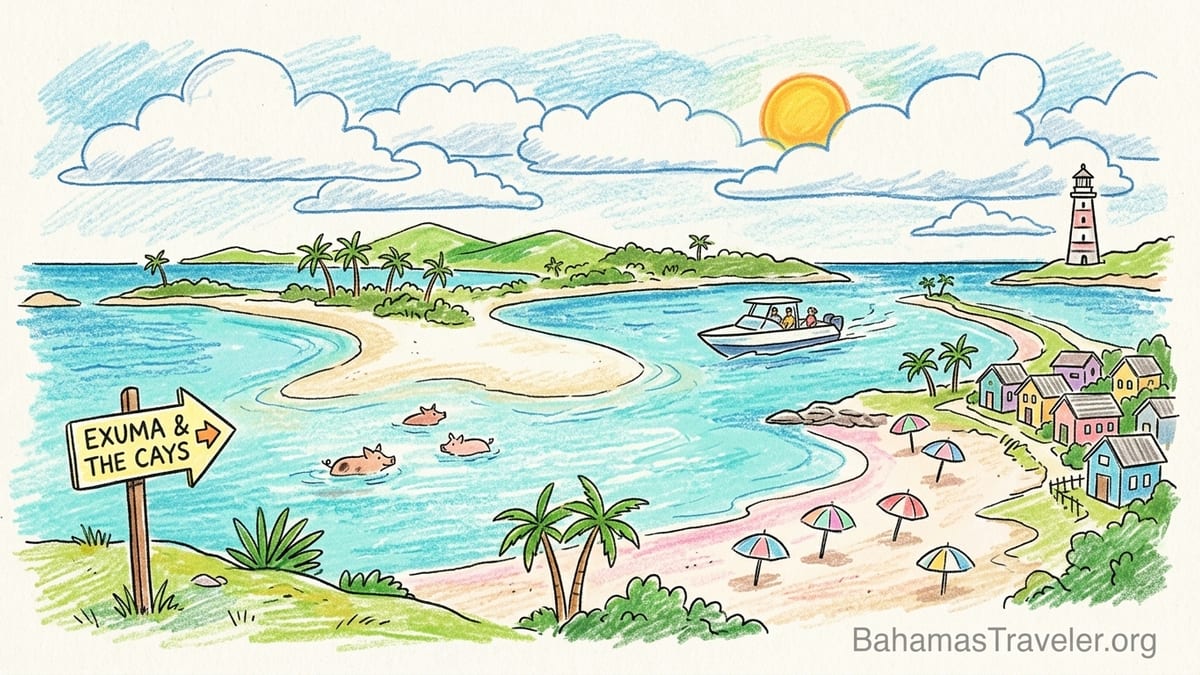
Exuma (Great Exuma and the Cays): Where I’d Spend My “Boat Budget”
If I’m choosing one Out Island for classic Bahamas color, I start with Exuma because the experience is not just beaches, it is water geography. Getting in is straightforward compared with many Family Islands: the official flight listings show daily service between Atlanta and Exuma’s airport at George Town (GGT), plus frequent hops from Nassau on Bahamasair and Western Air, with additional Florida options depending on season and operator. The arrival vibe is instantly “blue-water practical” rather than resort-glossy: a small-airport pace, then a quick pivot into rental-car logistics, grocery runs, and boat timing.
Exuma’s lodging runs from full-service resorts around Emerald Bay to smaller, harbor-adjacent hotels in George Town, plus the specialized “you’re here for the cays” stays farther north around Staniel Cay. I like Exuma best when I plan two real boat days: one for the headline stops (swimming pigs, Thunderball Grotto, sandbars) and another for something calmer like a private half-day to quieter cays, or a flats-style snorkel with fewer boats around. The flip side is cost and crowding: the famous cays can feel like a moving parade in peak windows, and last-minute tours can sting the wallet. Evenings are usually low-key, often anchored by marina bars or a short water taxi hop to Stocking Island for a sunset meal and music. If I’m returning, I’d give Exuma 4 to 5 nights so I’m not cramming boat trips between travel days.
Eleuthera and Harbour Island: The Boutique-Beach Split I’d Plan on Purpose
Eleuthera is the Out Island I pick when I want beaches first and crowds second, and I treat Harbour Island as a separate add-on rather than a substitute. Air access is unusually strong for an Out Island right now: official schedules list daily Atlanta flights into North Eleuthera (ELH), multiple weekly options from South Florida into ELH and Governor’s Harbour (GHB), and frequent domestic flights from Nassau. On paper it looks easy, but the first impression is a lesson in scale: Eleuthera is long, roads can be slow, and the best beaches are often “turn here, then keep going” rather than steps from a lobby.
Hotel style is where the identity split becomes obvious. Eleuthera leans into laid-back luxury and spread-out properties, including design-forward small resorts and a few classic beach options. Harbour Island, by contrast, is compact, polished, and golf-cart based, with boutique staples like Coral Sands and the Dunmore setting the tone for the island’s social scene. Food follows that pattern: Harbour Island is where I’d dress up for dinner and reserve early, while Eleuthera is where I expect great casual conch and grilled fish, but also nights when the best plan is whatever is open. The beach argument is strong on both: Harbour Island’s pink sand is famous for a reason, while Eleuthera’s bigger payoff is variety, from Caribbean-side calm to Atlantic-side surf. My main frustration here is transportation math: golf carts and taxis add up fast on Harbour Island, and a rental car is close to essential on Eleuthera if I want the freedom to chase beaches and viewpoints without waiting. If I’m returning, I’d plan 3 to 4 nights on Eleuthera plus 2 nights on Harbour Island, or just 4 to 5 nights on Eleuthera if I want quiet over buzz.
Abaco: The Best Choice When the Trip Is Really About Boating
Abaco is where I’d go when I want my days organized by marinas, channels, and short hops between cays. The official air listings currently show a wide mix of access, including daily service from Miami and Charlotte into Marsh Harbour (MHH), plus Florida links and domestic connections via Nassau. That matters because Abaco is easiest when I’m not arriving stressed: boating destinations reward daylight planning, and Marsh Harbour is a working hub rather than a “land and forget logistics” resort strip.
Where Exuma sells you on iconic stops, Abaco sells you on rhythm. I’d book a marina-forward stay like Abaco Beach Resort and treat my accommodations as a launch point for Elbow Cay, Hope Town, and day runs to beach bars where the dress code is salt. Great Abaco can still feel like a place rebuilding and reorganizing in parts, and that shows up in occasional service gaps, limited late-night options, and the reality that the most enjoyable Abaco itineraries often require a boat, a captain, or friends who know how to handle a center console. Food and evenings tend to be dockside and early: a strong dinner after a day on the water, then quiet streets. The biggest cost surprise is boating itself, especially fuel, slips, and the premium you pay for convenience when weather forces a plan change. If I’m returning, I’d give Abaco 4 to 7 nights, with the longer end reserved for travelers who will actually be on boats most days.
Andros: The Island I’d Choose for Diving and Bonefishing, Not “A Little of Everything”
Andros is where I go in my head when I want a purpose-built trip: diving, bonefishing, or both. It is not the island I pick for restaurant-hopping or shopping, and that clarity makes the planning easier. Official airline schedules list regular links from Nassau into Andros airports including Congo Town in South Andros (TXN) and San Andros (SAQ), which is the practical entry point for most travelers. The arrival tends to feel more remote than the flight time suggests, and that’s the point: you are here for water time, not nightlife.
For a diving-first stay, Small Hope Bay Lodge is a defining example of Andros’ travel identity. Its published all-inclusive daily rates put adult pricing at about $375 in low season and $425 in high season, and the inclusions are intentionally “activity-forward” (meals, open bar, and on-property gear like bikes and kayaks), with periodic promotions like free diving windows for certain summer 2026 bookings. That kind of packaging is ideal on an island where doing less planning can mean doing more diving. The tradeoffs are the same ones that make Andros special: fewer independent dining options, early nights, and a higher sensitivity to weather because the best days revolve around water conditions. Bonefishing is a serious draw here too, but it works best with a lodge or guide network that handles the logistics of flats access. If I’m returning for the main event, I’d stay 5 to 7 nights; if I’m only trying to sample Andros between other islands, I’d still want 3 to 4 nights so the travel days do not eat the best tides.
Bimini: The Fastest Bahamas Reset, With Real Crowds and Real Convenience
Bimini is the Out Island I’d choose when time is short and I still want that “I left the U.S.” feeling. Two access details define it right now. First, Baleària Caribbean’s high-speed ferry links Fort Lauderdale and Bimini in about two hours, which is a rare no-plane option for an Out Island. Second, American Airlines launched nonstop Miami to Bimini service on February 14, 2026, with three weekly departures, giving Bimini an easier airline path than it had historically. Add domestic flights from Nassau, and Bimini becomes a weekend island in a way most Family Islands are not.
The signature stay is the Hilton at Resorts World Bimini, where the experience is unapologetically resort-forward: marina views, pool scenes, and an on-site casino energy that feels different from the quieter islands. Recent publicly displayed pricing examples have shown rates around the mid-$200s per night for some dates, plus a resort fee (often listed at $45 per night) and a combined tax line item that can be substantial, so I budget for the “real” nightly cost rather than the first number I see. Diving and fishing are the reason to come beyond convenience, and operators like Neal Watson’s Bimini Scuba Center advertise seasonal packages that bundle a short stay with diving days and roundtrip ferry transport. The disappointment factor is also real: Bimini can feel busy, golf cart traffic is constant, and Resorts World has publicly noted that its beach may close to hotel guests for private events on certain dates, which is the kind of detail that can change the entire tone of a short trip. If I’m returning, I’d give Bimini 2 to 3 nights and treat it as a concentrated hit of water time, not a slow unwind.
Cat Island vs Long Island: The Quiet-Travel Decision I’d Make Based on “How Quiet”
If I want the Bahamas to feel like it did before algorithm-fed itineraries, I look at Cat Island or Long Island, and I pick between them based on what kind of quiet I mean. Cat Island can be reached via daily domestic flights from Nassau into Arthur’s Town (ATC) and New Bight (TBI), and there is also scheduled service from Fort Lauderdale Executive Airport into New Bight according to current official listings. Long Island’s access is similarly “small but workable,” with scheduled domestic links from Nassau into Deadman’s Cay (LGI) and Stella Maris (SML), plus some Florida service into Stella Maris. Both islands reward travelers who are comfortable building their own days rather than buying a packaged itinerary.
On the ground, the hotel style is small and personal: properties like Greenwood Beach Resort or Fernandez Bay Village on Cat Island, and Cape Santa Maria Beach Resort or the Stella Maris Resort Club on Long Island, are the kinds of places where the beach is the headline and the schedule is yours. The activity difference is the deciding factor for me. Cat Island is for slow drives, empty sand, and low-pressure exploration, including cultural stops and short hikes like the climb up Mount Alvernia. Long Island’s calling card is natural spectacle, especially Dean’s Blue Hole, plus long, wild coastlines that feel built for a rental car and a cooler. The frustration is also the same on both: limited dining hours, fewer taxis, and more “is the shop open?” moments than most travelers expect in 2026. I plan more nights here because the islands are not trying to entertain me. If I’m returning, I’d give either island 4 to 6 nights, and I’d add a buffer day if my flights only operate on certain days of the week.
The Takeaway: My Return List, Based on Mood and Logistics Tolerance
If I’m choosing with my heart, Exuma wins for the cays because it turns a simple beach trip into a series of water days that look like postcards. If I’m choosing with my eyes, Harbour Island delivers instant beauty and boutique polish, while Eleuthera delivers the long, quiet beaches that make me feel like I found my own Bahamas. If I’m choosing with my hobbies, Abaco is my boating island, Andros is my diving and bonefishing island, and Bimini is my fishing-and-diving weekend with the easiest access from Florida.
If I’m choosing with my calendar, I stay honest about travel friction. Bimini can be a 2 to 3 night trip because ferry timing and short flights make it realistic. Exuma and Abaco reward 4 to 7 nights because the best days are full days, usually on the water. Eleuthera and Harbour Island are best when I commit to at least 5 nights total so I am not spending half the trip moving bags between airports, docks, and golf carts. And if I’m connecting through Nassau, I build in extra time for domestic connections and accept that the “short hop” is only short in the air. The Out Islands are not interchangeable, and that is the best news: pick the island whose logistics you can tolerate, and its identity does the rest.
FAQ
Q1. Which Bahamas Out Island is best for first-timers?
Exuma is the easiest “wow” if you want sandbars and boat days. Eleuthera plus Harbour Island is better if you want beaches and boutique style.
Q2. Should I connect through Nassau or fly nonstop from the U.S.?
If a nonstop works, I take it to reduce missed-connection risk. If I connect in Nassau, I plan a generous buffer and avoid last flight of the day.
Q3. What is the easiest Out Island from Florida without flying?
Bimini is the standout because the Baleària Caribbean fast ferry runs Fort Lauderdale to Bimini in about two hours.
Q4. Where should divers go in the Out Islands?
Andros is the diving specialist, especially around lodge-based operations. Bimini is also strong for short-break diving with established operators.
Q5. Which island is best for boating and island-hopping by water?
Abaco is the most boating-centered choice, with marinas and cays set up for day hops and dock-and-dine evenings.
Q6. Where do I go for pink sand and luxury boutique hotels?
Harbour Island is the classic pick for pink sand and polished boutiques, and it pairs well with quieter Eleuthera just across the water.
Q7. Which island is best for bonefishing?
Andros is widely considered the bonefishing capital, and it is easiest when you book a guide or lodge that can handle flats access.
Q8. Which island is best for a quiet, nature-focused week?
Cat Island and Long Island both deliver, but Long Island leans toward big natural sights like Dean’s Blue Hole, while Cat Island leans toward slow, uncrowded days.
Q9. How many nights do I need in Exuma?
I plan at least 4 nights, and 5 is better if you want two full boat days without stacking everything onto travel days.
Q10. What is the most common logistical mistake in the Out Islands?
Underestimating transportation time and cost, especially rental cars, golf carts, and the buffer you need around domestic flight schedules.